A calm, living home gives people a chance to pause and breathe. Combining soft tones and green life creates a serene room that supports mental and physical well-being.
Research shows that being near lush greenery can lower daily stress and help people sleep better. Choosing the right houseplant also helps purify the air, removing common household toxins.
There are many simple ways to add a small potted plant or a large floor specimen to a living area. Homeowners should match foliage color to their furniture to keep a balanced look.
Practical tip: visit The Home Depot or a local garden center to explore the Leafjoy collection and find options that suit a specific style and lifestyle. These living accents make a house feel welcoming all year.
The Appeal of Neutral Decor with Indoor Plants
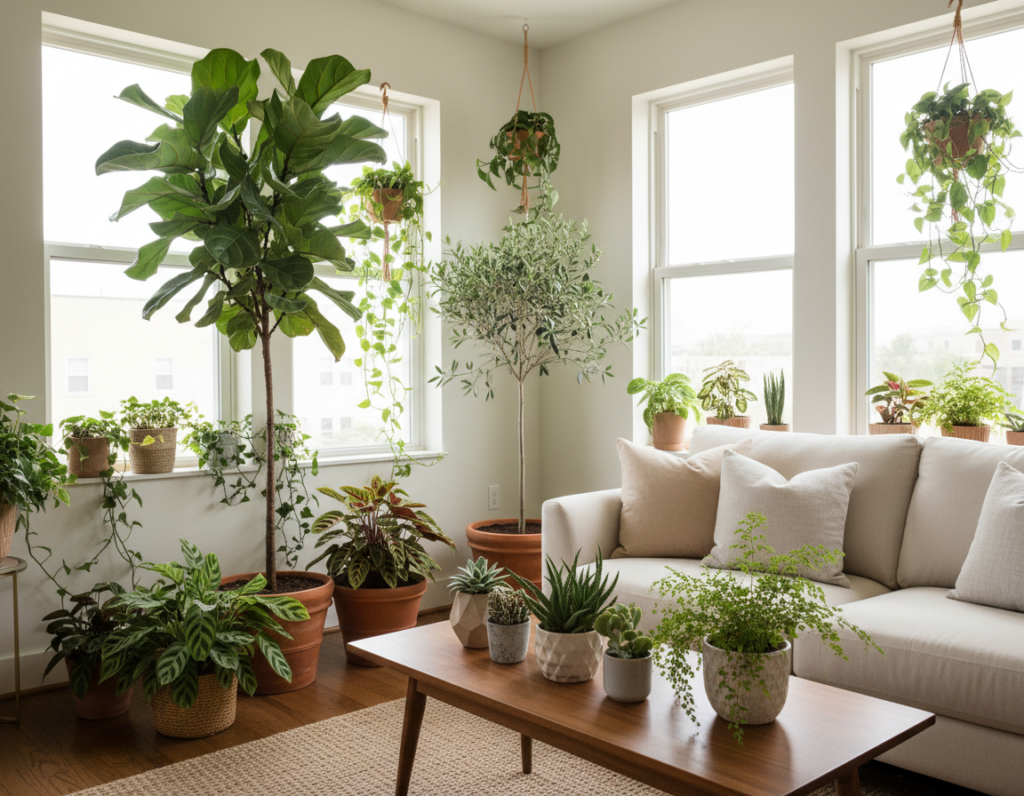
A soft, light-filled scheme gives foliage room to become the main visual feature in any living area. This approach creates a calm backdrop that lets green color stand out and feel intentional.
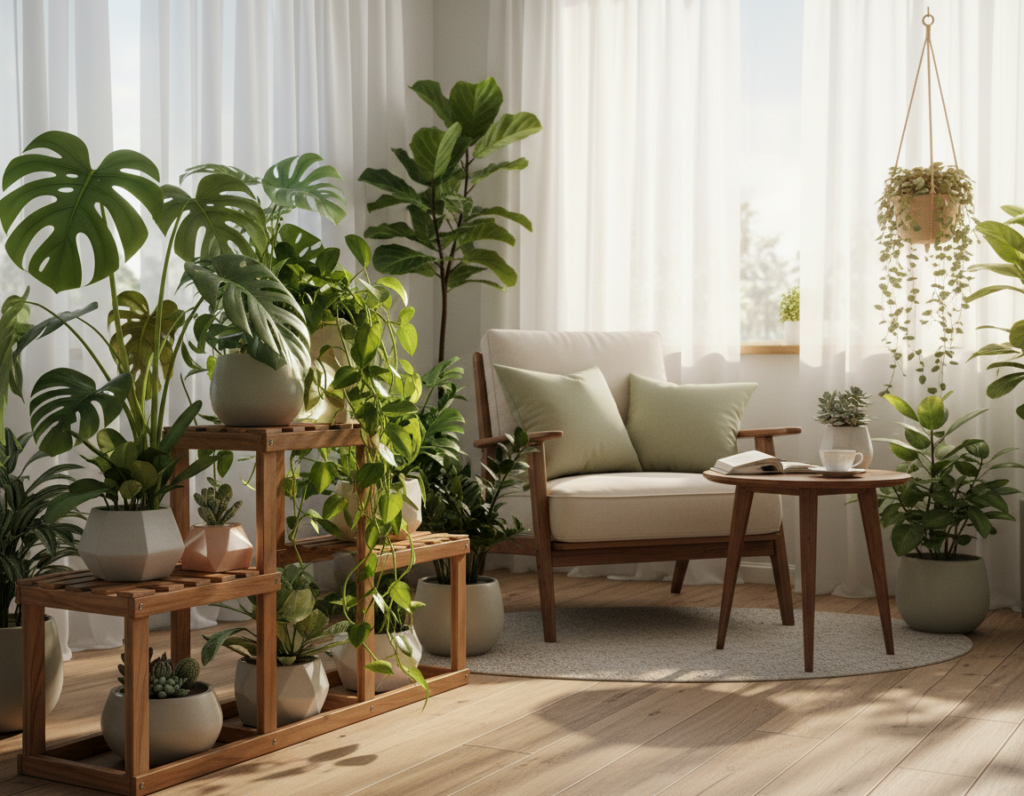
Simple palettes balance a room and make groupings of houseplants look cohesive rather than cluttered. By clustering a large floor plant near smaller tabletop varieties, a homeowner can craft a layered, tranquil display.
Designers note that varied ways of displaying growth—shelves, stands, and low planters—turn an ordinary space into a warm sanctuary. These choices also soften sharp architectural lines while keeping a clean, modern feel.
Practical benefit: living with greenery supports mental well-being and helps a room feel more inviting. Photos of styled rooms often show how one well-placed plant changes the mood instantly.
- Creates a calming visual focus
- Builds balance and harmony
- Makes styling both simple and versatile
Selecting the Right Plant Varieties
Begin by choosing varieties that match your home’s light and your weekly care routine. Picking forgiving species makes it easier to keep growth healthy and attractive.
Snake Plant
The snake plant is a top choice for beginners. It tolerates low to bright light and asks for very little frequent care.
Benefit: hardy nature and low watering needs help a new owner build confidence quickly.
Pothos
Pothos adapts to many rooms and shows off trailing vines that soften shelves and corners. It grows fast under moderate light and recovers well from missed waterings.
- Research each species’ exact watering schedule to avoid overwatering.
- Consider a spider plant or ZZ plant for fast growth and easy propagation.
- Choose easy care varieties to keep your houseplant displays lush while you learn.
For styling tips and ideas, explore Leafjoy styling ideas to pair these varieties with simple room arrangements.
Designing with Texture and Contrast
Mixing leaf shapes and pot surfaces creates visual tension that lifts a living area from flat to thoughtful.
Start by pairing bold foliage and fine fronds. The broad leaves of a rubber plant contrast well against delicate ferns, giving depth and a curated feel.
Choose containers in muted tones so the natural color of your plants provides the main contrast against sofas or shelving. Wicker baskets evoke a rustic country appeal, while a classic metal urn offers timeless elegance.
Consider how light plays across surfaces. Sun and shade cast shadows that change the look of leaves and pots through the day.
- Combine upright specimens with trailing varieties for layered height and texture.
- Place a textured ceramic pot to add visual weight to a living room corner.
- Use varied houseplants to break up monotony and introduce subtle color shifts.
Small styling choices make a big difference in photos and in everyday life. Thoughtful texture keeps a space intentional rather than random.
Utilizing Vertical Space for Greenery
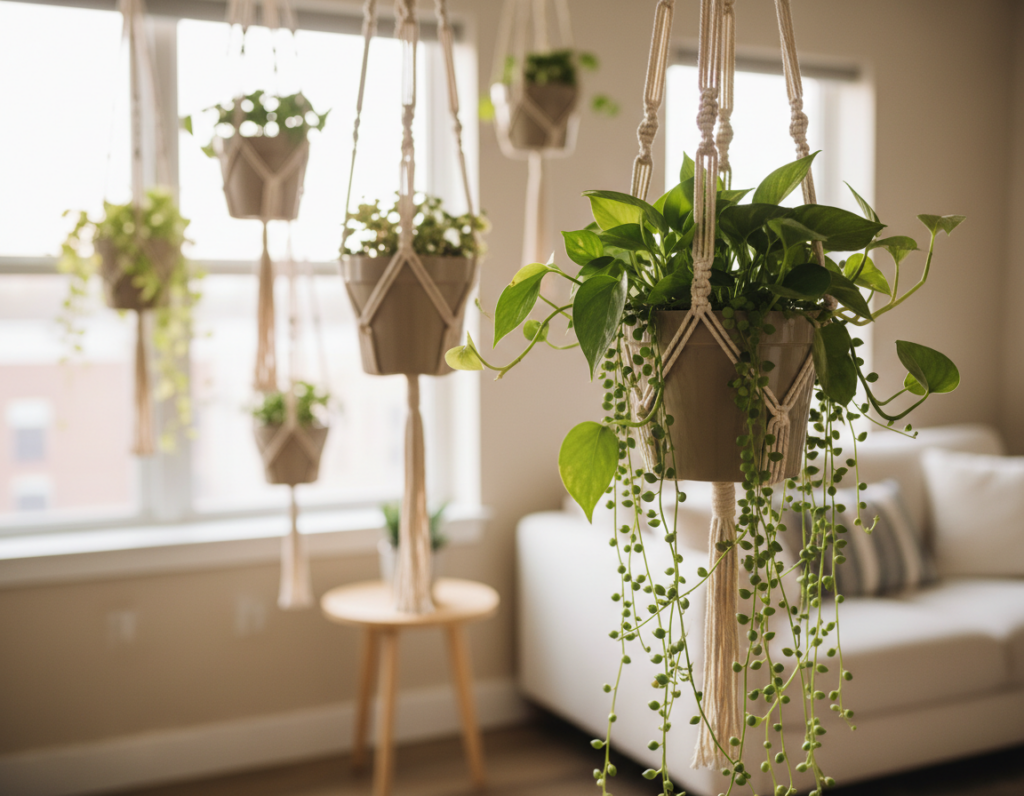
Hanging planters let a homeowner layer foliage upward, crafting a sense of height and movement. This approach frees floor area and creates a striking focal point in a small space.
Hanging Planters
Install sturdy hooks on walls or ceilings and choose baskets that suit structural load limits. Hanging a plant draws the eye skyward and makes a room feel more open.
Practical tips:
- Utilizing vertical space is one of the best ways to display plants when floor area is limited.
- Trailing vines such as pothos look stunning in a hanging basket as they cascade down and soften corners.
- Check light requirements before hanging; areas near the ceiling may receive different light than floor level.
- Use varied heights to add visual interest and a professional layered effect.
Safety note: ensure ceiling hooks are rated for the weight of wet soil and planters. Good placement makes greenery feel intentional and helps photos of the room look effortless.
Creating Cohesive Displays with Containers
A coordinated set of pots instantly makes a group of houseplants feel intentional and styled. Grouping similar colors and materials gives a clean, unified look that reads well in photos and day-to-day living.
Choose matching palettes. Group ceramic or metal containers in a shared color to create rhythm across a room. This makes each plant feel part of a larger arrangement rather than a random accent.
Balance scale and light. Pick container sizes that fit the space and the plant. Avoid oversized pots in small corners and place taller containers where they catch soft light.
- Use neutral-colored ceramic containers for a modern, streamlined look.
- Ensure proper drainage to protect roots and prevent rot.
- Match finishes—wicker, metal, or matte ceramic—to unify color and texture.
- Group like styles together to make a small collection feel curated.
Tip: a well-chosen container can elevate a simple plant into a focal point. Consistent containers help maintain order and make styling the living space easier over time.
Enhancing the Bathroom Environment
Bathrooms offer a unique microclimate that some greenery truly prefers. The leafjoy SpaScene collection is made for warm, humid powder rooms and creates a spa-like mood.
Humidity Lovers
Ferns, begonias, calathea, and orchids thrive in the elevated humidity of a bathroom. These species stay lush overnight and need less frequent watering than drier rooms.
Spa Atmosphere
Arrange plants around a tub or near a shower to build a calm, spa-style retreat. Group a few varieties in matching pots to improve air quality and make the room feel intentional.
- The bathroom often provides steady humidity that helps many plants flourish all night.
- Use the SpaScene collection to create a cohesive, relaxing display near water sources.
- Monitor light levels—humidity helps, but most houseplants still need some sun to stay healthy.
- Adjust your watering routine; high moisture in the air means less frequent waterings are required.
Styling Plants in Living Areas
Using height, texture, and scale, houseplants can define zones in a living room without heavy furniture. Thoughtful placement fills empty corners, adds visual interest, and supports a calm, cohesive atmosphere.
Pairing and placement: a snake plant works especially well in pairs, flanking a console or fireplace to create symmetry. Majesty palms suit an empty corner that needs a touch of height and movement.
Snake Plant
The snake option is ideal for a living room because it offers a clean silhouette and low care demands. It tolerates varied light and fits easily on a side table or beside seating.
Quick styling tips:
- Give each specimen plenty of room to grow so roots and foliage aren’t crowded by furniture.
- Mix different varieties to add subtle color and texture without overwhelming the space.
- Group sizes for a layered look that reads well in photos and daily life.
Incorporating Plants into Home Offices
A few well-chosen greens can turn a cramped desk into a calm, productive corner.
Desk-Friendly Varieties
The leafjoy WorkLife collection is curated for desks, shelves, and tabletops. It offers an easy indoor plant that fits a small home office without crowding a work area.
- Boost focus: Adding a couple of plants can reduce stress and improve creativity in a small space.
- Smart placement: Place specimens near a window so they get plenty of light but keep your table clear for equipment.
- Use height: Put trailing vines on a high shelf to add green without taking desk room.
- Easy care: Pick varieties like pothos for low fuss and set a simple watering schedule so they stay healthy.
“A tidy green corner helps ideas flow and keeps a room feeling purposeful.”
Tip: leave ample space for monitors and papers. The goal is a balanced office where plants enhance productivity, not obstruct it.
Managing Light Requirements for Indoor Growth
Light determines how a plant grows more than any other factor in a living area.
Managing light is the most critical part of care because each species has specific needs. If a room lacks a bright window, choose low-light varieties from the leafjoy Cocoon collection to keep the space green.
Rotate each specimen regularly so all sides get equal exposure. This prevents leaning and keeps foliage balanced.
Fiddle leaf fig is popular in living rooms but demands bright, indirect light to keep its large, glossy leaves. Place a fiddle leaf fig near a filtered window and monitor leaf color.
- Check soil before watering — light levels change how fast roots use water.
- Watch for yellowing or stunted growth as signs of light stress.
- Understand each plant’s needs to find its best spot and extend its life.
For practical guidance on positioning and light types, see lighting for indoor plants.
Seasonal Decorating with Houseplants
Seasonal touches let a small plant shift a room’s mood from bright spring cheer to cozy winter warmth.
Practical idea: combine small plants and festive accents to create a low, inviting centerpiece for a dining table.
Keep height low so guests can converse easily across the table. A compact group of houseplants keeps the sightline open and the table usable.
Choose species that bloom or change color through the year. That living change adds interest and keeps the look fresh in photos and daily life.
- Refresh the display each season to revive the home’s style without major effort.
- Use evergreens or berry-producing specimens for winter to add festive color and texture.
- Consider each plant’s light needs; move specimens to a brighter spot during darker months.
- Layer small pots and natural accents—pinecones, citrus, or ribbon—to create a balanced table vignette.
Seasonal plant displays offer a simple way to celebrate the time of year while keeping living areas vibrant and intentional.
Benefits of Air Purifying Greenery
Adding air-purifying foliage can make a measurable difference to the air a family breathes every day.
One clear advantage: many house plants help purify air by filtering common toxins. This improves indoor air quality and supports better daily health.
Research suggests greenery works like a natural filter, reducing volatile organic compounds and other pollutants. A healthy specimen performs much better than a stressed one.
“Healthy greenery does more than look good — it actively improves the spaces people live in.”
- One primary benefit is the ability to purify air, creating a healthier living environment.
- Different species filter different toxins, so choose a variety to maximize results.
- Even rooms with limited light can support air-cleaning options; select low-light tolerant species.
- Snake plant is notable for its ability to purify air in indoor spaces and requires little care.
- Healthy care routines lengthen life and boost a specimen’s cleaning power.
Bottom line: adding a few carefully chosen plants and keeping them healthy is an easy, long-term investment in home air quality and family life.
Creative Ways to Display Cuttings
Small glass vessels let cuttings become living art on a sunny sill.
The leafjoy H20 collection, including the H20 Mini and H20 Bowl, offers a stylish option for showing off stems in water.
Displaying cuttings in jars is one of the most creative ways to enjoy plants without soil. It suits a desk or a bright windowsill and highlights roots as they form.
- Propagate easily: place pothos or a spider plant stem in a clear jar to start new growth.
- Keep water fresh: change the water frequently to prevent rot and protect the houseplant cutting.
- Try different vessels: vary glass size and shape to showcase each variety and create a unique display.
- Mind light and placement: ensure enough light so roots and leaves develop healthy new growth.
These water-based displays offer a low-fuss way to expand a collection and add living interest to a home. They are a simple, elegant way to enjoy new growth while learning basic watering and care.
Choosing Between Real and Artificial Options
Practical factors—time, light, and daily care—usually determine if a living specimen or an artificial piece is the best option.
The faux fiddle leaf fig is a favorite for those who want the look of greenery without the upkeep. A high-quality fiddle leaf fig or leaf fig offers consistent shape and size and never needs watering or pruning.
Design tip: place larger artificial plants in woven baskets or neutral ceramic pots to avoid a plastic-heavy impression. Matte leaves and realistic veining make an artificial plant read as authentic in photos and daily life.
- Choose by lifestyle: artificial options suit busy homes or low-light rooms where a real specimen would struggle.
- Real benefits: living houseplants help purify air and provide a living connection to nature.
- Mix and match: pairing real and faux pieces creates a lush, low-maintenance display that stays consistent year-round.
“When quality is high, a faux option can deliver the same visual impact while saving time.”
Essential Care Tips for Beginners
A short, reliable care routine makes the biggest difference for someone new to growing greenery at home. This section gives clear, actionable tips to build confidence fast.
Watering Schedules
Establish a regular schedule. Paris Lalicata, who leads Plant Education at The Sill, advises beginners to start with easy care varieties to learn rhythms without stress.
Make sure to check the top few inches of soil before you water. Only water when that layer feels dry to the touch.
Soil Quality
Soil matters as much as watering. Use a well-draining mix to prevent root rot and keep roots aerated.
For sansevieria, choose slightly sandy, fast-draining soil so excess water moves away quickly.
Humidity Control
Humidity helps tropical species thrive, especially in a bathroom or warm room. Provide plenty of moisture in the air for sensitive varieties.
- Rotate specimens to give even exposure to light.
- Start with a few hardy houseplants to build skill.
- Remember: consistent care ensures a healthy indoor garden.
Troubleshooting Common Plant Issues
Small problems often signal simple fixes—troubleshooting starts by checking light and water first.
If leaves turn yellow, it may be a sign of overwatering. Move the plant to a brighter window and let the soil dry a bit before you water again.
Inspect foliage monthly for pests. Dusting leaves keeps them glossy and helps catch insects early so you can treat an issue quickly.
Slow growth often means the root system needs more space or fresh soil. Repot into a slightly larger container and refresh the mix to improve drainage and care.
Note: many easy care varieties like the snake plant tolerate low light, but they can decline in a dark bathroom. Majesty palms, however, are pet-safe and help purify air in areas with limited airflow.
- Check watering habits and adjust frequency based on soil moisture.
- Ensure adequate light and move specimens closer to a window if needed.
- Inspect for pests and dust leaves monthly to prevent infestations.
- Give roots room to grow—repot when soil is compacted or growth stalls.
These simple tips help resolve common problems fast, but each plant is unique, so learn the specific needs of each variety in your collection.
Conclusion
A few thoughtful additions can turn any room into a calm, healthier living space. This guide shows how small choices in light and placement help a person enjoy greener life at home.
Whether styling a bathroom or a shared sitting area, attention to scale, pot choice, and care routines makes displays last. Follow straightforward tips for watering, rotation, and matching species to each spot.
Consistency matters: steady care and the right light keep growth strong and reduce common problems. With confidence and a little practice, anyone can create a balanced, living display that improves air quality and mood.