Many homeowners struggle to balance comfort and clarity in a living area. They aim for a curated look but often end up with a cluttered room that feels smaller and chaotic.
Projects like The Dalmar Fort Lauderdale show how a single white planter can bring calm and cohesion to a space. A clean planter design can elevate living areas and make a home feel intentional.
Learning a sharp eye for layout takes time. Avoiding common errors is the first step toward better designs. Professionals say personal style should guide the types of plant choices and planters used, so each selection supports the overall interior style.
When residents avoid these pitfalls, the result is a more functional room that welcomes guests. Small changes in placement and scale can transform a crowded area into a fresh, professional-feeling part of the home.
The Role of Greenery in Modern Interior Design
Greenery has become a defining element in modern interiors, shaping both mood and scale. Adding a living element helps balance textures and creates a focal point that guides the eye.
Benefits of Indoor Plants
Healthy air and harmony: Many plants filter airborne toxins and uplift air quality in a living room. They also add vertical interest and soften hard lines in furniture arrangements.
Selecting the Right Varieties
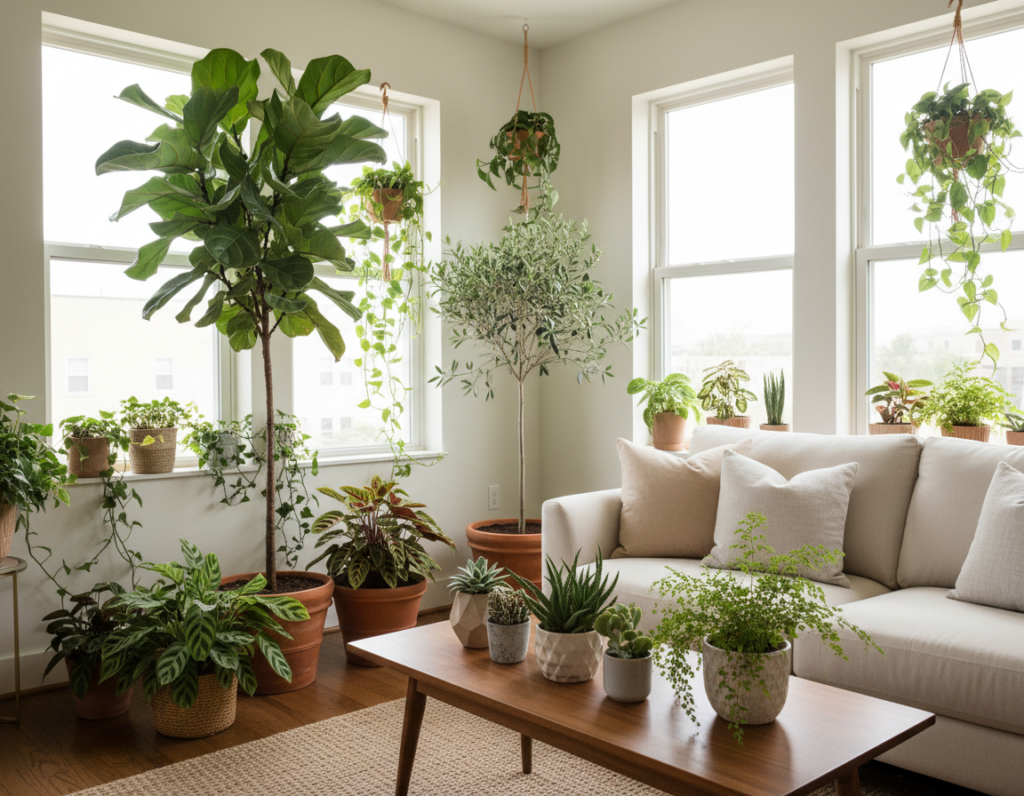
Choose species that match your light and maintenance needs. The Areca Palm (Dypsis Lutescens) offers a lush crown of bright green leaves around an upright trunk. The Swiss Cheese Plant (Monstera Deliciosa) brings large, glossy foliage that suits modern designs.
- A Ficus tree (Ficus Benghalensis) can reach about 4 feet and defines the look of a space.
- Vibrant pots and planters complement the natural color of healthy leaves and finish arrangements.
- Experiment with varied arrangements to find the best way to bring nature into a home while keeping a clean aesthetic.
For more guidance on choosing the right planters and placement, see this resource at plant selection and styling. Professional designers often recommend these varieties to ensure greenery thrives and enhances the interior today.
Common Indoor Decor Mistakes With Plants
Choosing the wrong greenery can quickly turn a neat living area into a neglected corner.
“Plants should match your care abilities and available light,” Anjie Cho says.
Too often, owners pick specimens that need more attention than they can give. That single error can make a room feel sad and cluttered rather than calm.
Failure to fit foliage into the interior flow also breaks the design. A poor placement can block sightlines and shrink a space.
- Choose greenery that matches light and the owner’s care routine.
- Research maintenance before adding any plant to a living area.
- Integrate pots and stands so the foliage supports, not interrupts, the layout.
Good care is not optional: healthy foliage enhances a home. When a specimen thrives, it lifts the entire room and completes the design.
Addressing Insufficient Lighting in Your Home
Poor lighting can collapse a room’s scale and make even the best layout feel cramped. Improving light is a simple way to open a space and help foliage thrive.
Reflective Surfaces
Mirrors and glossy finishes bounce indirect light into shadowed corners. This boosts serotonin and supports plants that sit away from windows.
LED Fixtures
LED fixtures deliver targeted illumination and are energy efficient. They work well on shelves and bookcases where a plant might otherwise struggle.
Natural Skylights
Skylights bring full-spectrum sun into a room and are a premium way to keep leaves and flowers healthy. Daylight also enhances color and texture across a home.
- Brighten corners: use mirrors or light-colored wall accents to reflect light.
- Layer your light: combine LEDs and ambient sources for balanced options.
- Choose color temperature: pick shades that flatter foliage and interior hues.
- Use pale pots: light-colored pots help reflect light and make a space feel airier.
Avoiding the Clutter Trap in Living Spaces
Excess items on tables and shelves compress a space and dilute the impact of strong design choices. Too many small objects, such as figurines or old vases, make a living room look busy and feel smaller.
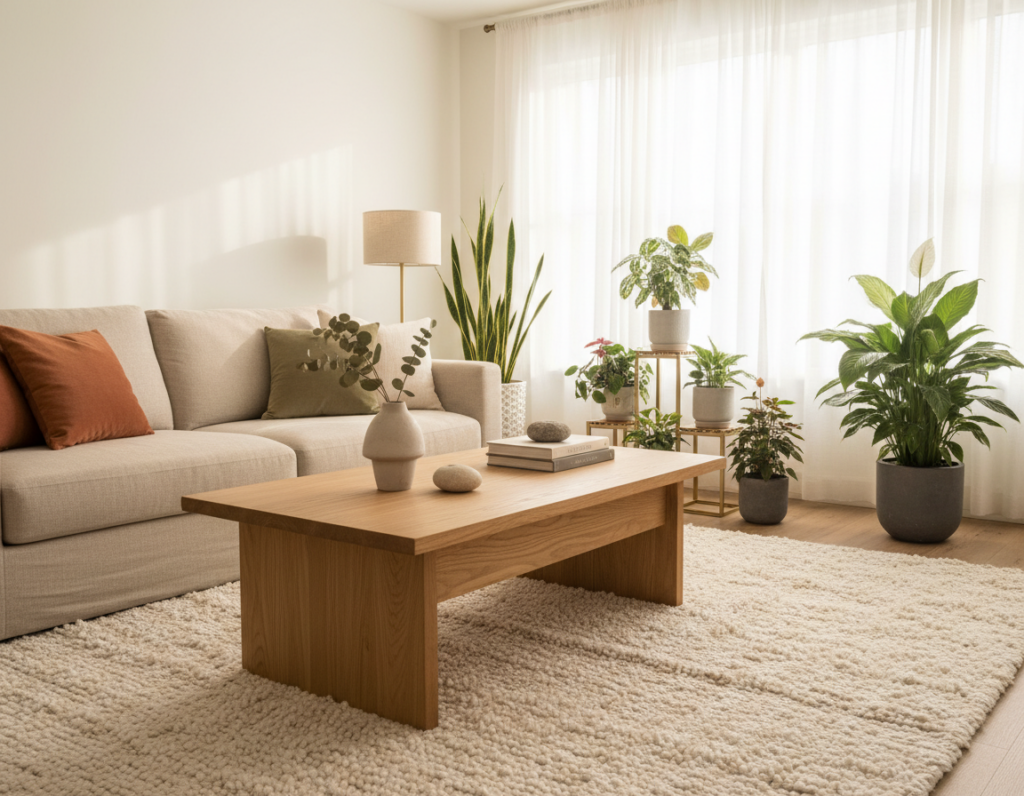
Rather than an army of trinkets, choose a single, well-placed plant or a quality planter to add life and visual weight. This creates a clear focal point and reduces dust and upkeep.
Use succulents in corners to introduce subtle greenery without overwhelming the interior. Succulents need little time and can fit on shelves or a side table for a modern, tidy style.
Professional designers recommend limiting the types of accessories on a table. Grouping two or three meaningful items has more impact than many small pieces. Over time, curating fewer, higher-quality planters will create strong contrast against furniture and make the home feel intentional.
- Replace scattered items with one statement piece.
- Choose succulents for low-maintenance corners.
- Display only a few accessories to keep the room organized.
Proper Storage and Display Techniques
Well-planned displays can make a shelf the strongest visual anchor in a living space. Start by clearing clutter and reserving surfaces for a few intentional pieces. This approach makes a room feel calm and organized.
Utilizing Bookcases and Shelving
Use bookcases to show favored flowers and plants rather than hiding everything behind closed doors. Place trailing greenery on a middle shelf so leaves spill naturally and soften edges.
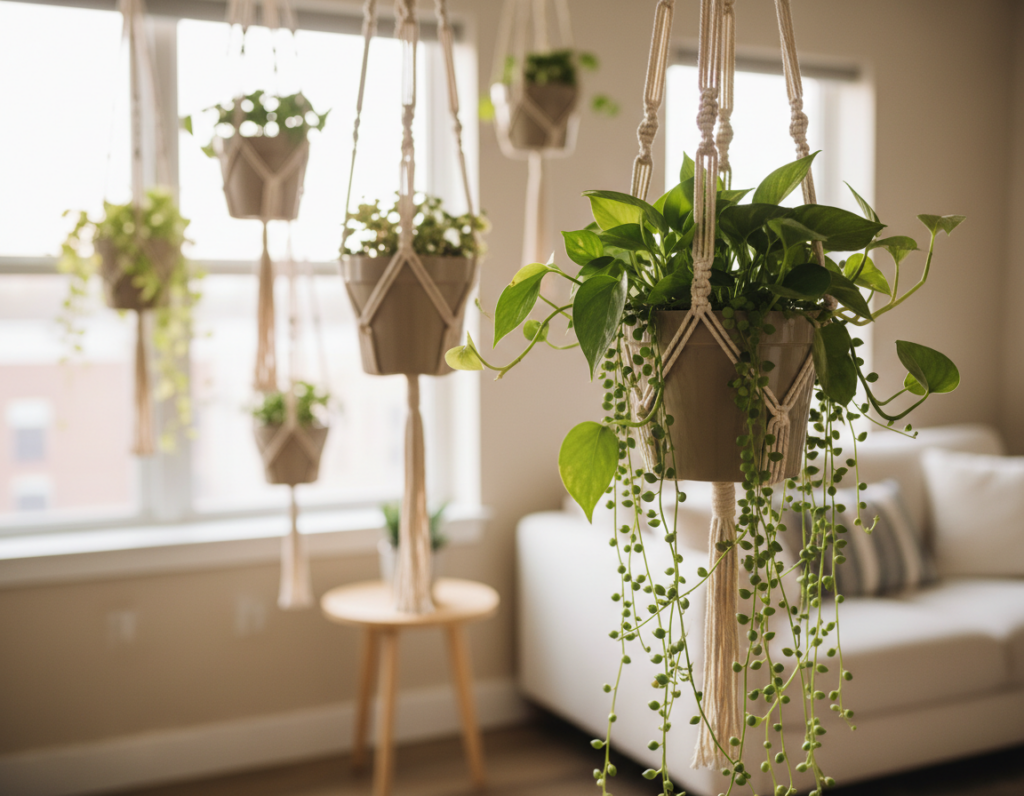
Hanging a specimen from a wall-mounted hook or shelf frees floor and table space. It adds height and a fresh visual line that draws the eye upward.
- Balance: leave breathing room on tables to let the plant be the focal point.
- Storage: keep books and documents tucked away to prioritize botanical displays.
- Safety: always check weight and pot size before placing heavy items on high shelves.
Proper display techniques keep the living area tidy while showcasing collections in a way that makes the whole space look curated and professional.
Balancing Design Trends and Personal Style
A home’s signature emerges when trend cues are tempered by personal choices that feel authentic.
Choose planters and pots that echo the room’s color palette so the plant arrangements complement existing decor. Matching tones keeps the eye moving and prevents the space from feeling like a showroom.
Use a wall for hanging greenery to add depth without filling tabletops. A few well‑placed hangers free surfaces and create vertical interest under good light.
Mixing vintage finds and modern pieces gives a living room an eclectic, personal edge. But avoid chasing too many trends at once; a focused approach prevents visual confusion.
“Select different types that contrast in texture and size to create balance and interest.”
- Pair broad leaves with fine foliage for natural contrast.
- Limit colors to a simple palette to unify arrangements.
- Let the home reflect personality—choose greenery that makes a person feel relaxed.
The Pitfalls of Artificial Plant Selection
Selecting synthetic greenery demands the same thoughtfulness as choosing a real specimen. Low-quality items that look fake make a room feel staged and cheap. Buyers should expect realism in texture, color, and scale.
Quality Standards for Faux Greenery
Choose convincing options such as a fiddle leaf fig, smilax, or a faux ficus tree to fill empty corners. Artificial hanging ferns work well above tables or near a wall to soften overhead lines.
- Check leaf variation and natural color shifts.
- Pick a planter that matches home style and adds a pop of color.
- Place faux pieces where a real specimen would get light to keep a natural look.
Maintenance and Cleaning
Regular care keeps faux foliage fresh. Dust on leaves dulls the look and reveals the illusion.
Wipe or rinse leaves on a schedule, and rotate displays between tables and shelves for visual contrast. Mixing a few real plants, such as succulents, enhances authenticity.
Feng Shui Principles for Plant Placement
Feng Shui-guided placement can change how energy and flow feel in each room of a home.
Experts recommend thoughtful choices: Zoë Vita James warns that spiky leaves can create “sha chi,” or unhelpful energy. She suggests choosing rounded leaves to soften the vibe and encourage abundance.
Marie Diamond advises that plants represent the wood element. Best zones are the south, southeast, or east areas of a space to boost growth and opportunity.
- Place a plant near a wall or corner in the south or east to support balance.
- Keep pots and the area around your greenery clean to preserve good energy.
- Match light needs to placement so leaves stay healthy and bright.
“Arrangement matters: tidy, intentional groupings strengthen both design and energy.”
Practical tip: arrange no more than three pieces together to keep the room calm. Thoughtful arrangements help the home feel harmonious and purposeful.
Conclusion
Key takeaway, a few intentional choices are enough to make a space seem larger and calmer.
Avoiding common errors is the fastest way to transform a house into a balanced, welcoming home. By choosing the right plant and placing it thoughtfully, each room gains purpose and flow.
Design should be both personal and practical. Keep scale correct, allow breathing room, and select materials that read as high quality rather than staged.
Whether choosing real or artificial greenery, the aim is a harmonious environment that brings joy. For guidance on avoiding common artificial plant traps, see this primer on common artificial plant decorating mistakes.