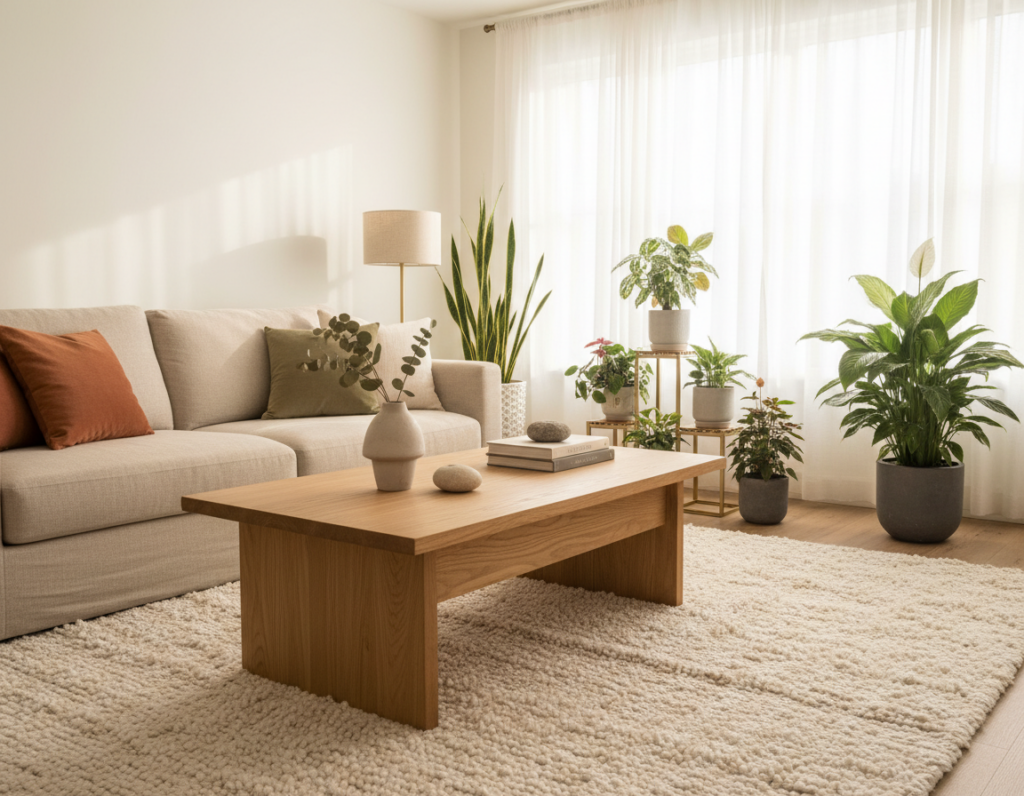
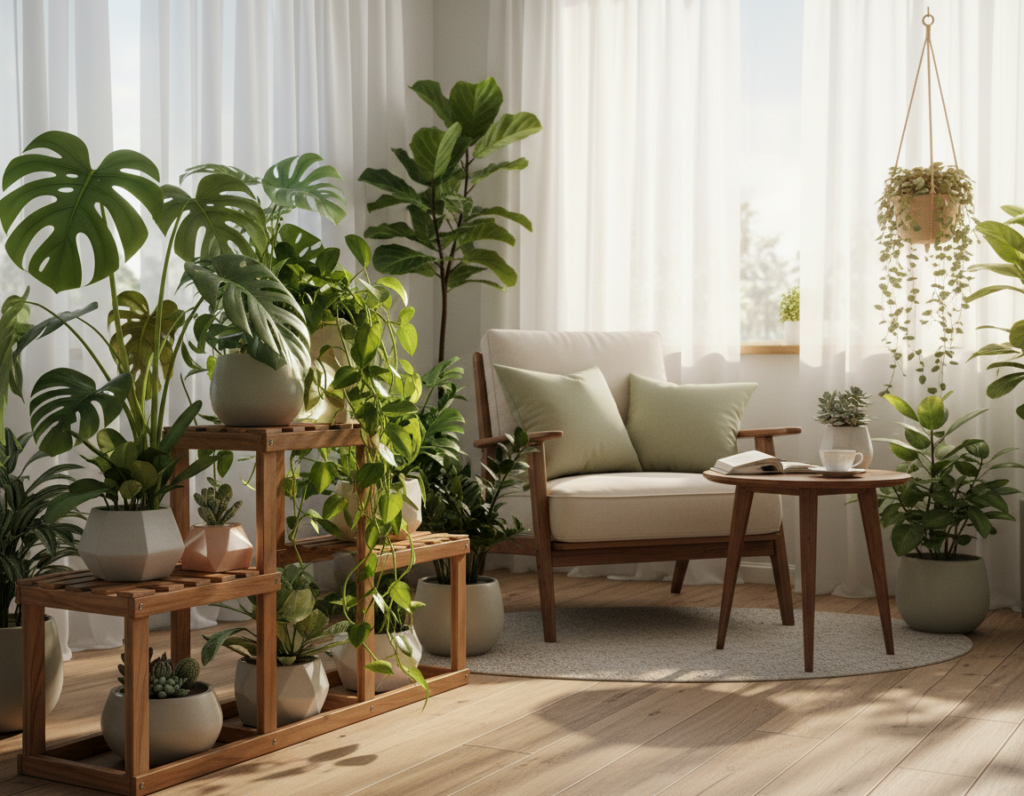
In 2026, biophilic design has shifted toward using a plant as functional décor rather than mere filler. Designers and wellness pros now show how a single choice can lift a room and make a small home feel like a true sanctuary.
Bringing nature indoors is an effective way to transform a tight space into a calming retreat. Careful picks help clean the air and support mental well-being all year.
Modern trends pair the right foliage with proper light to alter mood and scale. This approach treats each living element as useful, not decorative, and makes upkeep a simple, daily ritual.
Experts recommend mixing floor, tabletop, and hanging pieces to avoid clutter while boosting comfort. For practical guidance and research on health effects, see this resource on indoor greenery and recovery settings: how indoor greenery supports mood and air.
The Biophilic Shift in Modern Apartment Living
Urban design in 2026 reframes biophilia as a practical approach to daily living, not just decoration.
Residents face real constraints: low light, limited floor space, and busy schedules. Designers now favor choices that serve a function and support wellbeing.
Biophilic strategies encourage treating small homes as sanctuaries. Introducing natural elements helps manage indoor air and lifts mood without adding clutter.
Studies show adding greenery can lower stress and make living spaces feel more vibrant. By prioritizing varieties suited for tight quarters, people create a calm oasis away from city noise.
For developers and renters exploring long-term solutions, consider how biophilic design pairs with construction trends in urban housing. See an industry perspective on biophilic homes for modern living: biophilic homes.
- Focus on function-first choices.
- Maximize air quality with compact solutions.
- Design for low maintenance and daily routines.
Selecting Plants That Improve Apartment Atmosphere
Selecting the right greenery hinges on matching each species to the home’s light and soil conditions.
Start by checking light levels and choosing a specimen suited to that corner. Healthy specimens in nutrient-rich soil remove more indoor toxins and stay vigorous longer.
NASA research shows microorganisms in potting soil also help filter the air, so potting mix quality matters as much as the plant itself.
Decide between lush foliage or a flowering option based on the room’s purpose. Foliage varieties often boost perceived calm, while flowering types add color and mood lift.
- Match light needs and watering frequency to daily routines.
- Use rich, well-draining soil to support microbial activity and toxin removal.
- Research each houseplant’s specific care before bringing it home.
Low Light Champions for Dim Urban Spaces
A few well-chosen species thrive where direct sunlight rarely reaches, making them ideal for compact homes.
ZZ Plant
ZZ
The ZZ plant has waxy, deep green leaves and thick rhizomes that store water. It can go weeks without a drink, which suits busy renters and low-light rooms.
Snake Plant
Snake Plant
A snake is a top bedroom pick because it continues producing oxygen at night. Its vertical leaves add height while keeping a small footprint in a room.
Cast Iron Plant
Cast Iron
The Cast Iron plant grows very slowly and stays compact over time. It tolerates corners and minimal sunlight, so it won’t overrun living areas.
- These low-light champions need proper soil drainage and prefer to dry out between waterings.
- They reflect light with sturdy leaves and demand minimal time for upkeep.
- Ideal for urban dwellers who want green without constant maintenance.
Vertical Gardening Solutions for Small Footprints
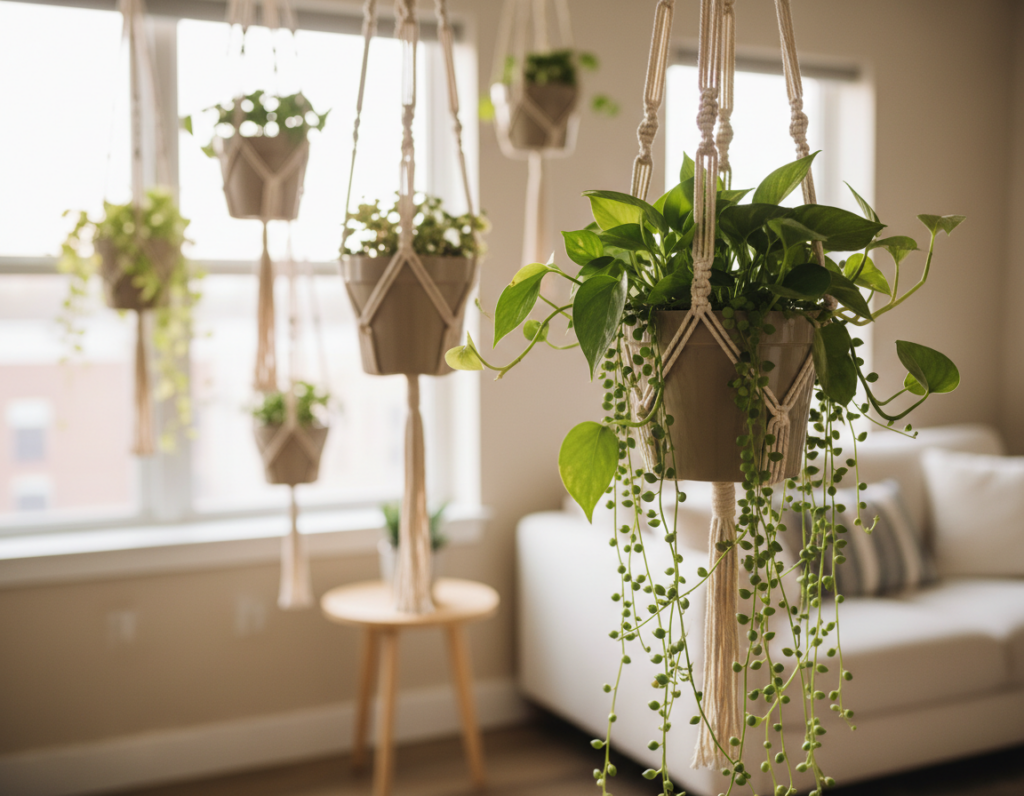
Vertical gardens turn unused wall real estate into a living, breathable feature. This strategy opens floor space while adding texture and height.
Golden Pothos is a classic for vertical systems because its cascading vines grow fast and can be trained to climb or trail. The pothos adapts to many light levels and gives quick coverage.
The Heartleaf Philodendron offers delicate heart-shaped leaves and forgives missed water sessions. Busy residents find it reliable in small homes and tight corners.
- Use hanging planters and narrow shelves to add greenery without crowding the floor.
- Spider plant thrives in baskets, sends out dangling babies, and suits pet-friendly rooms.
- Train trailing vines to climb walls or spill over bookcases to maximize vertical space.
Care note: Check soil moisture regularly; consistent watering keeps vines vigorous, though many varieties recover from an occasional dry spell. Vertical solutions make a compact apartment feel larger and more inviting.
High Impact Statement Plants for Sunny Corners
A single bold specimen can anchor a sunny corner and shape how the whole room feels. Designers often choose one hero to add scale and character without clutter.
Monstera Deliciosa
Monstera Deliciosa, known as the Swiss Cheese plant, offers large, fenestrated leaves that make an instant statement in a bright room. It prefers steady sunlight and needs enough space to spread its wide foliage.
Tip: Use high-quality soil with good drainage to support rapid leaf growth and healthy root development in full sun.
Fiddle Leaf Fig
The Fiddle Leaf Fig brings sculptural elegance to any sunny corner. It thrives in consistent, bright light and rewards owners with bold, glossy leaves.
Rotate the specimen weekly so leaves grow evenly toward the light. This simple habit preserves its striking shape.
“A single hero plant can define the entire vibe of a room when placed in a sunny corner.”
- Place the specimen where it receives direct sunlight for several hours.
- Ensure soil mixes offer drainage and nutrients to support fast growth.
- Consider flowering options only if they will get proper sun to bloom well.
The Science of Air Purification and Soil Health
Roots and microbes form a living filter that helps the air in small homes stay healthier. NASA research shows houseplants can remove formaldehyde, benzene, and carbon monoxide from indoor air.
Soil and root systems are central to this effect. Studies find the potting mix and root zone host microorganisms that adapt over time and boost the cleaning process.
The snake plant is a noteworthy example: it removes toxins efficiently and releases oxygen at night. During winter, when people spend a large amount of time indoors, one healthy specimen per 100 square feet is a practical guideline.
- Wipe leaves with a damp cloth periodically to keep filtration effective.
- Use a 6–8 inch container per NASA recommendations for each 100 sq ft of living space.
- Soil microbes improve air cleaning capacity with continuous exposure to common indoor pollutants.
“A single well-cared-for houseplant can lower pollutant levels and support household health.”
Utilizing Grow Lights to Overcome Natural Light Deficits
Modern LED grow lights provide a dependable way to recreate sunlight where windows are scarce. The Soltech Versa consumes minimal energy and emits very little heat, so it stays safe in compact rooms.
Versa’s articulation includes 310° horizontal rotation and 180° vertical movement. This lets users direct light precisely to foliage and root zones, supporting photosynthesis and steady growth.
- LEDs mimic the sun’s spectrum to support leaf and root development without the heat of incandescent bulbs.
- The renter-friendly Versa requires no installation and can sit on a desk or bedside table.
- Consistent exposure from grow lights stabilizes watering rhythms and prevents stress from irregular sun cycles.
For many people, a small fixture is the most practical 2026 solution to deliver the energy and light needed for healthy indoor greenery in windowless halls or basements.
Essential Maintenance for Thriving Indoor Greenery
Basic, repeatable tasks ensure each living piece contributes to air quality and visual calm.
Set a simple schedule for watering, fertilizing, and checking soil moisture. Regular checks prevent root rot from overwatering and avoid stress from too little water.
Follow NASA’s rule of thumb: one healthy specimen in a 6–8 inch container per 100 square feet to help clean the air. Adjust the amount of water and fertilizer to each species’ needs.
Trim hanging planters and pothos vines to keep growth in check and encourage new shoots. Wipe leaves on a snake plant and broad-leaf specimens to remove dust and toxins so they absorb light better.
- Inspect soil weekly for dryness or sogginess.
- Repot when roots bind the container to restore soil health.
- Use grow light timers if natural sunlight is limited.
“Proper maintenance is the best way to ensure greenery continues to support air quality and home health.”
Conclusion
A small, well‑curated green corner can change how someone experiences each room. With careful selection, a few hardy plants bring color and life to even the tightest space.
Prioritize quality over quantity by matching specimens to light and care routines. Consistent attention keeps soil and foliage vigorous and helps indoor air stay cleaner.
In any apartment, a modest living setup supports mental health and a calmer environment. Over time, a steady routine turns simple choices into a sustainable, rewarding ecosystem for the home.