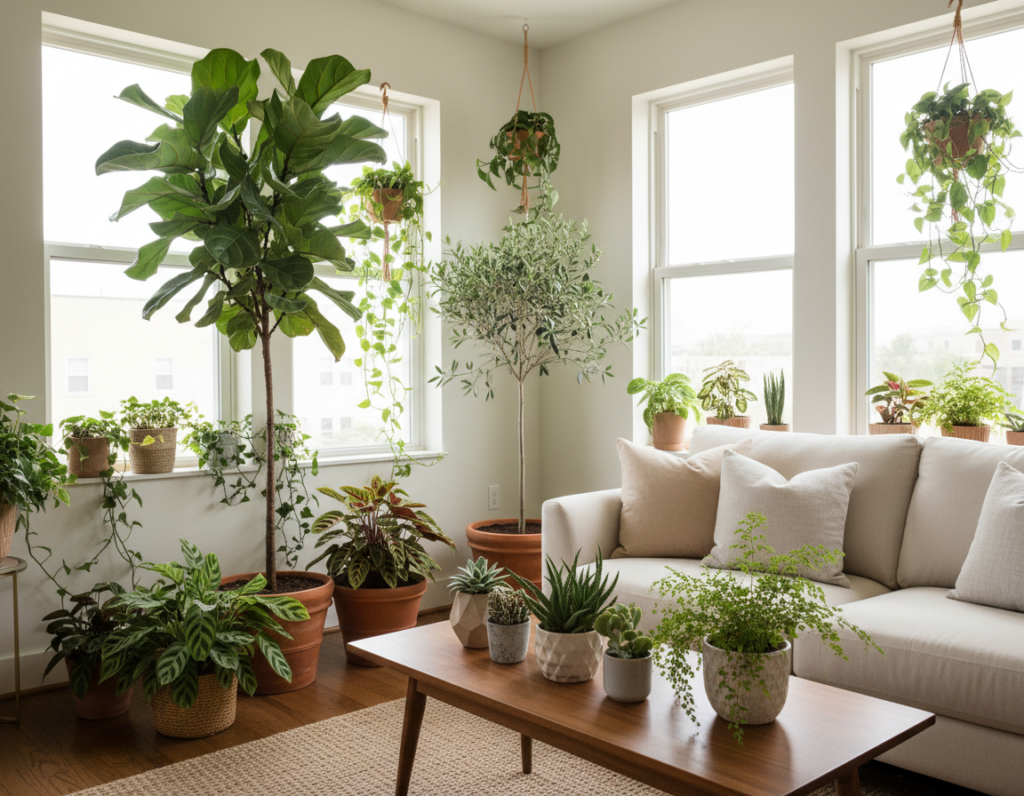
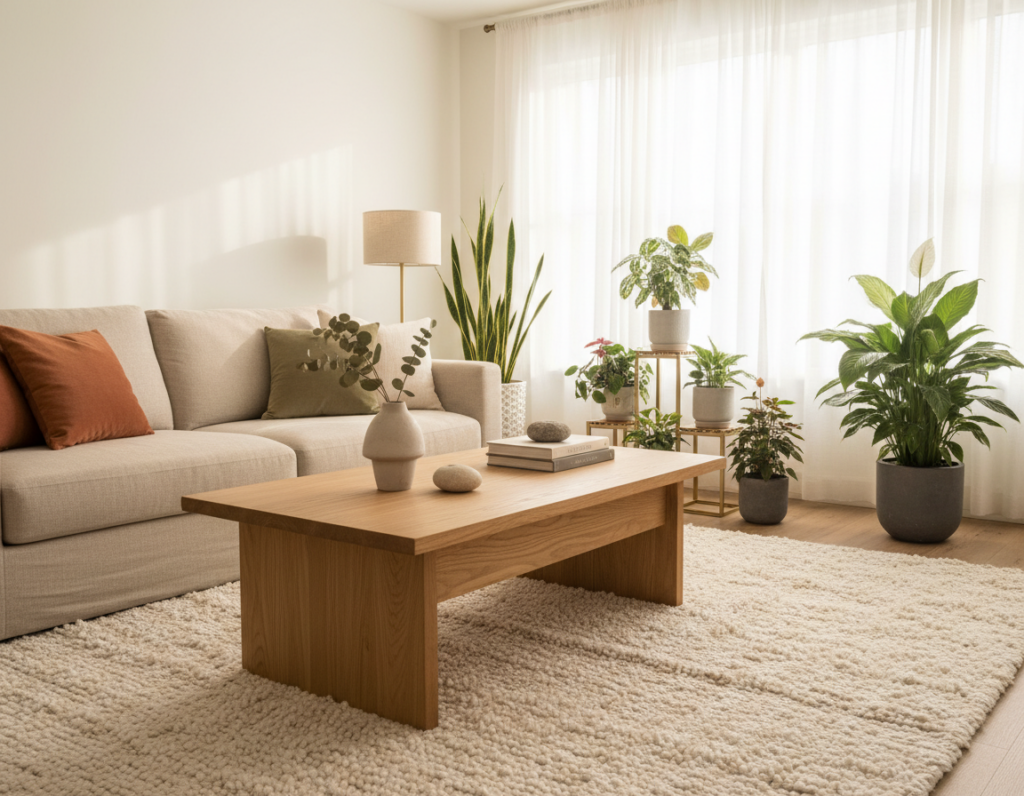
In 2026, biophilic design centers on greenery as functional decor that boosts air quality and supports mental well-being. Urban residents can transform a small living space by choosing the right plants to match their interior and living room layout.
One well-placed houseplant can change the look of a room and make a home feel more inviting. Designers often recommend vertical greenery to maximize limited floor space and create layered visual interest.
Lighting matters: understanding light levels helps pick houseplants that thrive indoors. With the right choices, even low-light corners can become lush spots that improve air quality and enhance decor.
Assessing Your Apartment Microenvironment
Start by mapping how light and air move through each room. A short audit helps match plants to real conditions and avoids costly mistakes.
Evaluating Natural Light
Observe a window across several days to note sunlight patterns and hours of bright versus indirect light.
North-facing panes give far less light than south exposures. This simple check shows whether low light species will thrive in a living room corner.
Humidity and Temperature
Measure humidity and temperature near typical plant spots. Tropical houseplants struggle in dry, drafty areas and may show brown tips on leaves.
Consistent humidity keeps foliage healthy and reduces stress on sensitive species.
- Choose a ZZ plant for dim zones; it stores water in rhizomes and can go weeks without water.
- Use well-draining soil to prevent root rot from overwatering.
- Place moisture-loving plants away from cold drafts and heating vents.
Stylish Apartment Plant Ideas for Small Spaces
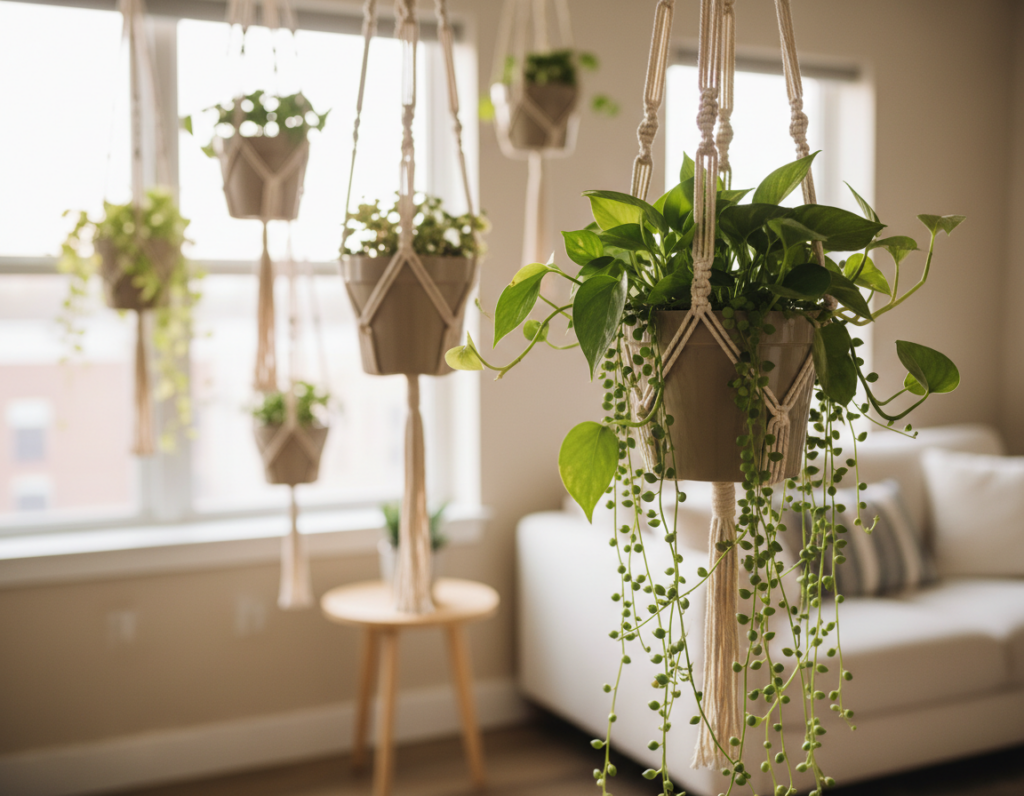
A single trailing vine can create depth and soften corners in a small living room. The Golden Pothos is a classic choice for tiny areas because its cascading vines climb walls or spill over shelves.
Choose trailing varieties to add lush foliage without sacrificing floor space. These indoor plants adapt to varied light and need minimal water, making them ideal for busy homes.
Group a few species with different green leaves to add texture and color. Trim vines to keep the houseplant compact so it does not overwhelm the living room or other spaces.
- Pick a variety whose foliage color contrasts with furniture for visual pop.
- Use well-draining soil and let topsoil dry slightly between waterings.
- Place vining types where indirect light reaches leaves for steady growth.
For more small houseplants and placement tips, see this guide — small houseplants.
Maximizing Vertical Real Estate
Raising pots and training vines transforms bare walls into breathing decor. This approach saves floor space while adding texture, color, and improved air quality to a living room or shared space.
Utilizing Hanging Planters
Hanging baskets free up tables and shelves and place foliage at eye height. The spider plant is ideal here: it is non-toxic and produces “babies” on long runners that look great spilling from a hanging pot.
Tip: monitor soil moisture closely — consistent waterings matter because hanging containers dry faster than pots on a table.
Installing Floating Shelves
Floating shelves create compact zones for small houseplants and propagation jars. Use clear glass containers to root cuttings; they add a modern touch and let you watch roots form.
Arrange varieties by light needs so leaves face the best light available in each room.
Training Vining Varieties
Guide vining species to climb frames, macramé supports, or shelf edges to build vertical interest. Trained vines can soften corners without cluttering the floor.
- Use clips or hooks to set growth paths.
- Rotate pots occasionally so all leaves receive light.
- Trim to manage length and encourage fuller growth.
Benefits:This method increases usable space, showcases diverse varieties, and keeps surfaces clear for daily use.
Selecting Plants for Low Light Conditions
Even rooms with little sun can host thriving foliage when species and routine match conditions. Choosing tolerant varieties and a simple care rhythm helps turn dim corners into healthy living spots.
Durable Species for Dim Corners
The snake plant ranks high for bedrooms and shy windows because it keeps producing oxygen at night and tolerates low light. It is a reliable choice for tight living room corners.
The snake plant continues to release oxygen at night, aiding indoor air quality even in low light.
Pick species that need infrequent waterings and can handle indirect light. Allow the soil to dry between waterings to prevent root rot in darker areas.
- Place a snake near a north-facing window to brighten a dark corner without extra fuss.
- Choose varieties with yellow-edged leaves for a pop of color against green leaves.
- Rotate pots occasionally so all leaves get some light and maintain even foliage.
Statement Plants for Sunny Corners
A tall, sculptural specimen can anchor a sunny corner and set the tone for an entire living room.
The Fiddle-leaf fig is a classic choice. It can reach ten feet in height and creates a dramatic focal point near a bright window.
Rotate the pot weekly so leaves grow evenly toward the light. This helps the houseplant keep a balanced form and avoids lopsided growth.
High humidity benefits large statement plants. Grouping a few plants together can raise local humidity and make care easier in sunny areas.
Ensure well-draining soil and watch moisture during the growing season, as large varieties need more water when actively producing leaves.
- Place a large specimen by a window that gets consistent sunlight but avoid noon sun that can burn leaves.
- Use a sturdy pot on a low table or shelves to lift the plant and define the corner without crowding the room.
- Monitor conditions daily for leaf color and soil moisture to keep the statement plant healthy.
Incorporating Modern Grow Lights
Tech-driven lighting lets people bring reliable sunlight to corners that get little or no natural light. Modern LED grow lights, such as offerings from Soltech, provide a full spectrum that supports photosynthesis and healthy leaf growth.
Benefits of Full Spectrum LEDs
Full spectrum LEDs deliver the red and blue wavelengths plants need for strong roots and lush foliage. This makes it possible to keep a wider range of houseplants in rooms with low light.
“Full-spectrum LEDs mimic sunlight closely enough to support vigorous growth even in windowless spaces.”
Integrating Tech into Decor
Many modern fixtures double as decor pieces. They blend into living room design while improving air quality by enabling more plants to thrive indoors.
- Position lights at the correct height to avoid leaf burn.
- Rotate pots so all sides receive indirect light.
- Watch soil moisture: increased light can speed drying and change care needs.
Essential Care Tips for Healthy Foliage
Small, steady habits make the biggest difference when keeping indoor greenery healthy. Regular checks help match routines to each room’s light and conditions. A quick look every few days prevents most issues.
Know the local conditions. The Bird’s nest fern prefers moderate humidity and about 70°F, so it does well in a steamy bathroom or near a warm living room window. Adjust placement if leaves show stress.
- Monitor soil moisture and avoid soggy soil to prevent root rot.
- Check plants every few days for watering needs; increase waterings in hot weather.
- Remove lower leaves that turn brown to keep foliage tidy and encourage new growth.
- Understand each houseplant’s needs for light, humidity, and height to preserve color and form.
Consistent waterings and simple routines maintain healthy foliage for years. They also help keep leaves bright and living spaces pleasant.
Avoiding Common Decorating Mistakes
Smart display choices help plants enhance decor without creating hazards for kids or pets. Simple moves protect family members while keeping the living area tidy.
Keep toxic species like English Ivy out of reach. Place them in hanging planters or on high shelves so curious hands and pets cannot nibble leaves.
Managing Pet and Child Safety
Select safe options first. The snake plant suits busy owners because it needs little water and care, but it should sit on a high table to limit pet access.
- Use hanging baskets or high shelves for a spider plant to free floor space and keep the living room safe.
- Showcase air plants in small glass bowls on a coffee table for a low-profile decor touch that does not take up much space.
- Always research toxicity before adding houseplants to a home to protect children and animals.
- Avoid overcrowding: too many plants can make a room feel cluttered and increase the chance of spills or damage.
Practical tip: group a few non-toxic specimens and leave clear walkways. This reduces accidents and makes daily care easier.
Conclusion
Smart placement, proper soil, and steady light form the backbone of a lasting indoor garden.
Focus on the basics: match each houseplant to its light and soil needs, and check leaves for signs of stress. This simple routine keeps houseplants healthy and helps them improve air quality in a living room or any room.
Use vertical space and hanging pots to free the floor and expand usable spaces. With consistent care, a few well-placed plants will change the look of your interior and make the home feel calmer.
Meta: A short care routine focused on soil, light, and placement helps indoor plants thrive and keeps living spaces inviting.