Many homeowners overlook small, unused spots. With simple choices, those areas can turn into calm, green retreats that lift a room’s mood.
The right plant brings life to low light areas and makes a dull space feel cared for. Matching a houseplant to the exact light level prevents stress and keeps care easy.
Even beginners can choose resilient houseplants that need little fuss. These additions improve air quality and add a warm, lived-in look to the home.
By learning basic light needs and picking tough varieties, anyone can reclaim unused spaces. This simple step often turns neglected spots into the most admired parts of a room.
Understanding the Needs of Plants for Dark Indoor Corners
Matching species to light levels is the first step toward healthy greenery in low-light rooms.
Soil moisture, air humidity, and light are the three essentials. Even the even darkest spots need monitoring to avoid root rot and limp foliage.
Many houseplants prefer indirect light rather than direct sunlight. This keeps leaves vibrant and reduces stress on a houseplant that sits away from windows.
Proper watering means letting the soil dry slightly between sessions. Aglaonema thrives with drier soil, which suits forgetful caretakers.
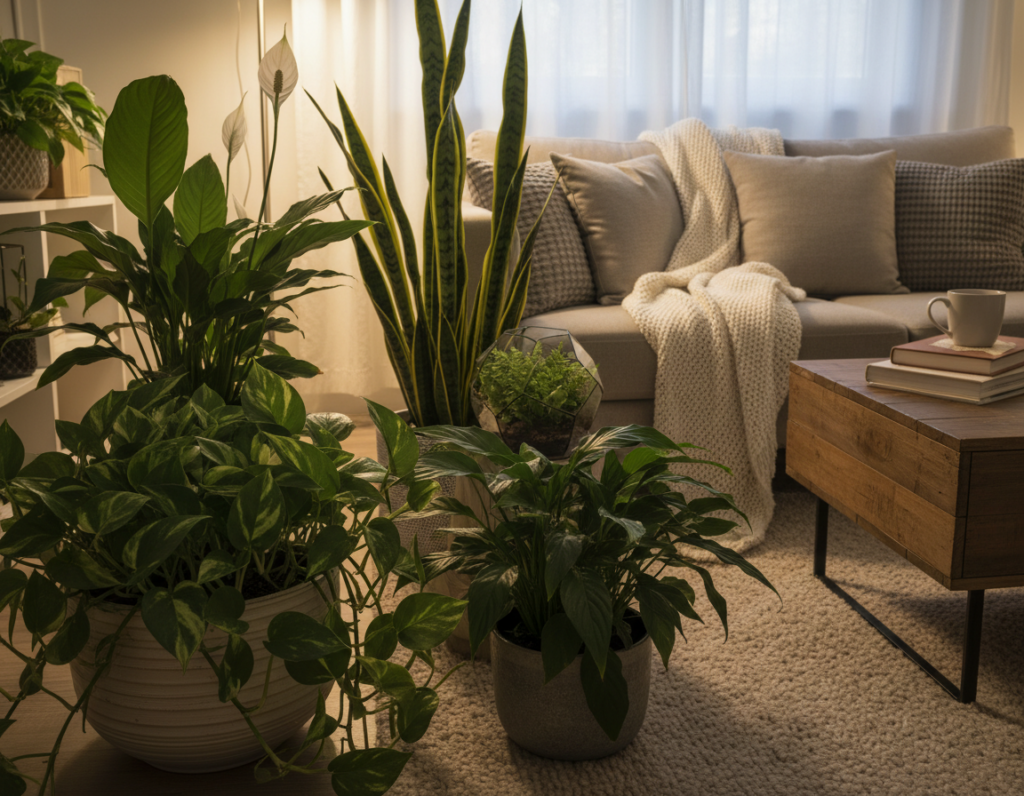
Peace lilies (Spathiphyllum) reward moderate care with glossy green leaves and elegant white spathes when humidity and light meet their needs.
“Use quality pots with drainage and group foliage to raise humidity and stabilize micro-conditions.”
- Check soil and temperature regularly to match species-specific conditions.
- Place varieties with similar needs together to create a balanced micro-climate.
- Choose pots that drain well to manage water and protect roots.
With basic care and the right choices, even a small room or living room niche can thrive.
Foliage Favorites for Shady Spaces
Choosing sturdy foliage can turn a neglected niche into a lush, low-effort display. Below are reliable selections that tolerate low light and occasional neglect while adding texture and color.
Golden Pothos
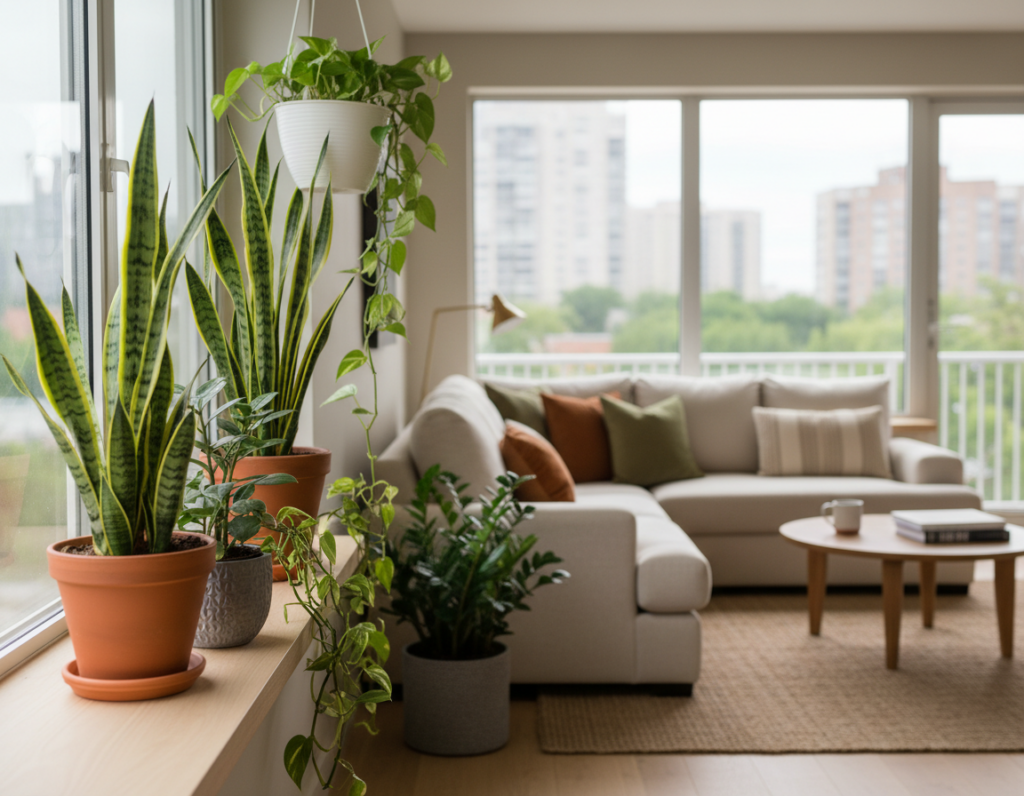
The golden pothos is an evergreen climber prized for glossy, variegated leaves and aerial roots. It makes an ideal hanging option or trained vertical feature that enlivens a bedroom or small room.
Care tip: Use well-draining soil and keep pots away from direct sunlight to avoid leaf scorch. Water when the top inch feels dry.
Aglaonema
Aglaonema, often called Chinese evergreen, is nearly indestructible. This houseplant thrives in low light and copes with irregular watering and lower humidity.
Why choose it: It tolerates neglect and brings dark green or variegated foliage without fuss.
Cast-Iron and Companion Foliage
The cast-iron plant (Aspidistra) earned its name in Victorian times by surviving poor air quality and dim rooms. It still stands out as a tough option today.
For contrast, consider a Boston fern to pair with leathery leaves. That fern needs steady water and higher humidity, so use pots that retain moisture but drain well.
Tip: Group similar varieties to boost local humidity and stabilize conditions.
For more suggestions on low-light houseplants, see houseplants for shady rooms.
Adding Height with Low-Light Trees and Palms
A vertical specimen brings drama to a dim nook without demanding bright sunlight. Tall trees and palms give scale to a living room or bedroom while fitting into low-light conditions.
Kentia Palms
Kentia palms (Howea) are prized for upright, pinnate foliage and graceful, overhanging leaves. They originate from an island east of Australia and respond well to indirect light and higher humidity.
Ponytail Palm and Care Basics
The ponytail palm (Beaucarnea recurvata) can reach about six feet indoors. It stores moisture in a bulbous base, so it tolerates occasional dry periods.
- Use high-quality soil and pots with good drainage to prevent root sitting.
- Mist Kentia foliage to mimic native humidity and boost air moisture.
- Place tall varieties in a roomy spot where their foliage can arch without crowding.
Adding trees and palms creates a luxe, relaxed feel while staying low-maintenance when match to local conditions.
Resilient Succulents and Cacti for Dim Environments
Succulents and cacti can bring bold shape and low-effort care to dim rooms. These species often store water and tolerate short periods of neglect. That makes them ideal where light is limited and attention is sporadic.
Snake plant (Sansevieria / zamioculcas zamiifolia). This hardy houseplant survives low-light conditions and needs very little water. It uses CAM photosynthesis, which means it releases oxygen at night. That makes it an excellent choice for a bedroom.
Care basics for snake plant
- Place in a stable spot with indirect light; avoid constant bright sun.
- Use pots with drainage and a gritty, well-draining soil mix.
- Water sparingly and let the soil dry between sessions to prevent rot.
Zebra cactus (Haworthia) essentials
The zebra cactus is compact and works well on a living room shelf or small table. It prefers a shallow pot and a fast-draining substrate. A recommended mix is seedling soil, pumice, lava rock, and quartz sand in a 3:2:1 ratio.
Tip: Maintain good air circulation and avoid overwatering. Even drought-adapted succulents need some humidity balance to stay healthy.
Quick benefits: architectural leaves, low watering needs, and tolerance of occasional neglect.
For more guidance on matching species to low-light conditions, consult this low-light houseplant guide.
Conclusion: Creating a Greener Home in Every Corner
A single resilient specimen can turn a neglected nook into a focal point that lifts the whole room.
Transforming a home into a greener space starts with matching plants to local light levels and care ability. Choosing a pothos or a snake plant helps ensure even the dimmest spots show fresh leaves and steady growth.
Monitor soil moisture, humidity, and air quality. Use well‑draining pots and water sparingly when needed to keep houseplants healthy in varying conditions and levels of light.
Start small: pick one dark corners home area, add a resilient plant, and watch a room become more inviting and balanced.