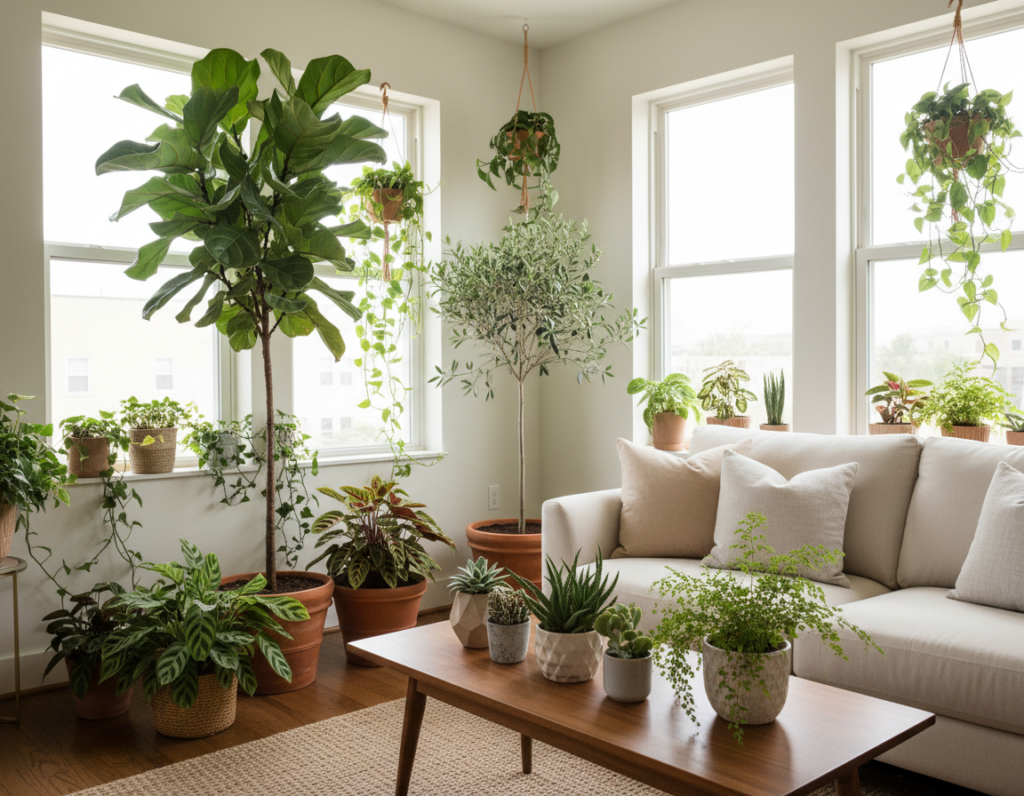
City dwellers often face tight square footage. In places like New York City, residents seek smart ways to bring nature indoors without losing floor space.
The article highlights practical solutions such as wall gardens and hanging systems that turn blank walls into living features. These approaches help homeowners create a vivid indoor garden while keeping rooms tidy and modern.
Design professionals recommend these space-saving options to clients who want healthier homes. Improved air quality and calming greenery are common benefits noted by interior designers.
With simple installations, apartment residents can enjoy a lush, ordered interior that supports a calmer lifestyle in a busy urban setting.
The Benefits of Vertical Greenery in Urban Homes
Bringing layered greenery onto a wall converts bland urban rooms into lively, breathable retreats. Residents gain both visible style and measurable health gains without losing floor space.
Health Benefits of Indoor Plants
Air quality improves when a vertical garden absorbs pollutants and raises oxygen levels. Research shows that green walls in offices improved skin health and immune response among workers.
Calming effects follow exposure to living walls, which is why many meditation studios and spas use them. Homeowners may notice less stress and better sleep after adding a living feature.
Aesthetic Appeal and Design Impact
Adam Baron of Folia Gardens in Brooklyn says these installations add color, texture, and volume to tight spaces. Todd Haiman of Todd Haiman Landscape Design notes they can create drama where a plain wall once stood.
- A professional interior designer can match greenery and layout to soften harsh architectural lines.
- Living gardens turn a condo wall into a design statement and a functional source of cleaner air.
- They offer a unique way to bring nature into small homes while saving space.
Essential Vertical Plant Ideas for Apartments
Using vertical frames and hanging pots, residents can craft compact, striking gardens that fit any condo. This approach applies basic design principles to make the most of limited space.
“Right plant, right place,” says Todd Haiman of Todd Haiman Landscape Design.
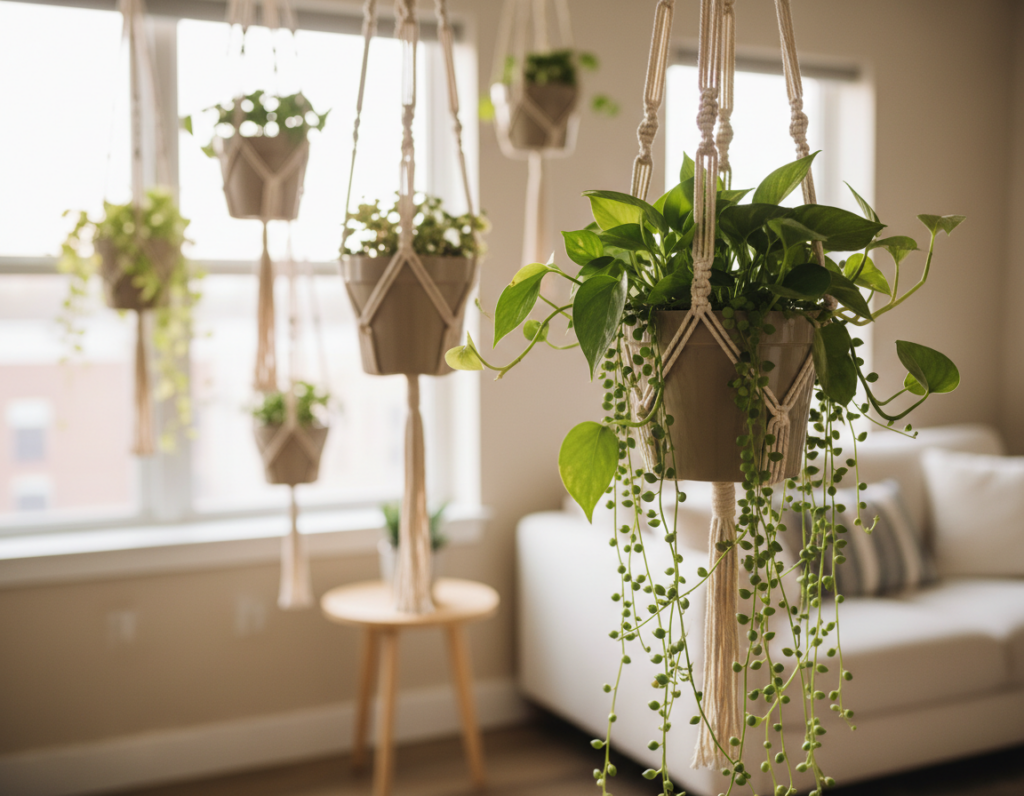
Choose species that match light and moisture at the intended wall. Common choices for hanging systems include English ivy, Boston fern, pothos, and philodendron. These selections thrive in suspended pots and in stacked arrangements.
Practical tips that help a small home succeed:
- Match each plant to the light on the chosen wall.
- Use pots with drainage or built-in irrigation to protect interiors.
- Place trailing varieties like pothos to add volume without crowding the floor.
- Try a balcony rack or wall-mounted frame when indoor humidity is low.
A well-planned vertical garden idea can transform a blank surface into a lush feature. With careful selection and simple maintenance, these gardens bring long-term reward to urban living.
Creating a Wallpaper Effect with Mixed Materials
Mixing green growth with stone or tile can turn an ordinary wall into a luxe, wallpaper-like surface.
Integrating greenery with hard surfaces such as tile, granite, or marble adds texture and depth to an interior. This approach makes a condo wall read as a crafted finish rather than a simple backdrop.
Designers often pair trailing plants with stacked stone or glossy tile to make a dramatic center wall. The contrast between soft foliage and solid materials creates a lasting effect that suits living rooms and balconies alike.
Durability matters: stone and tile protect the support surface and help manage moisture while keeping the arrangement visually rich.
- Use modular panels to mix stone and growth in repeatable patterns.
- Choose materials that complement the room’s color and light levels.
- Place the feature where it reads as a focal point to maximize space and impact.
“Mixing materials gives small homes a big design moment.”
Utilizing Moss and Succulents for Low Maintenance Walls
Low-maintenance moss and drought-tolerant succulents make attractive, practical wall features. They suit busy households and small condos that need living texture without daily care.
At the restaurant Dare, a commercial interior designer fixed faux greenery on a two-inch by two-inch black wire panel to mimic a lush surface while avoiding upkeep. That technique shows how durable materials can simplify installation in a commercial or home interior.
Succulent Wall Arrangements
Succulents work well in a wall planter because they need little water and come in many colors and shapes. Using a specialized modular planter lets a homeowner create a piece of living art that stays tidy with minimal maintenance.
Moss panels add more than look: they can cut reverberation and reduce sound bounce in a room. A preserved moss section blends sound control with low care and keeps humidity stable without irrigation.
- Use semi-rigid panels or wire grids for secure mounting.
- Mix preserved moss with small succulents to balance texture and watering needs.
- Choose a planter with drainage trays or removable pockets for easy upkeep.
Designing Room Dividers with Greenery
A living screen can split a studio into two functional zones while keeping light and air flowing. Monamour Natural Design in Madrid made a notable “Screen Divider” using preserved foliage to merge art and use.
Squares and circles filled with moss and succulents create a sculptural effect. These modules act as a vertical garden that defines space without heavy building.
A carefully placed greenery divider gives a condo privacy but keeps the room airy. Homeowners can define a lounge, workspace, or dining area with a living screen that reads as both decor and barrier.
- Easy installation: modular panels hang from a rail and stay removable.
- Low impact: preserved moss reduces maintenance while keeping the visual effect.
- Flexible design: mix shapes and boxes to adapt the interior layout.
“A screen that is both functional and artistic brings structure without closing a space.”
In short, using a vertical garden as a room divider is a smart way to add life, texture, and clear zoning to small homes.
Repurposing Bookshelves for Vertical Gardening
An old bookshelf can turn into a layered display that brings greenery into tight living rooms. Converting a shelf into a vertical garden is a simple, cost-effective way to reuse furniture and add a living feature to a condo.
Place pots on each shelf to build a tiered arrangement that uses height instead of floor space. Shelves create stable support and help keep watering tidy when trays or liners are added.
This approach lets a homeowner mix low-light and sun-loving varieties across levels. It also keeps the interior design tidy, since shelving frames act like furniture and like a garden wall.
DIY vertical shelving suits renters and owners. No professional installation is needed, and the shelf can be repositioned or removed easily if the room changes.
- Use varied pot sizes to add depth.
- Include trailing species on upper shelves to soften the edges.
- Add a few decorative planters to match the room design.
Installing Indoor Herb Gardens for Kitchen Utility
A compact herb wall brings fresh flavors and useful greenery directly into a busy kitchen. An indoor herb garden saves counter space and makes fresh herbs easy to grab while cooking. This approach combines tidy design with practical use.
Choosing Culinary Herbs
Pick herbs that match the light and humidity of the room. Basil, thyme, parsley, and chives thrive in bright windows. Rosemary and mint suit spots with steady, indirect light.
Kitchen Placement
Mount a wall garden near the stove or sink to keep herbs in reach. Hydroponic garden towers are another smart option during winter in a condo.
“Vertical growth improves airflow and reduces the need for pesticides,” says Nick Runkle, farm director at Stanly Ranch in Napa Valley.
- Saves space: a mounted herb garden frees counters.
- Utility: fresh herbs at hand elevate daily cooking.
- Low maintenance: choose hardy varieties or hydroponic systems.
An indoor herb setup is a practical design choice that adds color and life to the kitchen while supporting everyday culinary needs.
Maximizing Balcony Space with Vertical Structures
Stacking pots and screens turns a narrow balcony into a functional, private oasis. This approach saves floor area while creating a lush rooftop or balcony retreat.
Bamboo on a rooftop is an effective choice. It raises privacy walls and gives an architectural look. Residents should expect some leaf cleanup over time.
Outdoor balcony gardens are practical. They let people grow herbs, succulents, and useful aloe that soothes minor burns. A well-planned garden also becomes a visual backdrop for an outdoor living room.
- On a rooftop, bamboo extends privacy and frames the space.
- Use sturdy racks and pots that resist wind at high elevation.
- Stacked screens let condo owners grow herbs and succulents without losing walking room.
- A good layout gives both privacy and a living design focal point.
“A balcony that grows up, not out, becomes an extension of the home.”
Improving Air Quality and Reducing Sound Bounce
Moss-faced surfaces and clustered greenery improve indoor air and cut noise in busy urban interiors. According to NASA, house plants filter toxins by converting carbon dioxide into oxygen and removing harmful VOCs.
A wall garden becomes an active air cleaner and a soft acoustic surface. Using sheet moss or reindeer moss on a wall garden significantly reduces sound bounce and makes a room feel less hollow.
These solutions suit open-plan condos and small rooms where managing air and acoustics matters. A compact vertical garden can add life and steady benefits with minimal maintenance.
- Air quality: indoor gardens lower toxins and boost oxygen.
- Acoustics: moss panels absorb echoes and soften large spaces.
- Low upkeep: preserved moss needs little maintenance while keeping a natural look.
“By adding a living feature, an owner improves both air and sound in the interior.”
Selecting the Right Plants for Your Microclimate
Choosing species that match a room’s microclimate is the single best step toward a thriving wall garden. Small differences in light, soil, and humidity change which options will flourish.
Light Requirements
Assess each wall’s daily light. South-facing exposures suit sun-loving herbs and succulents. North-facing walls need shade-tolerant specimens like ferns or pothos.
Soil Conditions
Use well-draining mixes in pockets or modular planters. A trellis can support climbers while keeping roots in clean, aerated soil.
Humidity Control
Monitor moisture to avoid dry soil or rot. In low-humidity condos, group trays or add a humidifier. In damp spots, choose species that tolerate steady moisture.
Todd Haiman emphasizes that microclimate—light, wind, and moisture—dictates success. A trained interior designer can help assess conditions and recommend species suited to the room.
“Choose plants that suit the spot, not the other way around.”
- Match plants to light and humidity.
- Use a trellis for climbers and better soil structure.
- Monitor moisture to keep gardens sustainable and healthy.
Implementing Efficient Watering and Irrigation Systems
Automated watering takes the guesswork out of maintaining a lush vertical garden in a small home.
Timed irrigation systems deliver consistent moisture to every pocket of a living wall. DripWorks sells easy-to-install kits that let a DIY homeowner set up scheduled watering without complex plumbing.
Efficient watering prevents soil from drying out and helps plants establish strong roots. Todd Haiman notes that timed systems are critical to the success of a wall garden in any condo or room.
- Simple kits: DripWorks offers plug-and-play irrigation that suits modular gardens and shelves.
- Even coverage: a well-designed structure ensures every plant gets the moisture it needs.
- Peace of mind: timers keep a garden healthy while residents travel or work long hours.
- Dual benefit: automated watering supports both gardening goals and interior privacy by keeping green screens thriving.
“Consistent moisture is often the difference between a thriving feature and a failing one.”
Implementation tip: pair a drip kit with drainage trays and periodic checks. This keeps the design tidy and protects floors while your garden adds texture and life to the room.
Crafting DIY Planters from Repurposed Materials
Old picture frames, gutters, and wooden pallets can be reworked into stylish, low-cost planters that fit a small condo. Sam Niemann of Grown by Design in Chicago recommends these materials as a quick way to make custom garden features that attach to a wall.
Mounting gutters on a kitchen wall creates an efficient herb garden that frees counter space and keeps fresh herbs within reach. Thrift-store finds like metal trays, crates, or small shelving units make charming, personalized gardens when lined and sealed against moisture.
DIY vertical solutions save money and add character to a home. By stacking pots on a stake or fixing a pallet upright, a homeowner can build sturdy gardens that suit any room and match the decor.
- Repurpose frames as shallow pockets for small soil pockets or succulents.
- Attach gutters to a backsplash to create a compact herb garden near the stove.
- Use pallets or stakes to stack pots and create a secure, tall planter.
“Repurposing everyday materials gives small homes unique, functional gardens without a big budget.”
Enhancing Privacy with Architectural Greenery
Architectural greenery can turn an exposed facade into a private, living screen that shields homes from the street. This approach gives an outdoor room a soft barrier while adding texture and color to an exterior face.
A well-designed wall garden works as both a decorative element and a practical privacy solution. Using a trellis system lets vines or modular panels climb in controlled patterns. That creates an elegant cover without heavy construction.
Exterior wall gardens often serve as beautiful architectural facades that separate sidewalks from cafes and block sightlines from neighbors. They also soften fences and hide less attractive surfaces.
- Privacy: a living facade creates a natural screen between adjacent buildings.
- Trellis design: artistic shapes add a sophisticated exterior look and support growth.
- Softening walls: green coverings make fences and exterior walls feel lush and inviting.
- Private retreat: balconies can become secluded with layered panels and climbing systems.
- Long-term solution: a well-built wall garden provides a durable privacy option for urban gardens.
“Using architectural greenery is a subtle way to gain privacy while enhancing curb appeal.”
Incorporating Floating Shapes and Artistic Panels
Architectural moss panels and suspended shapes create artful statements that redefine interior surfaces. Monamour Natural Design, led by Denis Broduriès and Claudia Bonollo, built a floating moss wall that needs no indoor maintenance and reads like sculpture.
Designers often use shaped panels filled with succulents and preserved moss to add texture and depth. These modules hang on a wall and act as a curated focal point in any room.
Artistic panels are a modern route to bring living expression into a home without daily upkeep. High-quality panels keep the composition stable and long lasting.
- Monamour’s floating moss wall is maintenance-free and sculptural.
- Shaped planters with succulents create layered texture and visual rhythm.
- Premium artistic panels ensure a refined, durable feature that enhances interior design.
For guidance on installation and related styles, consult a practical guide like indoor vertical garden wall decor. Thoughtful selection and quality materials make these sculpted gardens a lasting design asset.
Managing Maintenance for Long-Term Success
A thoughtful maintenance plan prevents common failures in living wall structures. Regular checks keep irrigation working and roots healthy. Small routines protect the investment and extend the feature’s life.
Weekly inspections of drip lines, drainage trays, and foliage spot issues early. Look for blocked emitters, dry pockets, or yellowing leaves. Address pests quickly and trim growth to keep the structure tidy.
In tight spaces, choose low-care choices like moss panels and hardy species. These options cut watering needs and simplify ongoing care. A well-kept wall adds calm, privacy, and character to any room.
- Test irrigation monthly and reset timers seasonally.
- Replace worn media or modular pockets every 2–3 years.
- Rotate or replace specimens that struggle in the microclimate.
“Simple, scheduled care is the difference between a failing feature and a thriving vertical garden.”
Conclusion
Smart use of height lets anyone create a lush, space-saving display that brightens a tiny home. Start with a few easy vertical garden ideas and match species to light and moisture.
Simple systems—from DIY herb racks to moss panels—fit many budgets and design tastes. With efficient watering and periodic checks, a living feature will thrive in any room.
These installations boost air quality, soften sound, and reconnect city dwellers with nature. Begin small, learn what works, and expand the feature as confidence grows.