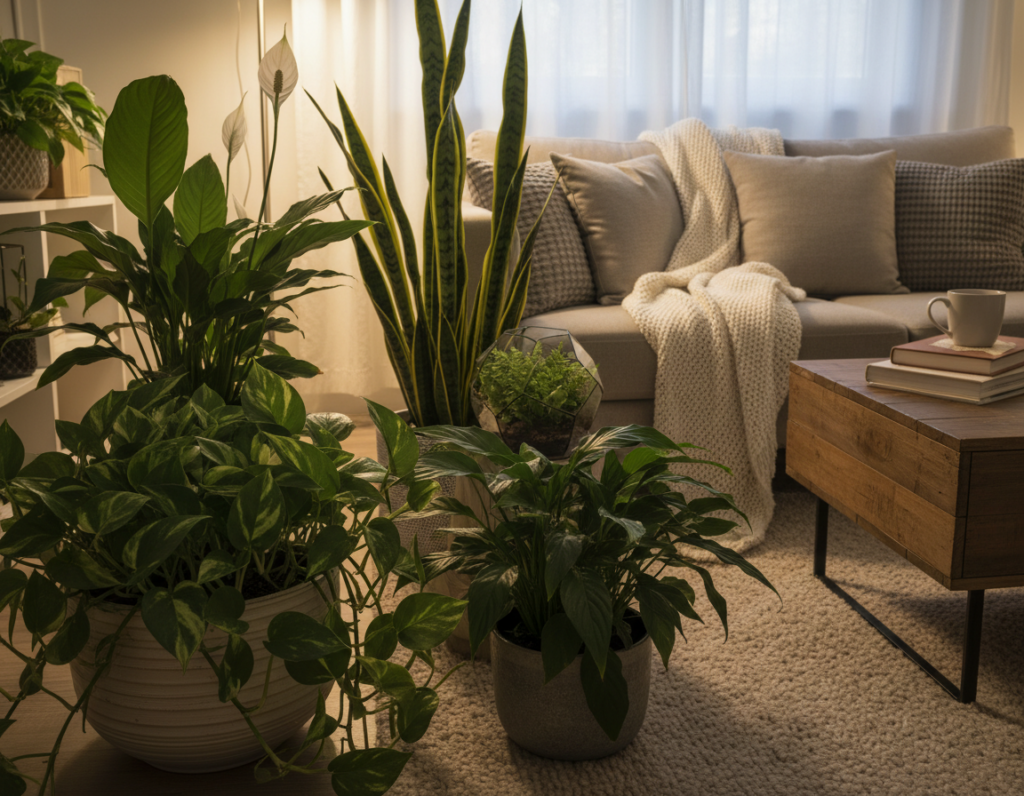
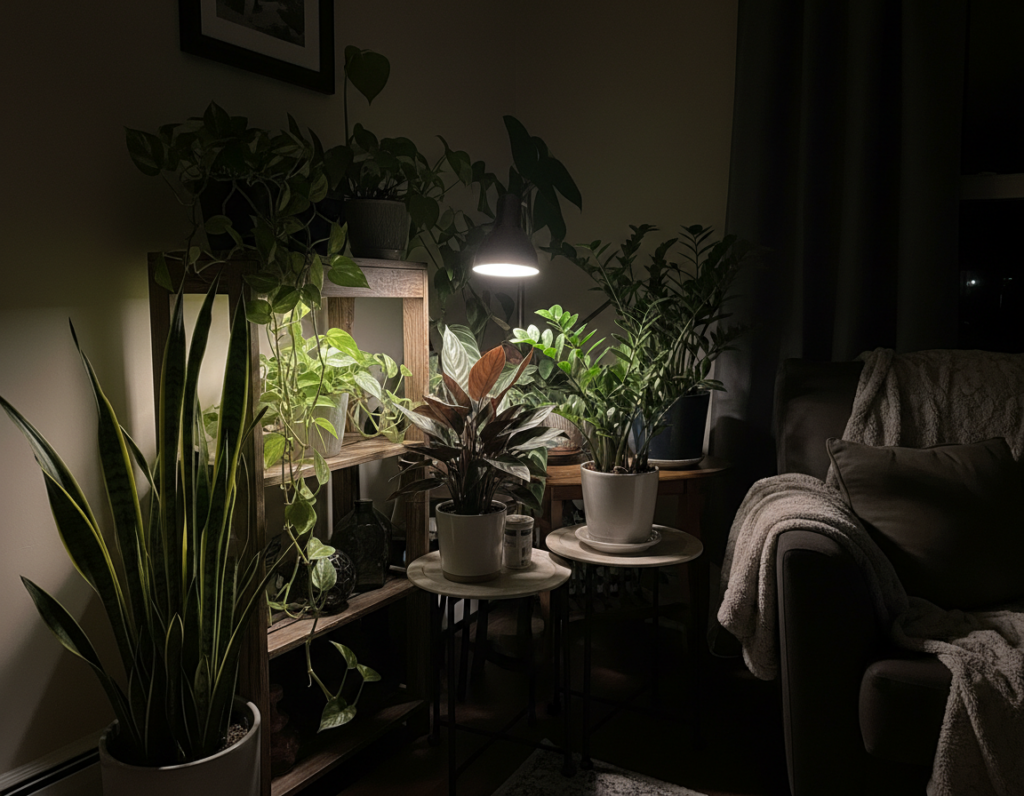
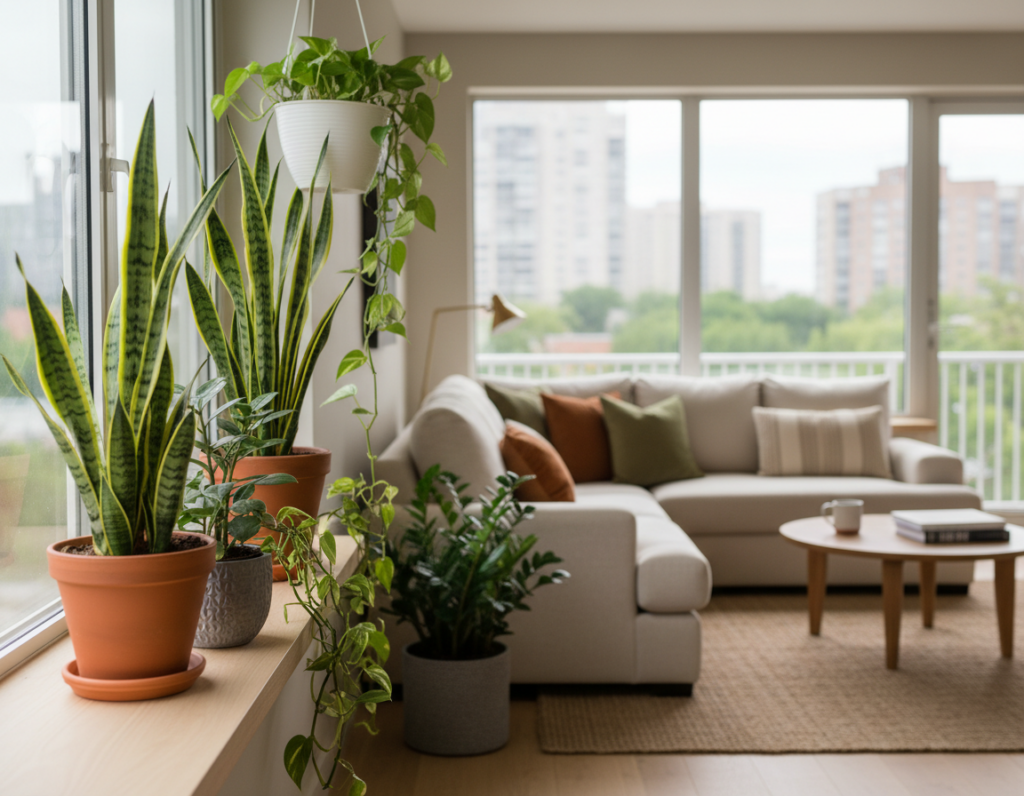
Small spaces can still feel alive. By using clever indoor hanging choices, a tiny room gains fresh air and a calming green touch. These additions purify the air and offer oxygen during darker months, which improves comfort at home.
Many varieties tolerate low light but show faster growth with medium to bright indirect light. A classic keeper is the pothos, prized for easy care and trailing vines. Beginners also like the Boston fern and the spider plant because they adapt well to small rooms.
Choosing the right piece means checking soil moisture, pot drainage, and weekly watering routines. With smart placement and basic care, even a dim corner becomes a lush focal point and a healthy indoor retreat.
Why Hanging Plants for Low Light Apartments Are Perfect for Small Spaces
Suspended green arrangements reclaim unused vertical areas, giving small rooms a fresh, living focal point.
Indoor hanging plants save valuable floor space and add depth as leaves trail down from decorative pots. They suit bathrooms, bedrooms, and living rooms where square footage is scarce.
Beyond looks, these displays improve indoor air quality by filtering toxins and releasing oxygen. A well-chosen houseplant like pothos thrives with minimal sunlight and modest water, so maintenance stays simple.
- Reviewed by Muddsir Munir on December 12, 2025: switching to indoor hanging plants refreshes the home atmosphere.
- They use ceiling space to turn dim corners into vertical focal points.
- Hanging options keep greenery out of reach of pets and children while improving air and mood.
Essential Care Tips for Thriving Indoor Greenery
Simple, steady routines help indoor hanging greenery thrive even in dim corners. A short checklist of water, light, and humidity keeps growth steady and roots healthy.
Watering Schedules
Understand moisture needs. Overwatering causes root rot, so check the top inch soil before you add water.
Most pothos varieties should be watered when the top 2 inches of soil are dry. Ferns prefer to stay moist and often need water when the top 25% of soil is dry.
Light Requirements
Bright light is ideal, but many rooms only offer shade. If a space is dim, reduce how often you water because evaporation slows and photosynthesis drops.
Monitor leaves and growth; pale or droopy foliage can signal that the plant needs more sunlight or a change in pot placement.
“Check soil depth and humidity each week; small adjustments prevent many common issues.”
- Adjust watering by room conditions and the pot size.
- Use misting or a small humidifier to support tropical varieties.
- Observe growth over time to refine schedules and avoid soggy soil.
Classic Trailing Vines for Dim Corners
Long, flowing vines add vertical interest without needing bright sun, perfect for shaded rooms.
Choose trail-form species to fill a corner with living texture and low fuss. These selections suit narrow shelves, higher ceilings, or a single sunny window that offers only indirect light.
Pothos Varieties
Pothos is ideal for beginners. Golden Pothos and similar types offer easy care and can send vines 6–10 feet long. They tolerate low light and usually show when the soil drys out, making watering simple.
Heartleaf Philodendron
The Heartleaf Philodendron brings heart-shaped green leaves and steady growth. This houseplant can trail many feet—sometimes up to 20 feet—so it quickly fills vertical space with elegant vines.
English Ivy
English Ivy is an evergreen climber that adapts to different light conditions. It prefers indirect light, will tolerate low rooms, and helps purify the air without demanding constant attention.
- Avoid direct sunlight; it can scorch delicate leaves.
- Rotate pots occasionally to encourage even growth.
- These trailing choices reward simple water and basic care with long-term visual impact.
Fern Varieties That Love Humidity and Shade
Ferns thrive in humid, shady corners and make a soft, tropical addition to dim rooms. They suit indoor hanging displays near showers or kitchen sinks where steam raises humidity.
The Boston Fern (Nephrolepis exaltata) has feathery fronds that can trail up to 3 feet long. It is a classic hanging plant that prefers steady moisture and cooler, indirect light.
Water and Humidity
These ferns should be watered when the top 25% of the soil is dry. That keeps the root zone moist without leaving the soil soggy.
Regular misting or placing the pot on a pebble tray helps maintain the humidity they need to prevent dry, brown tips.
Variety Notes and Placement
The Kimberly Queen fern has stiffer green leaves and tolerates more direct sunlight than the Boston type. It works well where a bit of morning sun reaches the foliage.
“Place ferns where indirect light reaches them and humidity stays consistent—bathrooms and kitchens often fit this need.”
- Boston Fern: soft fronds, trails up to 3 feet.
- Kimberly Queen: firmer leaves, more sun-tolerant.
- Care tip: water when top quarter of soil is dry and mist regularly.
Resilient Succulents for Low Light Environments
Resilient succulents bring sculptural texture to dim rooms without demanding bright sun.
String of Pearls is a showy option that trails over the pot edge and creates a soft, beaded cascade. It does best with some indirect light but can tolerate lower conditions better than many succulents.
Snake plant stands out for sheer toughness. It can tolerate low light and also handle direct sunlight, making it a versatile choice for varied rooms.
Burro’s Tail prefers indirect light and partial shade. Its thick leaves store moisture, so the owner should only water when the soil is dry.
“Because these succulents store water in their leaves, less frequent watering helps prevent root rot.”
- Trail-friendly forms like String of Pearls add dramatic drape.
- Snake plant offers unmatched resilience across light conditions.
- Burro’s Tail brings soft, cascading foliage suited to indirect sun.
Avoid harsh direct sunlight that can scorch fleshy leaves. With simple care and sparse watering, these options add low-maintenance greenery to any home.
Unique Foliage Plants to Brighten Your Home
A few select leafy species lift a room’s mood while thriving in gentler illumination. They add pattern, texture, and a pop of green without requiring bright sun.
Spider Plant Benefits
The spider plant is a popular houseplant that offers easy care and rapid growth. It produces spiderettes that can be rooted to create new green additions.
It does well in an indoor hanging basket and tolerates low light, making it a flexible choice for compact rooms. Water when the top inch soil feels dry to the touch.
Nerve Plant Humidity Needs
Nerve plants show striking patterned green leaves that brighten a small room. They thrive in high humidity, so a bathroom or kitchen shelf works well.
These varieties need consistent moisture; water when the top half of the soil dries. Keep them in indirect light and mist occasionally to keep leaves vivid.
“By matching each plant’s basic needs—soil, water, and humidity—anyone can grow striking foliage with minimal effort.”
- Versatile choices: spider plant suits hanging displays and shelves.
- Moisture tip: check the top inch soil or top half before watering.
- Placement: indirect light helps preserve delicate leaves and color.
Strategic Placement Ideas for Maximum Impact
Positioning makes as much difference as species selection when space and light are limited. Place each plant where its needs match the room’s conditions to cut down on extra care.
Bathrooms benefit humid-loving varieties since showers raise humidity and support steady growth. Kitchens work well near windows that provide indirect light or above countertops to save space and keep leaves away from spills.
Living rooms can host a statement specimen like a Monstera above seating to create a focal point and add vertical drama. Hallways and entries gain warmth from trailing options that soften bare walls and welcome guests.
“Always consider growth potential; a fast-growing pothos may need a larger pot or a new spot over time.”
- Match each spot to the plant’s soil and water needs.
- Rotate pots periodically to promote even growth toward available sunlight.
- Check corners and shelves: small moves often yield big visual impact.
Choosing the Right Pots and Hanging Methods
Choosing the right pots and mounts keeps a display safe and easy to tend. This short guide helps select durable containers and secure hardware that match each plant’s weight and care needs.
Selecting Secure Hardware
Use rated anchors. Ceramic and terracotta filled with wet soil become heavy and must hang from sturdy ceiling anchors rated above the total load.
Self-watering planters reduce how often one climbs to water hard-to-reach spots and help steady weekly routines. Always confirm hooks are rated for pot, moist soil, and root mass combined.
- Choose pots with drainage holes or use a removable nursery pot inside a decorative cache to protect the home surface.
- Macramé hangers add texture while cradling various pot sizes, aiding access during watering and pruning.
- Select hangers that allow easy removal so watering and inspection can happen without strain or spills.
“Match pot weight and anchor strength to create a secure, attractive display that supports steady growth.”
Common Pitfalls to Avoid When Growing Indoor Plants
Even simple oversights can undo weeks of steady growth in a small indoor display. This section highlights frequent errors and how to correct them quickly.
Overwatering is the top culprit. In indoor hanging setups under low light, evaporation slows and the soil stays moist longer. Wait until the soil dry indicator matches the species’ needs before adding water.
Dry winter air also stresses tropical varieties. Many green specimens require extra humidity; use pebble trays or a humidifier so plants need are met and browning stops.
- Avoid heavy pots without rated anchors; hardware failure risks damage.
- Keep toxic types like Philodendron up and away from pets and kids.
- Rotate containers for even growth and check regularly for gnats or fungus.
“Simple checks—anchor strength, soil moisture, and humidity—prevent most failures.”
For a deeper beginner primer on care, see this low light guide. Following these tips preserves the easy care benefits and improves overall plant care.
Conclusion
With the right selections, even the darkest room can gain fresh color and cleaner air.
Choose resilient options such as a spider plant or a boston fern to begin. These choices prove forgiving and add texture with soft fronds and trailing vines.
Consistent care matters: check soil, give proper water, and match each spot to the species’ needs. A single hardy houseplant builds confidence before expanding a collection.
Varied options let anyone shape the desired look. With small steps and the right choice, a compact space in the home becomes a calm, green retreat.