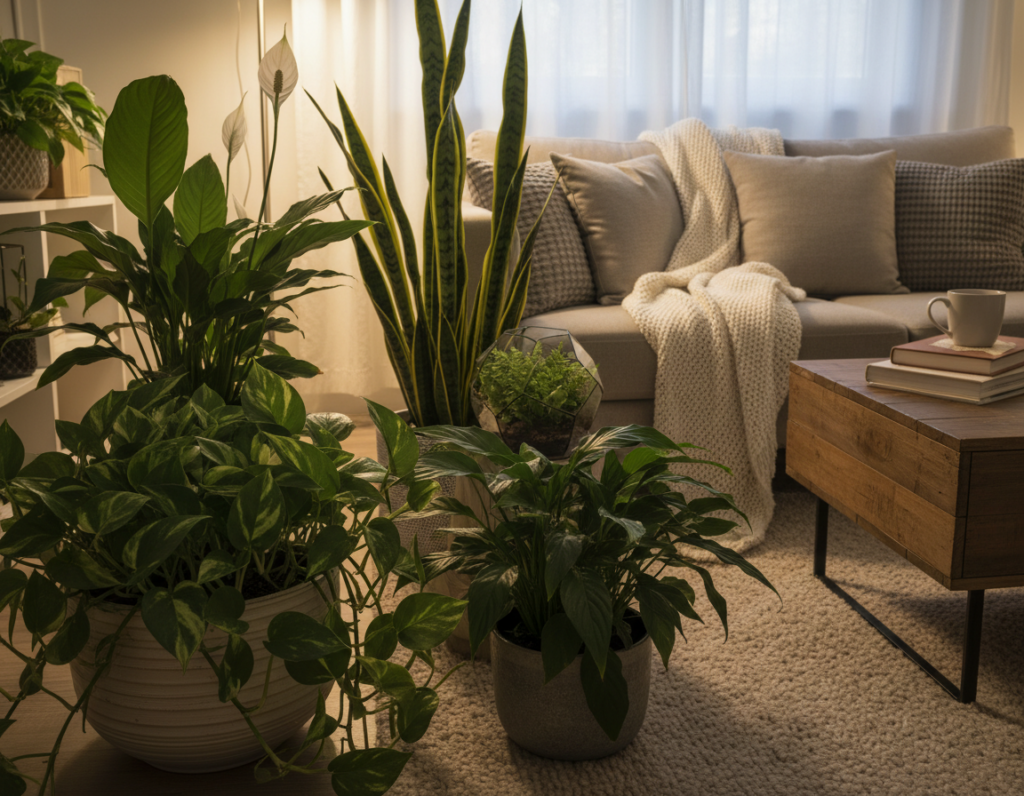
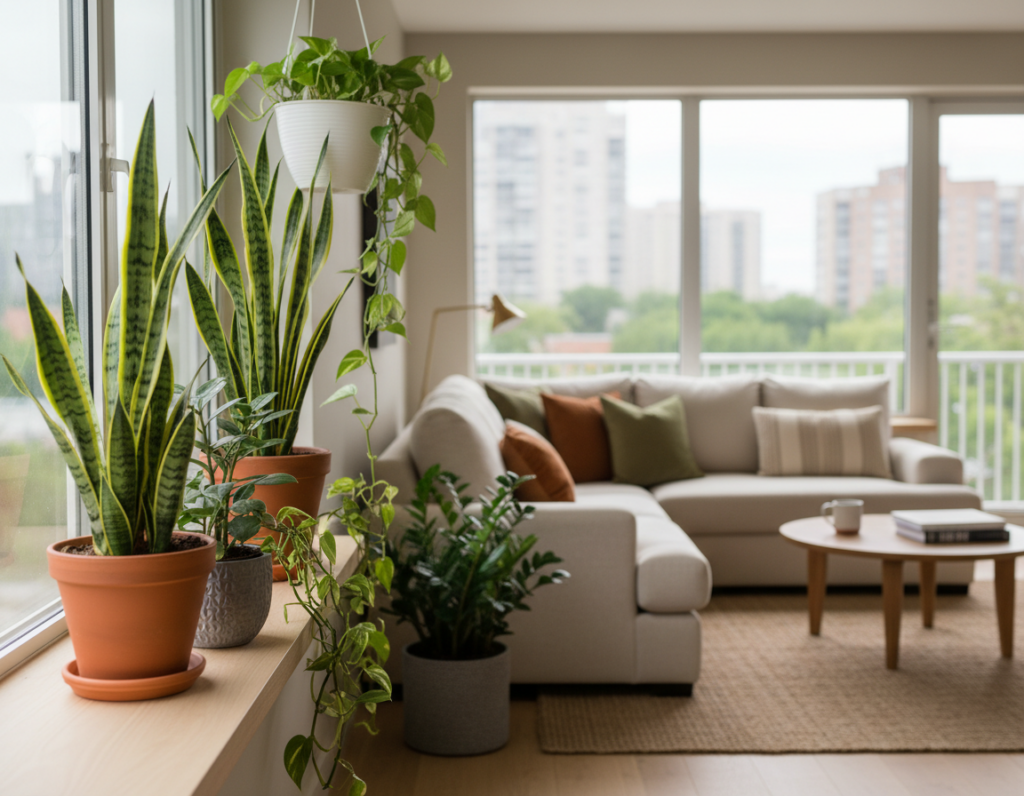
Urban dwellers often assume a shaded unit cannot host greenery. This guide shows how a modest home can become a calm, green refuge despite tall structures outside.
Many common houseplant species evolved under forest canopies. They tolerate low light and steady indoor conditions, so they suit a dim living space. Choosing the right specimen saves time and care.
With a smart selection, residents can build a resilient collection that brightens rooms and improves air quality. The following sections explain which options thrive and how to keep them healthy in low natural light.
Understanding Light Conditions in Urban Apartments
Detecting how much natural light reaches each room is the first step toward a successful indoor collection. A simple check helps match the right specimen to the right spot and avoids needless stress later.
Defining Low Light
Low light means the space does not provide enough natural illumination to read comfortably without a lamp. South-facing rooms in the Southern Hemisphere or units shaded by tall trees and buildings often fall into this category.
Most houseplants do better in soft, indirect light than in harsh direct sun, which can scorch leaves.
Assessing Your Space
Observe how light moves through rooms during the day. Check near each window and note where indirect light is consistent.
- Large buildings or trees can reduce natural light reaching windows.
- If one cannot read without a lamp, that room is likely low light.
- Match plant types to the light conditions you record across spaces.
- Rotate a small specimen into different areas to test tolerance before expanding your collection.
Top Plants for Apartments with Blocked Sunlight
Even dim rooms can support a rewarding indoor collection when species are chosen that evolved under canopy shade. Low light does not mean no light; most specimens still need some energy to stay healthy.
Tropical varieties are often best. They evolved beneath trees and thrive in indirect light rather than direct sun. Select types that naturally grow on the forest floor—these tolerate filtered rays and steady indoor conditions.
When adding a new plant to the home, pick well-draining soil to avoid excess moisture issues common in shaded spaces. Keep an eye on leaves for pale or soft tips; those signs suggest relocation closer to a window or supplemental light.
- Choose species adapted to low light and indirect light.
- Place specimens near windows that receive filtered rays from nearby trees.
- Use porous, fast-draining soil to reduce root problems.
With the right choices, even a compact space can host resilient houseplants that brighten rooms and require modest care.
The Resilience of the Snake Plant
The snake plant stands out as an ideal choice in dim city units due to its tough nature and sculptural leaves. It tolerates low light and steady indoor conditions while adding a bold, architectural touch to any collection.
Air Purifying Benefits
Dracaena trifasciata excels at converting CO2 into oxygen. It continues that process at night, which helps improve indoor air quality over time.
The species is nearly indestructible. As a succulent, it stores water in each leaf and in the soil. This means minimal watering and less frequent attention.
- Many varieties exist, so buyers can pick shapes and tones that fit a window or corner.
- Pairing a snake plant with a trailing philodendron offers visual contrast and trusted low-light performance.
- Allow soil to dry fully between waterings to prevent root rot and encourage steady growth.
In short, the snake plant suits busy residents who want an elegant, low-maintenance houseplant that also helps cleanse indoor air.
Why ZZ Plants Thrive in Dark Corners
Zamioculcas zamiifolia thrives where other houseplants falter, making it a smart urban choice. Its glossy, dark green leaflets add instant polish to a dim room and suit small city homes.
The species is native to Eastern Africa and stores water in underground rhizomes. This allows the plant to endure long dry spells and survive in low light conditions that stress more sensitive specimens.
ZZ plants handle a range of indoor light levels, though they prefer indirect light. They tolerate neglect and remain attractive even when left alone for weeks.
- Glossy dark green foliage brightens shadowed areas.
- Rhizomes store moisture, so it survives drought better than many plants.
- Place near a window or in a corner to boost a minimalist indoor collection.
- Use well-draining soil to avoid root rot; this species dislikes sitting in water.
Overall, the ZZ plant suits busy urban dwellers who want a low-maintenance, resilient specimen. It performs where other species struggle and elevates small spaces with little fuss.
Adding Tropical Flair with Chinese Evergreens
Aglaonema varieties brighten interiors without demanding bright windows. The Chinese evergreen offers bold variegation and an easygoing attitude that suits many urban homes.
Varieties such as ‘Maria’ and ‘Pattaya Beauty’ feature silver and green patterns that lift a dull corner. They act as a quick splash of color and texture in a small collection.
These cultivars are prized in Feng Shui as symbols of luck. They also reward owners who prefer low-effort upkeep.
- Easy care: occasional watering and indirect light keep leaves vibrant.
- Long-term appeal: over time the plant fills out and looks lush.
- Versatile placement: a window ledge or shelf both work well.
“The Chinese evergreen is a reliable choice for those who want tropical style without constant fuss.”
Trailing Vines for Shelves and Hanging Baskets
Trailing vines bring life to high shelves and hanging baskets, even in dim urban rooms. They add texture and motion while suiting low light conditions and compact layouts.
Pothos Varieties
Pothos, often called Devil’s Ivy, thrives in indirect light and tolerates short dry spells. It propagates easily from cuttings placed in water, making expansion simple and affordable.
Heartleaf Philodendron
The heartleaf philodendron creates a soft cascade of glossy leaves. It copes well in shade and prefers light, airy soil so water does not pool around roots.
English Ivy
English ivy adapts to hanging baskets or trained climbs. It offers a classic drape and works near a window that provides steady, bright indirect light.
- Tip: Use loose, well-draining soil and check moisture weekly.
- Tip: The Swiss Cheese variety is an option if a bolder tropical look is wanted, though it needs more light.
“Trailing vines transform shelves into living displays with little fuss.”
Elegant Peace Lilies for Low Light Spaces
A single peace lily can lift a shaded corner into an elegant focal point. Its deep green leaves and white spathes create a calm mood without demanding bright light.
Spathiphyllum suits small living rooms and hallways near a window that offers indirect rays. Popular varieties such as ‘Sensation’ and ‘Chopin’ give choices for large or compact space needs.
- Elegant and hardy: thrives in low light spaces and adds polish to dim corners.
- Visual impact: glossy leaves and white blooms uplift a room that lacks direct sun.
- Varieties: pick large-leaf or bushy forms to match the available space.
- Care tip: water when the soil is dry; dramatic drooping signals thirst.
“A peace lily brings both style and air-cleansing benefits, though it may bloom less often in very dim rooms.”
Adding a peace lily to an indoor plants collection is an easy way to bring life and quiet elegance into a darker sanctuary.
The Durability of the Cast Iron Plant
Victorians prized Aspidistra because it tolerated windowless halls and long, dark winters. That reputation endures today.
The cast iron plant (Aspidistra elatior) shows large, deep, paddle-like dark green leaves that bring a bold, tropical look to any indoor collection. It is legendary for its durability and needs very little attention.
This houseplant survives drought and neglect better than most. Unlike the snake, which stands upright in sword-like rows, the cast iron plant spreads wider and looks lush in low-lit corridors.
- Nearly impossible to kill: minimal care keeps it healthy.
- Bold foliage: large dark green leaves create instant impact.
- Flexible placement: near a window or in a darker hallway it will still grow steadily and needs little water.
- Low fuss: tougher than a swiss cheese variety and suited to busy routines.
“The cast iron plant is a staple for urban dwellers who want a reliable, long-lasting specimen.”
Managing Humidity and Watering in Shaded Rooms
Reduced daylight changes how often one should water indoor green life. Lower light slows evaporation, so the potting medium stays moist longer than in bright spots.
Good airflow prevents mold and keeps roots healthy. Crack a window or run a small fan on occasion to move air around. That simple step helps surfaces and walls stay dry.
Preventing Root Rot
Check soil moisture before every watering. Most specimens need a chance to dry between sessions; overwatering invites root decay.
- In shaded rooms, plants grow more slowly and need less water than in sunny locations.
- Adjust the schedule by testing the top inch of soil rather than following a strict timetable.
- During summer, monitor soil more often so leaves do not wilt from unexpected drying.
- Ensure pots have drainage and use fast-draining soil to reduce standing moisture.
“Good airflow and measured watering keep a low-light collection healthy.”
Essential Tips for Rotating and Pruning
Simple rotation and targeted pruning often restore shape and encourage a fuller habit. In low light conditions, turning containers weekly helps stems grow evenly and stops them from leaning toward a single window.
When trimming, cut leggy stems just above a healthy leaf node. This encourages side shoots and a denser, more compact silhouette.
Prune with restraint: avoid removing more than one-third of the foliage at once to reduce stress. Use sharp shears and make clean cuts.
- Rotate each specimen each time they water so all sides receive equal light.
- Wipe leaves gently to remove dust; clean foliage absorbs more light and stays healthier.
- If a houseplant looks weak, move it briefly to a brighter window to regain color and vigor.
Regular, small maintenance sessions save time later. Consistent care keeps an indoor collection balanced, vigorous, and attractive year-round.
“Rotate and prune often; small actions yield steady improvement.”
Using Artificial Light to Boost Growth
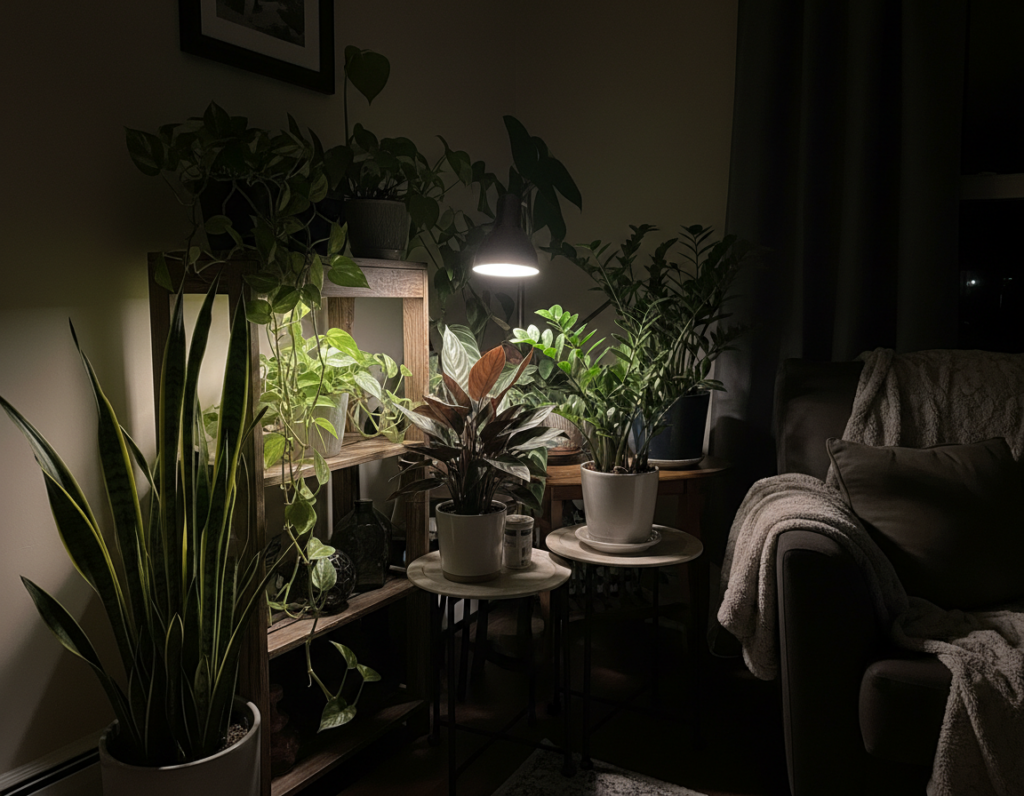
A modest LED setup often provides enough energy to support steady indoor growth. In darker urban units, a small investment in the right bulbs can make a major difference. LED bulbs deliver the light wavelengths a plant needs while using little electricity.
Choosing LED Bulbs
Pick full-spectrum LEDs that mimic natural light. They balance blue and red wavelengths to support both leaf development and flowering.
Look at lumen output and the Kelvin rating. A 5,000–6,500K bulb works well for general growth, while higher PAR values indicate stronger usable light.
Placement Strategies
Place fixtures within a few feet of foliage so the light reaches leaves effectively. Closer placement boosts growth, especially during winter.
Combine artificial light with indirect natural light from a window when possible. Many houseplants benefit from both sources to keep color and vigor.
- Tip: Aim lights toward the canopy, not the potting mix.
- Tip: Use timers to provide 10–14 hours of daily illumination, then give a nightly dark period.
- Tip: Reduce supplemental light in summer when natural light increases.
In short, LED grow lights are an efficient tool to help a low light collection thrive. For a deeper guide to artificial light options, see artificial light options.
Conclusion
, Consistent, simple care turns quiet corners into lasting, attractive displays.
Choose hardy options such as a snake plant, a trailing philodendron, or a spider plant to begin. Each specimen adds texture and steady interest to a small home.
Keep a regular watering check, rotate pots, and prune sparingly to boost vigor in low light and shade. A small, varied collection rewards patience and makes daily life calmer.
Start small, try a swiss cheese variety if a bolder look appeals, and enjoy building a resilient indoor garden that fits any urban life.