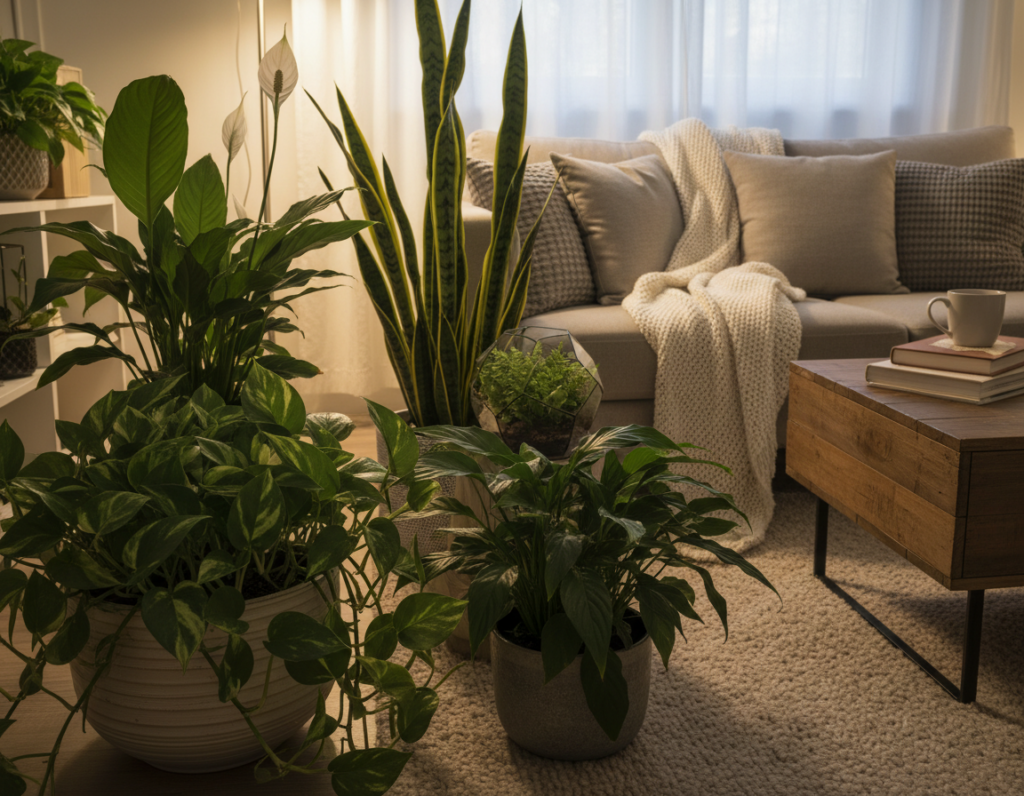
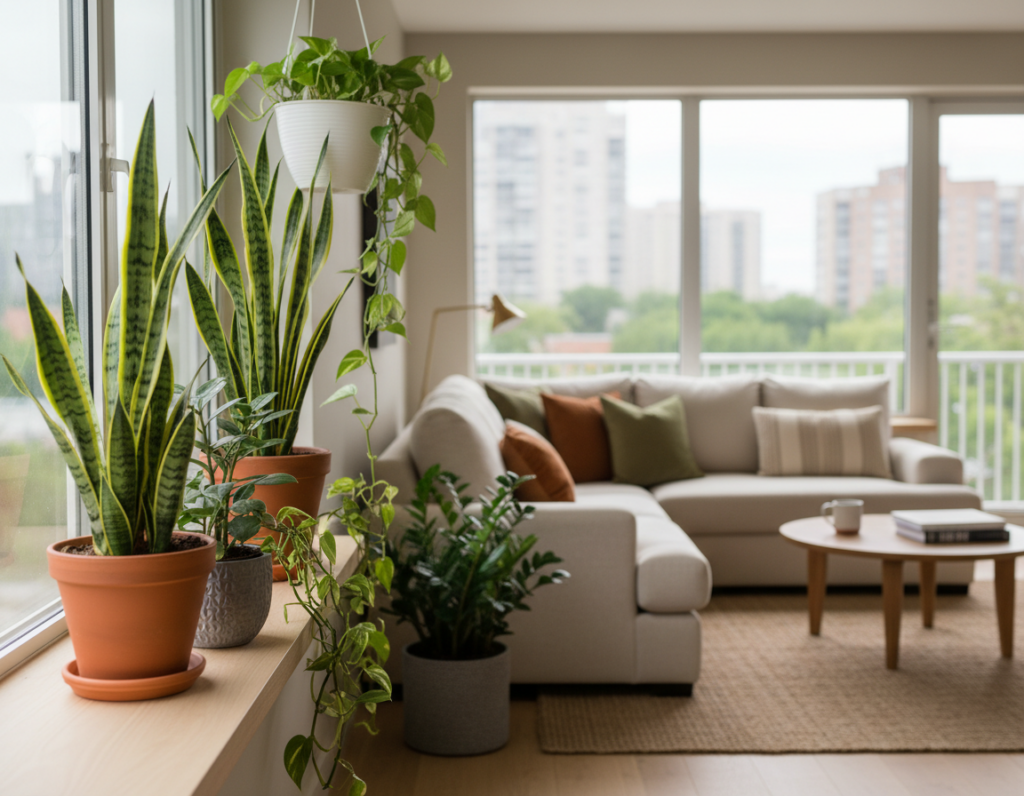
Many green companions suffer in dark corners of a home. North-facing rooms, small-window bathrooms, and deep corners often leave a plant struggling to gather energy.
Experts at local greenhouses say the idea that all low-care houseplants thrive in pitch-dark spaces is a myth. A species that merely tolerates low conditions will often drop leaves or stop growing.
Low light does not mean no light. Even shade-tolerant specimens need some sun or supplemental sources to keep roots and leaves healthy.
For readers who want practical options and care tips, a helpful list of proven low-light options is available at low-light options. Proper watering, air, and occasional repositioning can make the difference between a sad houseplant and one that thrives in a shaded room.
Understanding the Reality of Indoor Plants Without Natural Light
Many green companions labeled low light actually need more brightness than a dark room provides.
Low light is a technical range: roughly 50 to 500 foot-candles. That matches typical office fluorescent conditions.
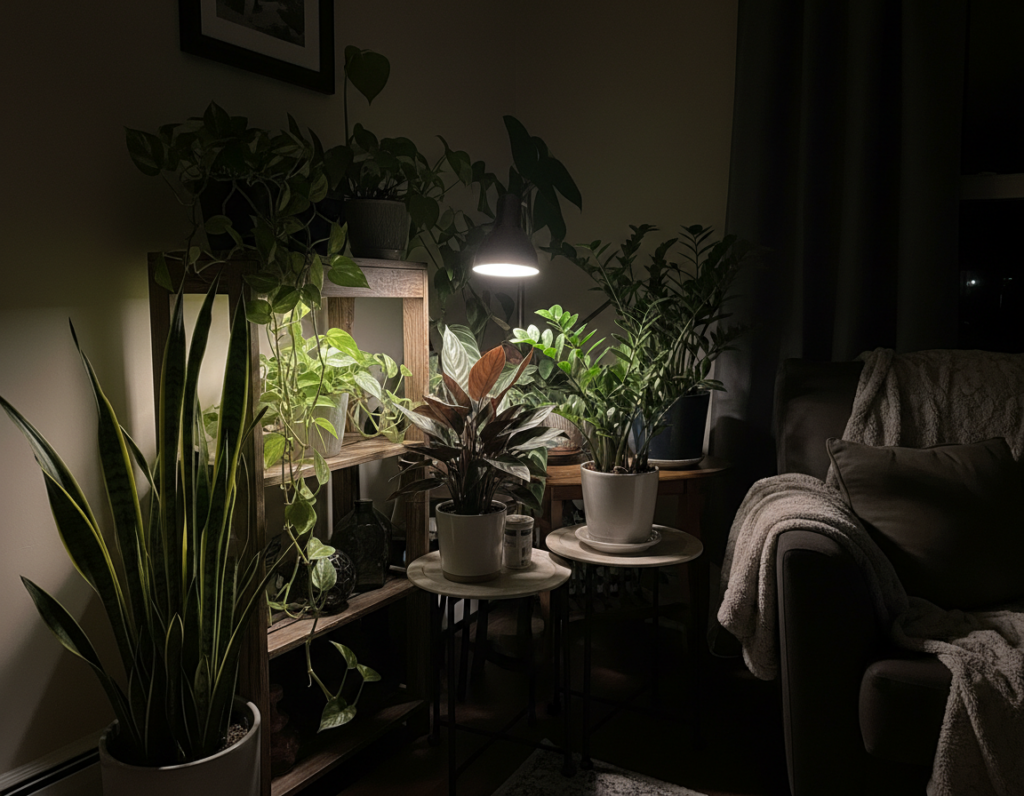
Too often, a species marketed for dim corners still expects some access to a window or a few hours of filtered sun. If a room is so dark that a lamp stays on all day, experts advise adding a grow lamp to support photosynthesis.
“If a space needs a lamp on all day, your group will likely require supplemental lighting.”
Humidity and air flow also affect how well a plant adapts. Low humidity can slow recovery even when light needs are met. Good watering and steady air help keep a collection healthy in marginal conditions.
Use this checklist to evaluate a room:
- Measure light or note if lamps run all day.
- Place tolerant species near a windowed corner that gets indirect rays.
- Consider a small grow fixture for long-term success.
The Science Behind Shade-Loving Plant Adaptations
Shade-adapted species evolved clever tricks to harvest scarce photons under dense canopies. These adaptations let some plants keep green leaves and even flower in dim conditions that would stunt others.
Chlorophyll Concentration
By packing more chlorophyll per square millimeter, these plants convert low amounts of light into usable energy. This higher pigment density makes each leaf act like an efficient solar panel.
Forest Floor Evolution
Many began life on tropical forest floors. There, broad leaves and slow growth rates were favored.
“Some species use CAM metabolism to shift part of their photosynthetic work to night, improving efficiency over time.”
- Broader leaves capture more photons from filtered sources.
- Higher chlorophyll helps process scarce light.
- CAM and other strategies conserve water while supporting photosynthesis.
- Understanding these traits helps choose the right plant and care—especially water and placement—so it can thrive.
Distinguishing Between Plant Tolerance and True Thriving
Tolerating dim rooms is not the same as thriving there; appearance and health tell the difference.
When a specimen only tolerates low light, it often grows slowly and becomes leggy. Variegation can fade and stems may stretch toward any available bright spot.
True thriving means the plant keeps its full shape, healthy foliage, and even produces flowers without constant fussing. That state shows the species really suits the room’s conditions.
Overwatering is a common error when owners try to force recovery. In lower light, a plant uses less water, so it’s vital to let the soil dry between waterings.
Watch growth rates and leaf color over time to judge success. If the plant remains compact and colorful, it is thriving; if it weakens, reassess placement, soil, or supplemental light.
“Let the soil dry a bit before you reach for the watering can; moisture is often the hidden problem.”
- Signs of tolerance: leggy stems, pale variegation, slow growth.
- Signs of thriving: full shape, steady foliage, occasional flowers.
- Care tip: check soil moisture and avoid excess water.
Top Selections for Low Light Environments
Choosing proven performers makes it easy to fill shaded corners with life. These options work well in spaces that get little direct sun yet still need easy-care greenery.
ZZ plant: Nearly indestructible, the ZZ tolerates extended dry spells and low brightness. It rewards neglect with steady, glossy growth.
Snake plant: A sculptural survivor that handles erratic watering and temperature shifts. It brings strong form and reliability to a room.
Cast Iron plant: A classic for good reason. This houseplant has been used in homes for decades because of its extreme durability.
Philodendron: Versatile and trailing, philodendrons adapt to varied conditions and look great on shelves or in hanging baskets.
Peace lily: For those who want flowers in dim spaces, peace lily varieties offer blooms and glossy leaves with modest care.
- These selections need less frequent water and fewer moves to a bright window.
- They help transform dark corners into curated living displays.
- Pick one that matches space, style, and how often someone cares for their houseplant.
“Select resilient species and you get beauty with low maintenance.”
Why Snake Plants Are the Ultimate Survivors
Few species combine architectural form and stubborn resilience better than the snake plant. It tolerates neglect and erratic care while still adding clean lines to a room.
Practical resilience: Snake plants survive in dim places and handle temperature swings. They need very little attention and reward owners with steady, upright growth.
Varieties for Modern Interiors
Choose a look: Laurentii offers yellow edges for contrast. Zeylanica shows bold mottling. Black Coral brings a deep, moody tone.
- Durable: These plants resist pests and tolerate dry spells.
- Functional: They help clean the air and anchor dark corners.
- Care tip: Let soil dry completely—overwatering is the top risk.
- Beginner-friendly: Ideal for those new to house care who want a statement piece.
“Allow the potting mix to dry and water sparingly; that habit saves more snake specimens than anything else.”
The Aesthetic Appeal of ZZ Plants in Dim Spaces
ZZ plants bring a sculptural calm to dim rooms while keeping care very simple. Their glossy, dark green leaves reflect any available light, helping a shaded room feel brighter and more deliberate.
Their thick, potato-like stems store water, so the plant tolerates missed waterings and long gaps between attention. Designers favor ZZ plants to anchor corners, balance built-ins, or add a modern silhouette near a fireplace.
- Reflective foliage: dark green leaves bounce light and add polish.
- Resilient form: stems hold water, reducing frequent care needs.
- Versatile styling: pairs well with a peace lily to create depth and contrast.
- Low maintenance: keeps lush appearance in low light conditions.
Whether placed in a basement office or a living room corner, the ZZ plant makes a strong visual statement while tolerating the kinds of conditions many other plants find stressful.
Incorporating Cast Iron Plants for Traditional Elegance
A Cast Iron specimen brings durable grace that suits both antique interiors and modern minimalism. The name comes from its ability to survive the dim, gas-lit rooms of the Victorian era.
The plant shows broad, arching leaves that add a soft, formal silhouette. Their dark green tone and green leaves contrast beautifully with wood and layered textiles.
They are unflappable. Cast Iron varieties handle lower humidity and modest light while asking for very little water. That makes them a smart alternative to more delicate species like the peace lily.
“Cast Iron plants pair timeless form with rugged survival skills.”
- Timeless elegance: evoke Victorian charm and steady presence.
- Hardy foliage: broad, arching leaves stay lush in dim corners.
- Low maintenance: minimal pruning, sparse watering, and low humidity tolerance.
- Design pairing: complements snake plants and antique furniture for layered style.
Trailing Varieties for Shelves and Built-ins
Trailing specimens bring softness to shelves and make built-ins feel intentional rather than empty. These varieties add movement and a layered look that works well in tight or dim corners.
Heartleaf Philodendron
Heartleaf Philodendron is ideal for high shelves. It sends long vines that spill over edges and soften hard lines.
It tolerates low light and adapts across rooms. Owners should let soil dry slightly between waterings to avoid root rot.
Chinese Evergreen
Chinese Evergreen offers striking variegation, from silver accents to pink splashes. It makes a bold statement on a ledge or in a hanging pot.
This species adapts to low to medium light and is forgiving if someone forgets a watering now and then. Let soil dry a bit before adding more water to keep roots healthy.
“Place trailing varieties near a window or a bright shelf to maximize color and growth.”
- Softening shelves: trailing varieties smooth edges and add depth.
- Color pop: Chinese Evergreen’s variegated leaves lift darker corners.
- Care tip: let soil dry between waterings to prevent overwatering.
Essential Care Practices for Dimly Lit Spaces
Simple checks and steady care prevent most failures when a room has limited brightness. Good routines protect roots and foliage and reduce stress on a specimen living in low light.
Watering Habits
Overwatering is the most common cause of death for plants in dim areas because they use far less water than those in bright rooms. Check the soil with a finger before adding water; if the top inch is dry, it’s usually safe to water. Let soil dry between sessions to avoid root rot.
Soil Quality
Use high-quality, well-draining soil that prevents water from pooling around roots. Good mix and proper drainage reduce rot risk for a peace lily or cast iron specimen. Repotting into fresh mix every 12–24 months keeps soil lively and prevents compaction.
Leaf Maintenance
Wipe dust from leaves so each surface can absorb as much filtered light as possible. Rotate the pot periodically if growth leans toward a single source. Regular cleaning and gentle pruning keep foliage healthy and improve overall vigor.
“Establish a simple routine: check soil, water sparingly, clean leaves, and rotate for even growth.”
- Key habit: check soil before watering to prevent overwatering.
- Soil tip: choose well-draining mix to protect roots.
- Leaf tip: clean leaves and rotate to encourage balanced form.
Strategic Use of Artificial Lighting Solutions
Modern full‑spectrum LED systems provide the right wavelengths (about 400–700 nm) so a plant can photosynthesize and stay compact in a dark room.
They deliver 2,000–10,000 lux, a practical range for many varieties. This makes it possible to keep favorite plants in windowless corners or offices.
Smart hydroponic units and integrated fixtures offer designer-friendly options that fit living spaces. Many models pair clean aesthetics with effective spectrum control.
When adding artificial light, monitor soil moisture closely. Extra energy often speeds growth, so adjust watering and check that the soil dry cycles remain appropriate to avoid rot.
- Choose full‑spectrum LEDs to mimic the sun and support steady growth.
- Select lux in the 2,000–10,000 range for most rooms and common varieties.
- Adjust care: expect more active growth and alter watering schedules accordingly.
“Artificial lighting can transform a windowless space into a healthy green corner all year round.”
Conclusion
Small, consistent habits produce big gains for any houseplant kept in a darker room. Choosing the right species for a specific spot in the house makes care easier and results more reliable.
Care routines that focus on proper water and gentle leaf cleaning pay off over time. Rotate pots, check soil, and adjust watering to match slower growth.
Do not be discouraged by past failures. With patience and the right knowledge, even modest effort will bring life and balance to a home.
Ultimately, the best houseplant is the one that fits a person’s routine and brings quiet joy to daily life.