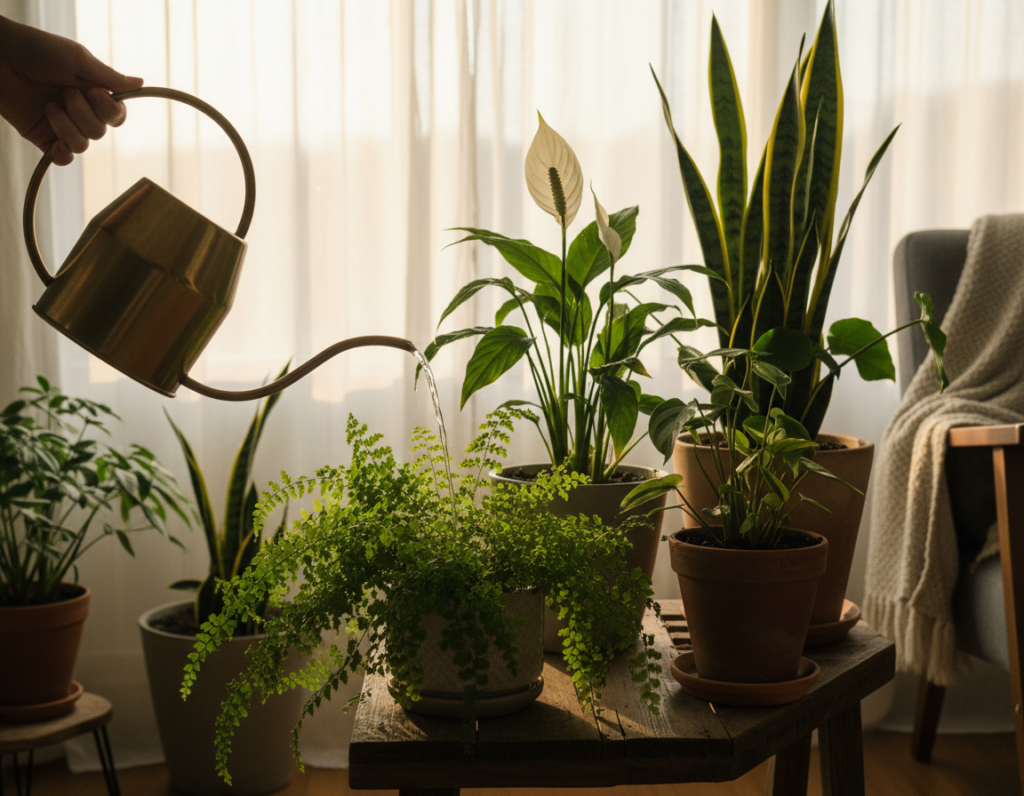
Many houseplants can recover when wet soil and poor drainage are fixed quickly. Wilco Farm Store notes that misapplied watering often comes from the idea that every plant needs daily hydration.
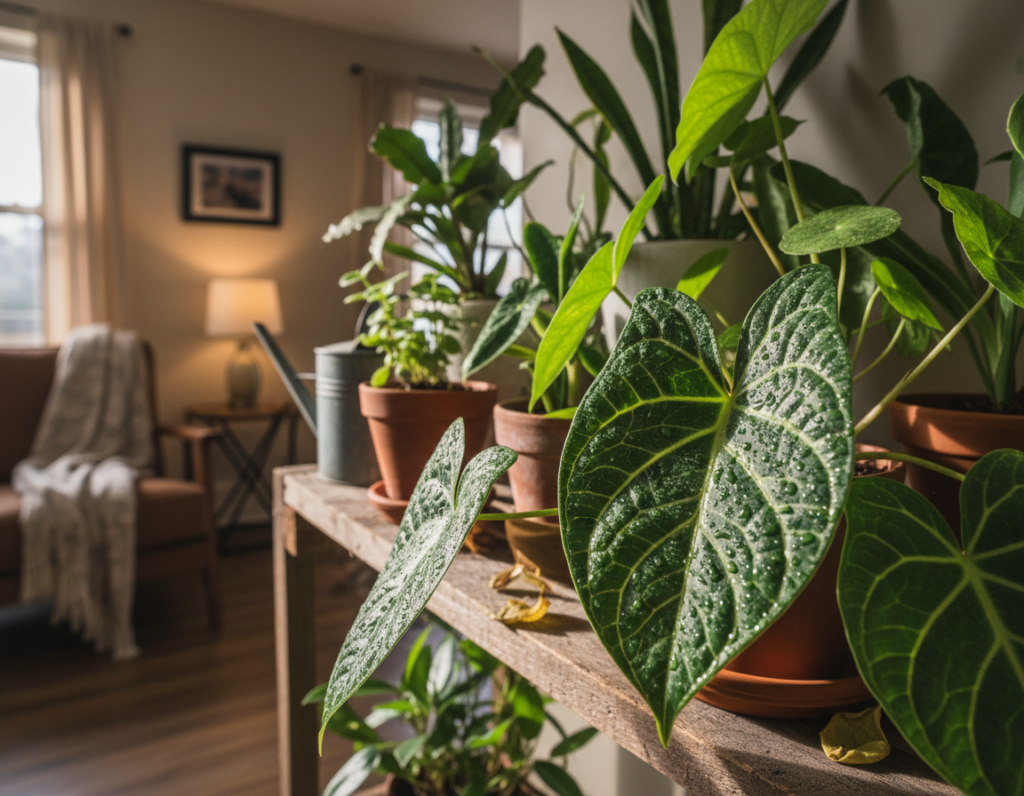
Yellowing leaves turning color are a common early sign that roots are stressed. People spot tired foliage before they check the pot or root zone.
The good news is that prompt action can stop root rot before it becomes fatal. Inspect the soil and test moisture levels before adding more water.
Simple care steps — improving drainage, choosing the right soil mix and adjusting watering routines — help restore balance. Wilco Farm Store offers guidance on soil blends and identifying needs for different indoor species.
Identifying Signs of Overwatered Plants
Noticing subtle changes in leaves and soil can be the turning point for a struggling houseplant. A quick visual check helps distinguish between thirst and too much moisture.
Visual Indicators of Distress
Yellowing leaves that drop from the bottom often mean the roots lack oxygen.
If stems feel soft or squishy at the base, the root zone is likely compromised.
Soil and Pest Clues
A white, fuzzy mold layer on top of the soil signals persistent dampness. Fungus gnats (Sciarid Flies) thrive in moist mixes and lay eggs where larvae feed on the root and leaf tissue.
- Check if the soil wet to the touch before adding water.
- Look for floppy or wilting foliage; wet soil plus wilting usually means excess moisture.
- Mold on the surface or gnats near the pot are clear signs the environment is too damp.
- Leaves turning yellow and dropping is a sign the plant is shedding to survive stress.
Immediate Steps to Save Overwatered Apartment Plants
Quick, simple steps reduce stress on a soaked root system and speed recovery. First, check the saucer and dump any standing water so the roots are not sitting in a pool of moisture.
Move the houseplant to bright, indirect light. This gives energy for recovery without the shock of direct sun.
Remove decorative moss or stones to let the top soil breathe. If the plant pot lacks drainage, tip it gently to release trapped water at the bottom.
“Taking the time to assess the plant and pot helps set a clear plan for repair.”
- Dump water from the saucer to protect the roots.
- Relocate to bright, indirect light.
- Remove surface coverings to speed soil drying.
- Prop up the container if the soil stays damp for too long.
Careful attention during this initial time improves the chance that leaves recover and the houseplant returns to health.
Assessing Root Health and Damage
A careful, methodical check of the root ball helps determine whether a plant can recover or needs more drastic action. Begin by gently easing the container and inspect the visible root mass and surrounding soil.
Distinguishing Root Rot
Healthy roots are firm and pale. They hold their shape and show fresh growth at the tips.
Roots affected by rot turn dark, feel mushy, and often give off a sour, compost-like odor. Annelise Brilli of Thompson & Morgan explains that overwatering kills microscopic root hairs, stopping the plant from absorbing water and nutrients.
- When removing the plant pot, use clean tools to avoid spreading disease.
- Trim any soft, black sections of root and affected stems to limit further damage.
- Dust cut tips with a little powdered cinnamon to reduce fungal risk.
- Replace compacted or contaminated soil with fresh soil to encourage new root growth.
“Root hair loss makes it impossible for the plant to take up moisture and food, so early assessment matters.”
If damage is severe, remove plant sections that cannot recover. For step-by-step guidance on handling soaked root zones and repotting, see how to rescue a soaked root.
Techniques for Drying Out Waterlogged Soil
Drying a saturated root zone starts with gentle steps that remove moisture without harming fragile roots. Quick, careful action helps a plant avoid long-term damage. The goal is to lower excess moisture in the soil and restore airflow to the root area.
Wicking Moisture from the Root Ball
Wicking draws water out slowly so the root system stays intact. Insert folded paper towels or a clean sponge into the topsoil near the root ball to pull moisture up.
For partial drying, use narrow tubes or straws to create air channels. These let the root zone breathe without disturbing tender roots.
Improving Airflow Around the Pot
Elevate the plant pot on small blocks or pebbles to improve drainage and circulation. Place the container in a well-ventilated spot with bright, indirect light; avoid direct sun or heaters that stress leaves and roots.
- Use absorbent material to wick moisture gently from the soil.
- Raise the pot to let air reach the bottom and enhance drainage.
- Insert narrow channels for air to reach the root ball and keep soil dried evenly.
- Monitor soil dry status closely and allow a few hours of good ventilation.
When to Repot or Propagate
When roots are clearly decayed, the practical choice is to either repot the specimen into fresh soil or to propagate healthy stems. Keira Kay of Bloom & Wild recommends rinsing off remaining soil once the soil dried, then assessing the root mass before moving to a new pot.
Repotting is best when some roots remain firm. Remove plant material from the container, trim black or mushy sections, rinse gently, and place the root ball into a pot with well-draining fresh soil and good drainage. This gives the plant a stable way to rebuild root growth.
Propagation becomes the preferred route if roots are gone but stems and leaves still show vitality. Common house varieties such as pothos, philodendron, and peperomia root readily from stem cuttings and can return to full growth in weeks to months.
“Once the soil dried out, rinse the roots and repot to ensure proper drainage.”
- Remove plant specimens from damaged soil when roots are soft or rotten.
- Prune dead foliage so energy goes into new growth and root repair.
- Expect timelines: mild cases recover in 3–7 days; moderate in 1–3 weeks; severe may need 1–2+ months.
Long-Term Strategies for Proper Watering
Adjusting how and when water is applied makes a big difference for lasting plant health. A clear routine reduces recurring root stress and helps foliage recover. Small changes in pot choice, soil mix, and timing offer big returns.
Choosing the Right Pot
Use pots with drainage holes so excess water can escape from the bottom of the container. Raising a plant pot on a layer of pebbles or a saucer improves air flow and stops water buildup.
Soil Composition for Drainage
Match the soil type to the species. Wilco Farm Store notes succulents and cacti need fast-draining mixes, while tropical varieties prefer blends with peat or coco coir. Good soil gives roots air and prevents the top and bottom from staying soil wet.
Seasonal Adjustments
Watering schedule should change with the season. Plants drink less in winter and more in summer. Using a moisture meter is a reliable way to check the soil at the bottom before adding water.
- Choose pots with drainage holes to keep roots healthy.
- Pick a soil mix that balances aeration and drainage.
- Adjust the watering schedule for winter and summer activity.
- Elevate pots on pebbles to improve air circulation.
- Learn specific needs for sensitive species like Hoya and Sedum.
“A moisture meter helps people decide if the soil dry status is right.”
For more detailed routines and a quick reference, see this concise watering guide.
Conclusion
, A calm, consistent routine gives a damaged root system the best chance to rebuild and produce fresh new growth.
Patience matters: healthy roots and a lively crown take time to return. Check the soil and pot regularly, trim damaged sections, and adjust water and light to reduce future damage.
Use these practical tips to spot early signs and act before decline worsens. Tailor care to each houseplant so the top layer of soil supports steady growth and healthy leaves.
With steady attention and the right approach, a struggling plant can recover and bring long-term life and beauty to indoor spaces.