When a houseplant shows wilting or yellow leaves, quick assessment helps. They can suffer from poor light, wrong water levels, or compacted soil. The Royal Horticultural Society says good cultivation beats routine chemical fixes for most problems.
Start by checking basic conditions: feel the soil, examine roots, and note sun exposure. Adjust the pot or move the plant to brighter spots if needed. Small, steady changes often prompt new growth.
Many people find that proper care restores vigor over time. Improve air circulation, avoid overwatering, and refresh tired soil. If a specimen seems near death, patience and consistent routine can bring back life.
These simple steps give houseplants the best chance to thrive for years. Follow light and water guidelines, check roots and pot size, and treat winter stress gently.
Assessing the Health of Your Houseplants
A quick, systematic check can reveal why a houseplant looks limp or pale. Start by noting overall conditions: light, temperature, and recent moves to a new spot or place.
Checking Stems for Vitality
Scratch test: Gently scrape a small area of a stem. If green tissue shows underneath, the plant is still alive and can recover.
Healthy stems feel firm and bend slightly. Brittle or blackened stems hint at deeper problems that need prompt care.
Identifying Common Stress Factors
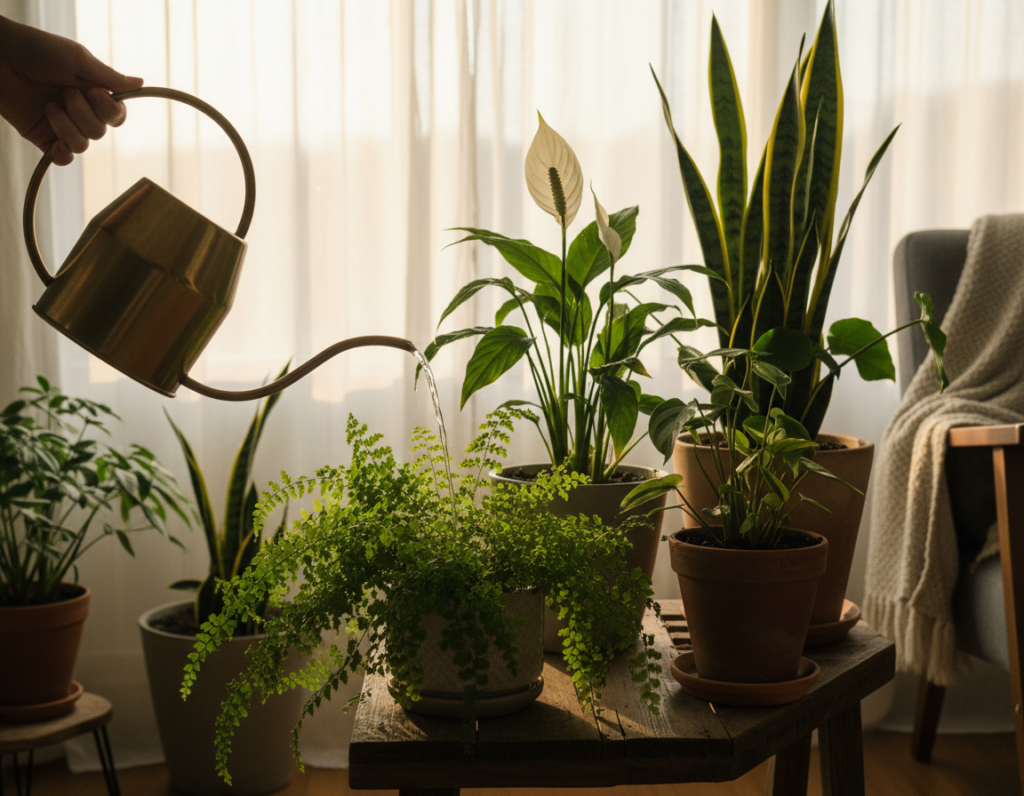
Soil moisture matters: Insert a finger about one inch into the soil. If the soil is bone dry, underwatering is likely. If the soil stays wet, check pot drainage.
Inspect roots when possible. Firm, pale roots are normal; mushy or dark roots signal rot. In winter, many houseplants slow growth and may look like they are getting sick when they are simply dormant.
- Wilting or leaves turning yellow often means poor light or incorrect water.
- Office plants moved to a new place can show wilted leaves until they adjust.
- Over years of care, close observation is the best tool to spot early problems.
How to Revive Unhealthy Indoor Plants Through Physical Care
A few deliberate actions can set a tired houseplant on a path to new growth. Start with targeted pruning to remove dead stems and yellow leaves. Do not remove more than one-third of foliage at once so the plant avoids extra stress.
Clean dust from leaves to improve light absorption and air flow. Gently wipe broad leaves and mist finer ones to help photosynthesis. Consistent water and steady light are better than frequent changes.
Check the pot and soil for compacted mix or poor drainage. If the soil stays soggy or the roots look crowded, address those problems before heavy trimming. Trimming damaged growth encourages new growth from healthy roots.
- Remove dead or yellow leaves to redirect energy.
- Limit cuts to one-third of the plant at a time.
- Keep conditions stable through winter and give time for recovery.
Note: Let the plant recover naturally with steady care, and inspect roots and potting mix if progress stalls.
Refreshing Soil and Root Systems
Fresh soil and a careful root check can change a struggling plant’s outlook in a single repot. New soil provides nutrients and better drainage, especially after long stays in the same pot.
Techniques for Repotting
When removing the plant from its container, gently loosen the roots to encourage new growth. Keep the root ball intact but tease tangled roots apart so they spread into fresh soil.
Make sure the new pot is only one size larger than the previous one. Place the plant at the same depth it grew before to avoid stress.
Improving Drainage and Soil Quality
Good drainage prevents root rot and keeps water moving through the mix. Use pots with drainage holes and, where needed, add perlite or orchid bark to improve aeration.
Use fresh soil when repotting; old mix often lacks nutrients. After repotting, steady care helps roots establish and leads to healthier leaves and steady growth.
“Refreshing the soil and easing crowded roots gives a plant the best chance to recover and thrive.”
- Gently loosen roots; do not over-prune.
- Choose a slightly larger pot with drainage holes.
- Mix fresh soil with perlite for better structure.
Optimizing Light and Watering Conditions
Good light and correct moisture are the two simplest ways to improve a plant’s health. Simple adjustments to exposure and watering often trigger visible growth in a few weeks.
Adjusting Exposure for Better Growth
When a plant is getting stressed, move it to a spot near a window that gives bright, indirect light. Avoid direct sun for most houseplants; it can scorch leaves and dry the soil quickly.
Use the finger test: insert a finger one inch into the soil to see if the soil is dry or bone dry before you water. This shows whether the plant needs water rather than following a strict schedule.
- Rotate the pot weekly so all leaves get equal light.
- In winter, make sure the plant receives consistent light through shorter days.
- Keep the soil slightly moist for most species; check roots if growth stalls.
“Adjusting light and checking soil moisture are the fastest, safest steps to help leaves recover and support new growth.”
Managing Seasonal Dormancy and Pests
Winter brings a natural slowdown for many houseplants, and spotting the signs early helps avoid bigger problems.
Leaves turning yellow or dropping can be normal when a plant is entering dormancy. Stacy Ling notes that Boston ferns often brown and shed leaves after they move indoors for winter; this is often part of the cycle, not a fatal decline.
Still, some signs merit inspection. Check leaves for webbing, tiny specks, or sticky residue—these point to pests such as spider mites, which thrive in dry air.
- Keep humidity higher around sensitive specimens to prevent tip browning.
- Avoid overwatering; a dormant plant needs less water and can suffer root issues if soil stays soggy.
- Inspect roots and soil if yellow leaves persist; dormancy can hide deeper problems.
“Many houseplants are resilient and will bounce back once the sun returns in spring.”
For office plants or specimens moved suddenly, monitor light and water conditions closely for a few weeks. For deeper reading on dormancy and winter care, see dormancy and winter care.
Conclusion
With steady attention and simple steps, a stressed plant can show new growth in time. Small, regular actions win over sudden fixes.
Consistent care, careful checks of light and water, and timely soil or root work set the right conditions. Over weeks, leaves and stems often respond with renewed vigor.
If more help is needed, follow a step-by-step guide on how to revive dying specimens.
By watching houseplants, acting gently, and allowing time, one can bring many specimens back life and enjoy lasting growth through winter and beyond.