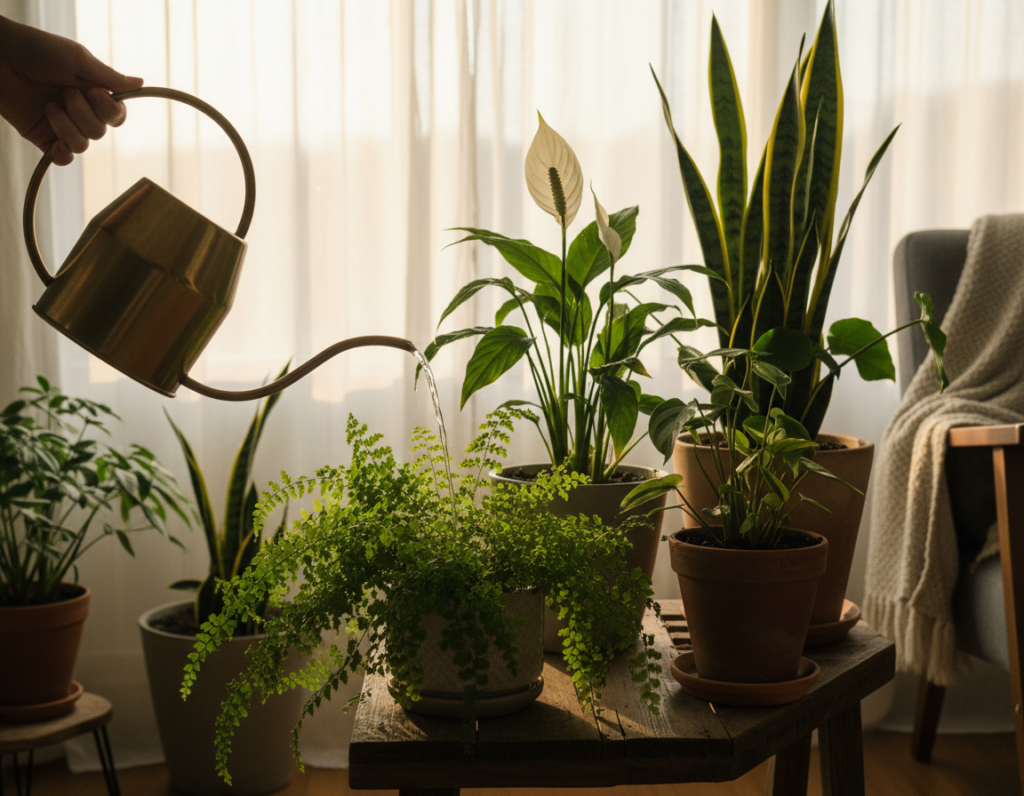
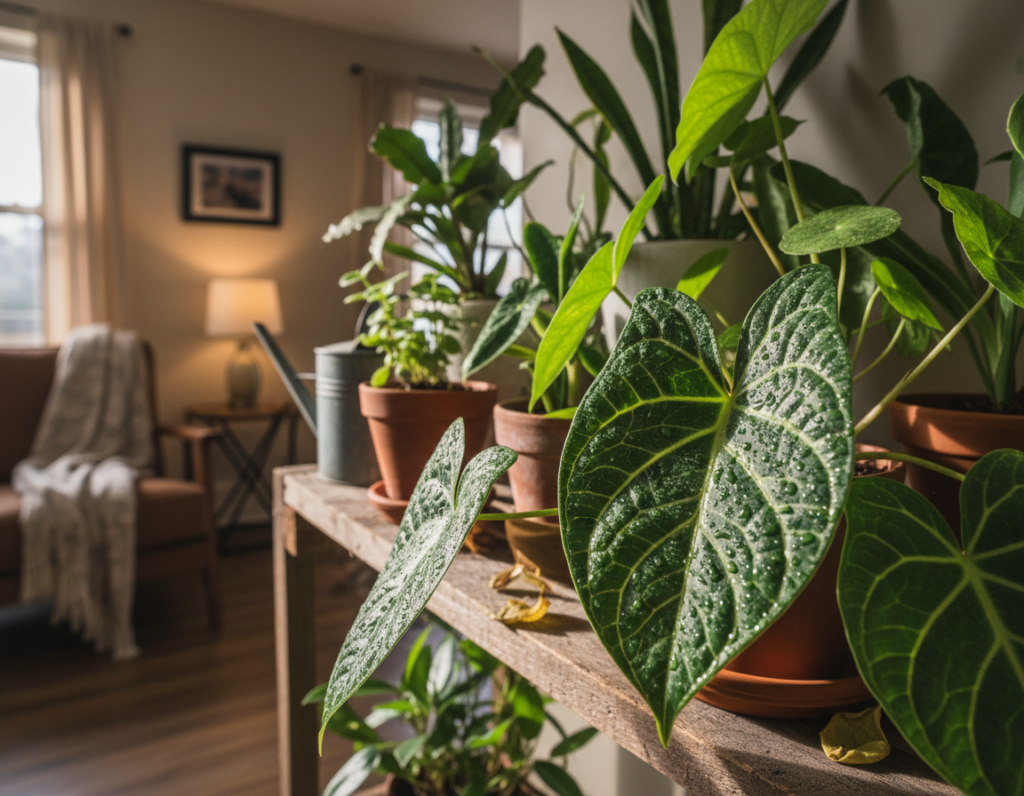
White, fuzzy growth on the top of a pot often looks alarming but is usually a harmless saprophytic fungus feeding on decaying organic matter.
It appears slowly, as small dusty patches. Many people notice it on the surface while the foliage stays healthy.
Unless someone has severe allergies, this growth rarely harms people or pets. Still, it flags that moisture and air movement need attention.
Allow the mix to dry between waterings and check drainage to prevent repeated outbreaks. Good light and steady circulation help keep the top layer healthy.
Understanding Mold in Indoor Plant Soil
A fuzzy white layer on top of a pot often signals a shift in the container’s microclimate. Shelby DeVore, founder of Garden.Farm.Thrive, notes that many microorganisms are vital for healthy growth and nutrient cycling.
Fungal colonies thrive where moisture, organic matter, and limited air meet. High humidity, poor drainage, and low light create ideal conditions for visible mold growth.
Using old or unhygienic potting mixes can introduce spores before a new plant even gets settled. The issue usually reflects the environment rather than a disease attacking the foliage.
“Balance is key: proper drainage and good airflow keep beneficial microbes working without letting unwanted fungus take over.”
Quick checks to spot trouble:
- Excess water pooling at the pot base.
- Damp, compacted potting mix with little light.
- Faint white or gray patches on the mix surface.
Identifying Different Types of Fungal Growth
Visible colonies on the top layer often show distinct colors and textures that help identify them. Spotting differences quickly lets the owner decide whether the issue is harmless or requires action.
White growth often appears fuzzy and woolly. This saprophytic fungus feeds on decaying organic matter and usually stays on the surface. It rarely harms healthy plants but signals excess moisture and poor air flow.
Black growth can show as sooty, dark mycelia. It may coat stems and leaves and is sometimes hard to see until it spreads. This form can compete for nutrients and reduce vigor.
Green and brown powdery types form fine layers on damp potting mix or on leaves. Green patches often come from common Penicillium or Aspergillus species. Brown powdery growth can be more aggressive and may curl or drop leaves as it spreads via water or air.
- White mold: fuzzy, surface-level, saprophytic fungus.
- Black: soot-like, may cover foliage.
- Green/brown powdery: fine layer, can reach leaves and cause damage.
Why Your Houseplant Environment Encourages Mold
A humid, poorly ventilated corner creates ideal conditions for surface fungal growth to take hold. When air movement is low and moisture stays near the pot surface, spores find a stable place to grow.
Overwatering and cool temperatures lengthen the time the top layer stays damp. That encourages fungi to colonize the mix and form visible patches.
Other common contributors are easy to fix. Small changes often stop recurrence before it spreads.
- Poor drainage that traps water at the base.
- Low light that slows evaporation.
- Lack of airflow around the pot and nearby clutter.
Simple prevention includes raising the pot, improving circulation with a fan, and letting the medium dry slightly between waterings. These steps reduce humidity hotspots and limit further fungal growth.
Why Your Houseplant Environment Encourages Mold
When water lingers around roots and airflow is weak, fungal patches are more likely to appear. Small changes to the container and placement often stop problems before they spread.
Pot choice matters. Andrew Levi, founder and CEO of PlantTAGG, warns that an oversized container holds excess water and raises the risk of moldy soil.
“Choose a pot that matches root size and always check for drainage holes.”
Poor light and cramped shelves keep the top layer damp. Dead leaves left on the mix provide food for fungi and should be removed.
- Ensure pots have drainage to avoid water-logged conditions.
- Place plants where air circulation can help the mix dry between waterings.
- Avoid dark corners and clear away decaying leaves regularly.
For step-by-step guidance on treating and preventing outbreaks, see this guide: prevent fungus and mold on houseplants.
Manual Removal Techniques for Infected Soil
Manual removal offers a fast, controllable way to reduce visible contamination on the pot surface. It should be done carefully to avoid damaging the root system and to limit spore spread.
Recommended steps are simple and effective. First, wear a dust mask to avoid breathing spores. Use a clean spoon to scrape off the fuzzy white layer and discard it in a sealed bag.
Safe Disposal Practices
After removal, repotting into fresh potting soil is the most reliable fix. When transferring, gently loosen the root ball and avoid tearing fine roots.
- To get rid of mold, scrape the affected surface layer carefully with a spoon.
- Wear a dust mask while you rid mold from pots to protect your health.
- Repot into new potting soil and remove dead leaves or debris from the surface.
- Wipe any visible spores from leaves with a damp cloth; prune stubborn spots.
- Seal and trash the removed moldy soil away from other plants to prevent spread.
Note: Manual removal is a short-term solution. Address drainage, light, and watering to prevent recurring growth.
Natural Remedies to Eliminate Fungal Growth
Everyday ingredients like cinnamon and baking soda can help manage light fungal outbreaks. These options work well after surface removal and improved drainage. They are gentle, affordable, and easy to apply around a houseplant.
Cinnamon as a Fungicide
Cinnamon contains cinnamaldehyde, a compound with natural anti-fungal action. Sprinkle a light layer across the top of the soil after scraping away visible patches.
This method acts as a preventive barrier and helps limit new growth without harsh chemicals.
- Easy to use: dust lightly after cleaning the surface.
- Safe: good for most plants and pets when used sparingly.
- Natural: helps reduce saprophytic fungus that feeds on organic matter.
Baking Soda Spray Solutions
Mix 2 teaspoons of baking soda with 1 liter of water to make a mild spray. The higher pH can disrupt white mold growth on the top layer of potting mix.
Test the solution on a small leaf and wait 24 hours. If there is no damage, spray lightly over the cleaned surface to help rid mold and slow future growth.
- Mix carefully: keep concentration to the recommended ratio.
- Use sparingly: avoid daily spraying to protect beneficial microbes.
- Follow up: combine with better airflow and moderated watering for best results.
Best Practices for Watering and Drainage
Proper water management and good drainage cut off the food and moisture that let surface fungi thrive.
Simple checks first: stick a finger into the top inch of the soil. If it feels damp, hold off on watering.
Use pots with drainage holes about 1/4 to 1/2 inch wide, as Andrew Levi recommends. That size prevents water from pooling at the base and keeps roots healthy.
Techniques that help:
- Bottom watering lets plants draw moisture up while leaving the surface drier.
- Avoid fixed schedules; water based on how the potting soil feels and the season.
- Keep the top surface clear of dead leaves so there is no extra food for growth.
- Run a ceiling fan in winter or a small oscillating fan to boost air circulation.
Good drainage and steady air movement together create conditions where houseplants absorb nutrients without excess dampness. That duo is the best defense against recurring white mold and other surface issues.
When to Consult a Professional Remediation Service
Persistent surface colonies that resist home treatments are a good reason to consult a remediation expert. If visible growth returns after cleaning or spreads to leaves or nearby surfaces, homeowners should consider professional help.
Only certified remediation firms have advanced testing tools to confirm whether a colony is dangerous. For residents near Montreal or Ottawa, Mold Busters offers full inspection and removal services and a free virtual inspection to help identify risks.
Consult a pro if you suspect black varieties such as Stachybotrys chartarum, if people in the home show respiratory symptoms, or if air circulation is poor and the issue persists.
“A professional can identify the specific fungus and address the root cause to protect both the houseplants and the household.”
- If you cannot get rid of growth that keeps returning, contact a service like Mold Busters.
- Experts can run air quality tests to check whether the problem affects your home.
- When potting soil or houseplant soil issues persist, remediation pros provide testing and permanent fixes.
For more on where to check for surface growth on mixes, see where to look for mold on.
Conclusion
Routine checks and small adjustments often stop visible fungal growth before it becomes a problem. Balance moisture, light, and airflow to create conditions where beneficial microbes thrive and unwanted colonies cannot.
Most cases are harmless saprophytic fungi that respond to simple care: improve drainage, avoid overwatering, and clear away debris from the top layer. Natural remedies like cinnamon dusting or a mild baking soda spray help after cleaning.
If a colony returns, spreads to foliage, or causes health symptoms, seek professional remediation for testing and removal. Consistent care will prevent recurrence and keep a healthy collection of houseplants thriving.