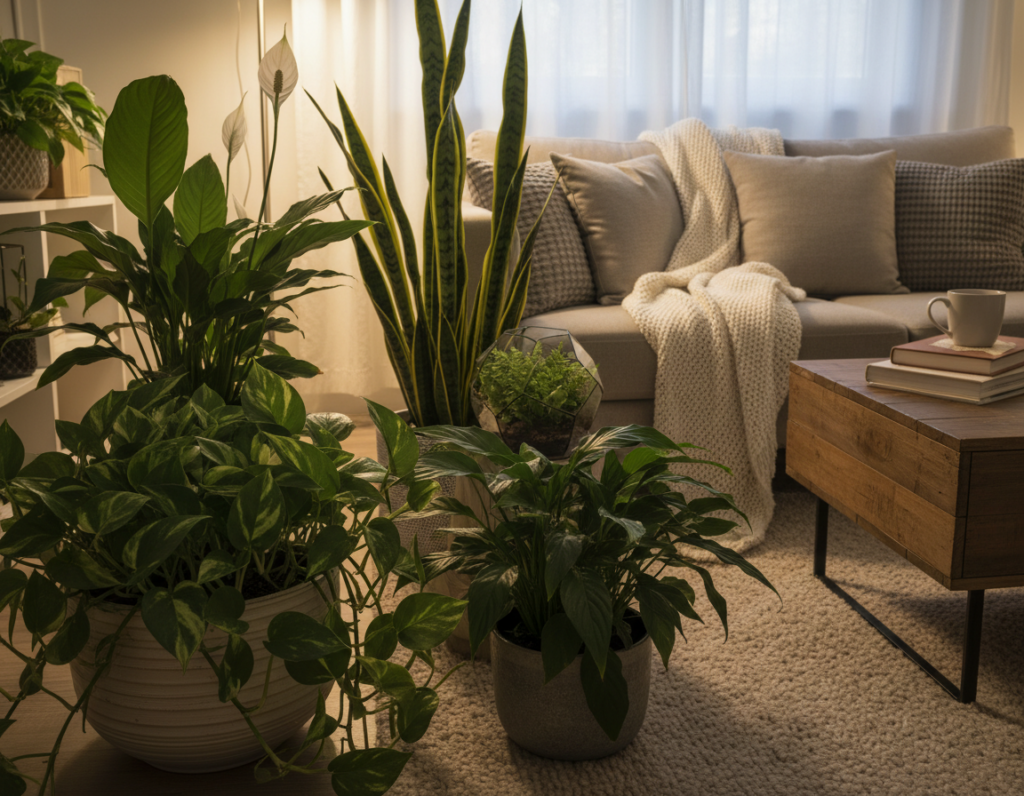
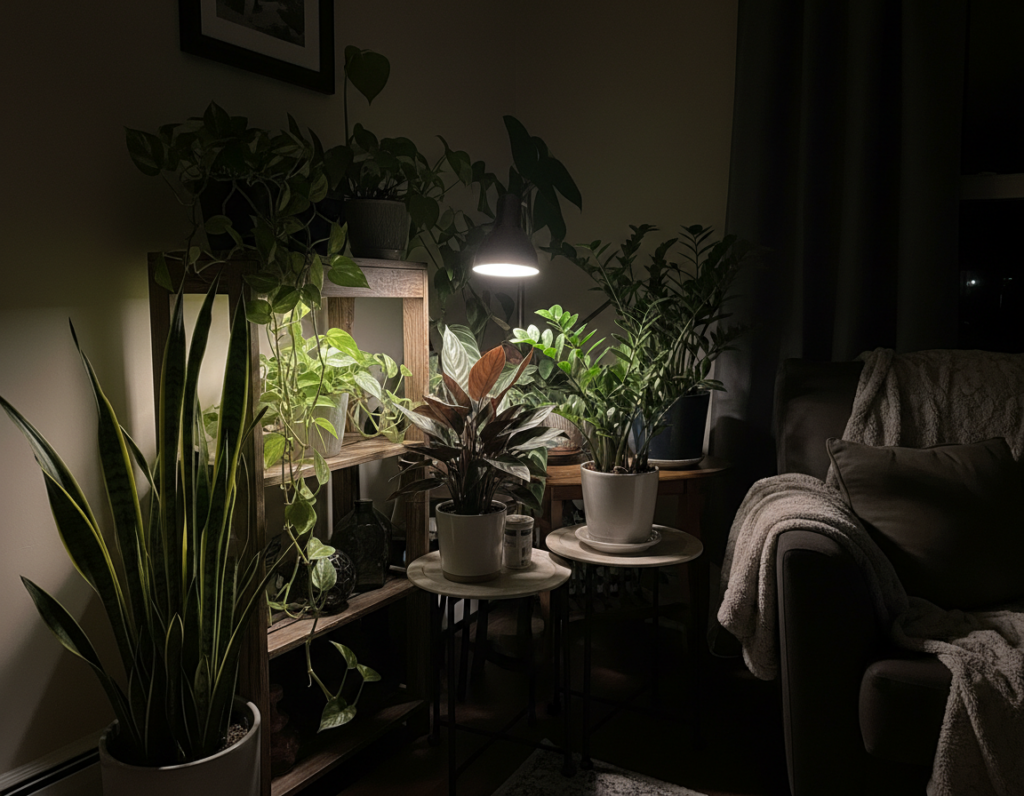
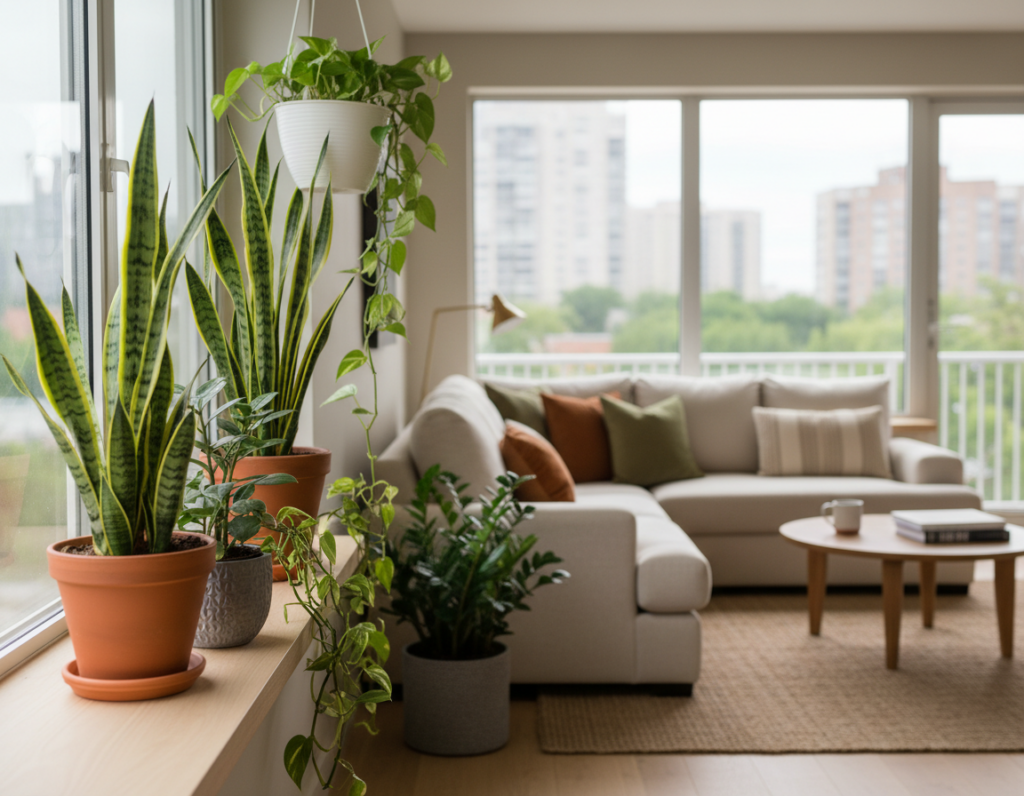
Creating a green retreat in low light rooms is easy when one chooses the right species. Many houseplants come from shaded forests, so they tolerate limited sunlight and still add life to a home.
These selections suit corners, shelves, hanging pots, and spots away from windows. With straightforward care, a single plant can lift air quality and brighten a room without constant attention.
Readers will learn which varieties grow well with minimal light, how to arrange pots for visual interest, and simple routines that keep foliage healthy. This intro sets the stage for practical tips and easy options that fit modern living spaces.
Understanding Low Light Conditions for Indoor Gardening
Success with shade-tolerant greenery starts with recognizing subtle light sources and how they reach your pots. Low light does not equal no light, and that distinction guides placement and care.
Indirect light is diffuse illumination that arrives after bouncing off walls or passing through sheer curtains. Many tropical understory species evolved under canopy shade and use this softer energy to grow.
“Understanding that low light does not mean no light is essential for success,” says Nina Koziol, a garden writer and horticulturist in Palos Park, Illinois.
- North-facing windows supply gentle, indirect sunlight suitable for most houseplant varieties.
- Seasonal shifts change sunlight intensity; winter months often require moving pots closer to a window.
- Monitor how much diffuse light reaches hanging or floor containers to protect leaves and steady growth.
The Best Plants for Dark Indoor Spaces
A handful of hardy species tolerate limited sunlight and still give rooms a lively, green look. These selections suit corners, shelves, and low-window areas. They also cope with irregular water and brief neglect.
Snake Plants and Dracaena
The snake plant is famed for its tolerance of low light and sparse watering. A dracaena adds vertical form and adapts well to north-facing rooms or basements. Both do best in a well-draining soil mix in roomy pots to avoid root rot.
The Resilient ZZ Plant
The ZZ plant (Zamioculcas) has glossy, dark green leaves that catch what little natural light is present. It stores water in thick stems, so it survives long dry spells and gentle neglect. Place it near windows that offer diffuse illumination.
Classic Cast Iron Plants
Cast iron (Aspidistra) is a Victorian favorite that tolerates corners other varieties avoid. Its dark green leaves provide a traditional look and steady growth in low light. These choices improve air quality and require minimal fuss.
- Tip: Use a free‑draining potting mix and avoid overwatering to keep foliage healthy.
- To learn more shaded-room varieties, see this guide on houseplants for shady rooms.
Essential Care Tips for Thriving Foliage
A few steady routines will keep a houseplant thriving in low light conditions. Start by checking the soil with a finger before any watering. Greenhouse experts note that overwatering is the most common cause of plant death.
Water wisely. Let soil dry to the first inch for many species, and give snake plant varieties longer between drinks since they tolerate irregular watering and temperature swings.
Light and leaf care. Wipe dust from leaves so natural light reaches the surface. Rotate pots every few weeks to encourage even growth and prevent leaning toward windows.
- Dracaena can add about a foot of growth in two years when it gets proper indirect light and water.
- Use high-quality soil in pots to support steady growth and reduce the risk of root problems.
- Keep cast iron plant care minimal: sparing water and steady placement prevent yellowing leaves and neglect effects.
- Place trees or palm varieties away from drafts in a corner and maintain a consistent routine so plants thrive.
Conclusion
Smart placement and modest care are enough to sustain green life in less sunny rooms.
Choose hardy plants and place them where they receive the softest light. This helps leaves stay healthy and steady growth occur with little fuss.
Monitor soil moisture in pots and resist frequent watering; overwatering is the most common error and harms roots. Select resilient varieties, such as the cast iron plant or the snake plant, to reduce maintenance needs.
Whether arranging trees, a palm, or smaller houseplants, the right choices can brighten a room and improve air quality. With simple routines, a home can hold vibrant, low‑effort greenery year‑round.