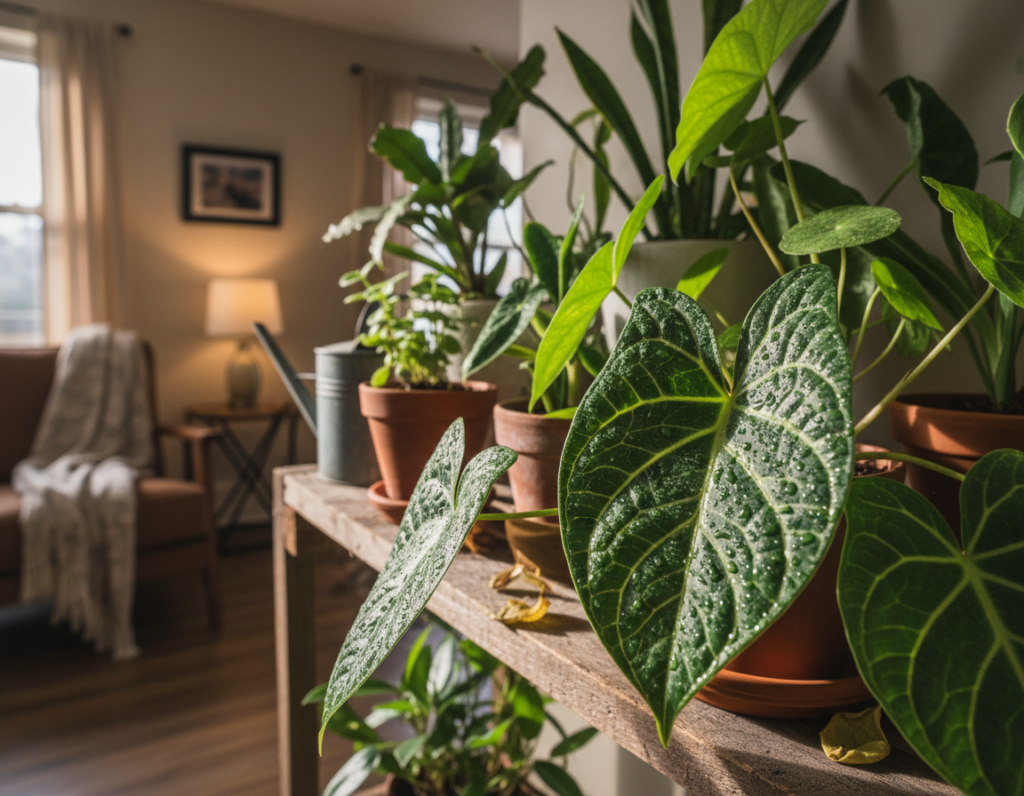
Many houseplants show dull edges or burnt tips that signal more than cosmetic harm. When foliage begins to turn brown, it often points to cellular necrosis caused by stress. This stress can come from too much water, poor drainage, or root rot.
Checking roots and pot drainage holes is the first urgent step. A quick look at the root ball often reveals soggy soil or a foul smell. If roots sit in wet soil, rot can spread fast.
Other causes include tap water salts, low humidity in winter, or excess fertilizer. Even a peace lily may suffer when light, moisture, or temperature are out of balance. Act quickly: correct watering, improve drainage, and match the plant needs to the room to protect foliage for years.
Understanding Why Brown Tips on Indoor Plant Leaves Occur
Even a peace lily basking under a skylight can show darkened edges despite ideal care. This shows that visible damage does not always mean a simple error.
When leaf tips begin to turn brown, the issue often starts with water movement. The vascular system may fail to push moisture all the way to the margins, leaving those areas dry and brittle.
Environmental factors combine to cause brown leaf tips. Low humidity, sudden temperature shifts, and salt buildup from tap water each affect how a houseplant moves fluids and nutrients each day.
Light matters, but it is rarely the sole cause. A sunny window can stress a specimen, yet more often the problem is a mix of water quality, drainage, and atmosphere.
Observe growth patterns and soil wetness to identify the underlying reason. For step-by-step recovery, consult this guide to save brown-tipped plants.
Inspecting the Root System for Hidden Damage
What happens under the soil usually explains why outer foliage begins to suffer. A brief, careful inspection of the root zone reveals whether water movement is blocked or if decay is present.
Signs of rot
Signs of Root Rot
Since 99%+ of water taken in by roots is transpired through leaves, any blockage will quickly affect the leaf tips. Healthy roots are creamy white and firm.
If roots look mushy, dark, or smell sour, rot is likely. Act quickly: remove damaged roots and repot in fresh, sterile soil to stop further decay.
Identifying pest damage
Identifying Pest Damage
Soil pests chew or girdle roots. This causes the plant to struggle to absorb water and nutrients, so edges may turn brown and fall away.
Gently lift the root ball from its pot to check for pests, salt buildup, and moisture levels each day. Even with a bright window and good light, poor roots will limit recovery.
Addressing Watering Habits and Drainage Issues
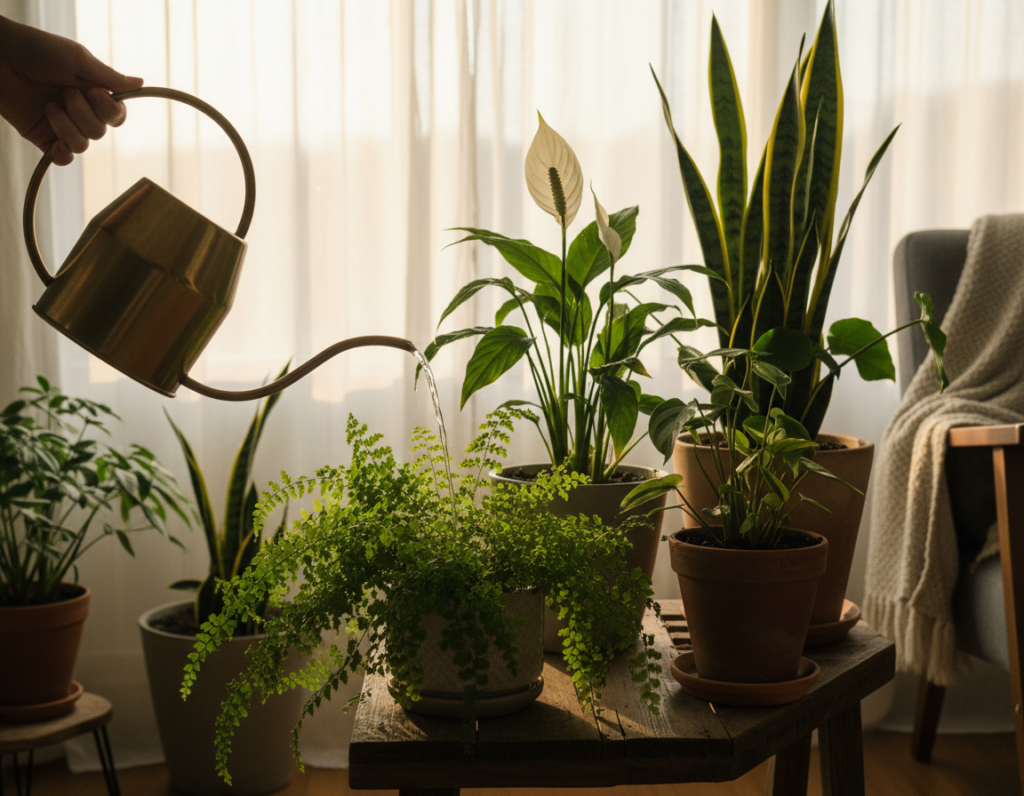
Watering rhythm and pot drainage often decide whether edges stay healthy or turn dry and brittle. Start by feeling the top soil: only water when the top 1/2″ to 1″ is dry.
The Importance of Proper Drainage
Good drainage prevents root rot and keeps moisture balanced. Use pots with drainage holes so excess water can escape. Standing water blocks oxygen at the roots and will cause rot that shows at the leaf tips.
- Water by checking the soil, not by schedule; frequency matters more than volume.
- Empty saucers after watering; a pot sitting in water will damage roots over days.
- Match watering to specific plant needs—some species need less frequent watering than others.
Even plants in a sunny window will struggle if the soil stays wet. Consistent watering habits plus proper drainage are the best way to stop brown leaf tips and keep plants thriving.
Managing Humidity and Temperature Fluctuations
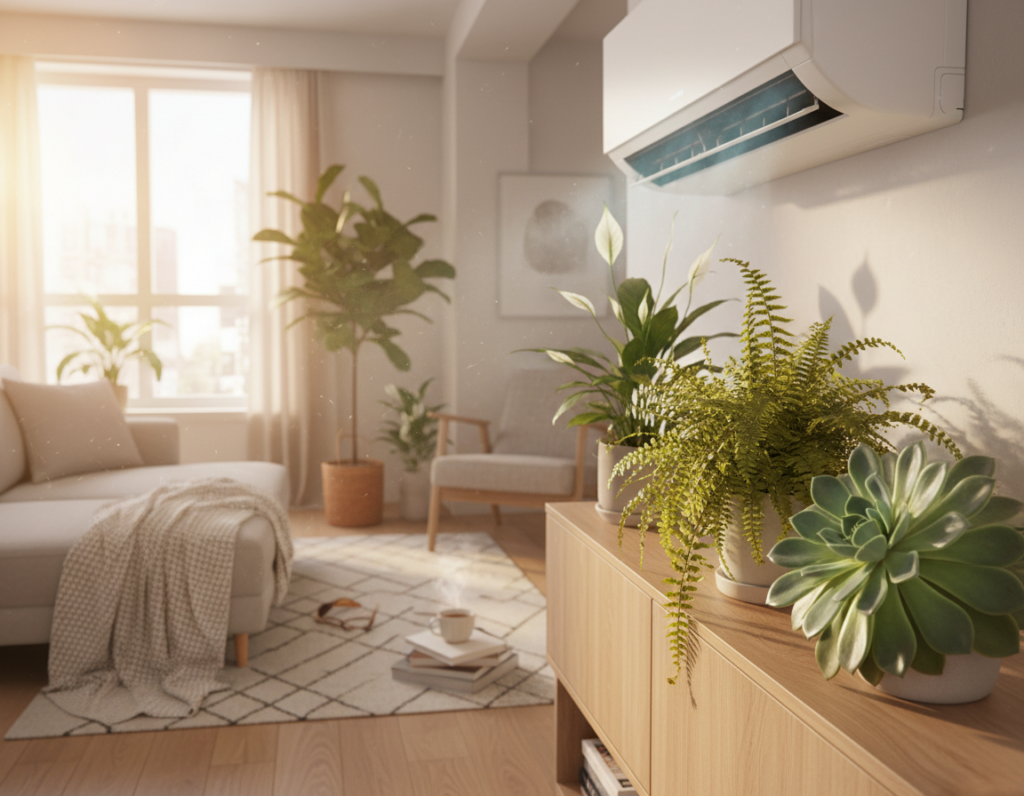
Rooms with dry heat or cold drafts often stress foliage before any soil issue becomes clear. Maintaining steady air moisture and mild temperature helps prevent damage at the margins.
Most tropical houseplants prefer 40–60% humidity. When indoor air falls below this range, the leaf tips and edges lose moisture faster than roots can replace it. During winter, central heating makes the air especially dry.
Monitor the microclimate around each specimen. Move pots away from vents, drafty windows, and space heaters. Even a short daily swing from warm day to cool night can cause visible stress.
Combatting Dry Winter Air
Use a humidifier or group several plants together to raise local humidity. A tray with water and pebbles beneath pots will also boost moisture without overwatering.
Avoiding Temperature Extremes
Place specimens where temperatures stay steady through the day. Avoid direct blasts from heaters or cold drafts that can scorch tissue in a single day.
“Consistent humidity and temperature prevent many common causes of leaf damage.”
- Keep humidity near 40–60% for most tropical species.
- Check for drafts near windows and doors each day.
- Raise ambient moisture before adjusting watering routines.
Evaluating Water Quality and Chemical Sensitivity
Chemicals dissolved in municipal water can quietly accumulate in soil and reduce a plant’s ability to move moisture to the margins. Sensitive species show damaged leaf tips first when salts or disinfectants build up near the roots.
Chlorine and salts matter. Chlorine in tap water can be neutralized with products such as Phytology Water Drops, which remove harmful chlorine instantly. Water softeners add sodium that many houseplants cannot tolerate.
Routine flushing helps. Once a month, flush the pot with filtered water to wash away excess salts. If damage persists, switch to rainwater or distilled water for several weeks to check for improvement.
- Test whether tap water causes symptoms by comparing with distilled water for a few waterings.
- Use Phytology Water Drops or similar dechlorinators if municipal chlorine is suspected.
- Flush soil monthly to prevent salt buildup and protect roots from rot and reduced uptake.
“Maintaining good water quality is one of the simplest ways to prevent buildup that harms foliage.”
Correcting Nutrient Deficiencies in Potting Soil
A lack of essential minerals in potting mix often shows itself through dull margins and slow new growth.
Healthy soil supports steady uptake of water and nutrients to the outer leaf area. When that balance falls apart, visible damage appears at the leaf tips and new shoots lag behind.
Signs of Mineral Imbalance
Look for pale veins, slowed growth, and burnt margins. These are common signs that the soil needs replenishing. Check roots for firmness and color as well.
- Use a balanced fertilizer such as Dr. Earth’s Pump & Gro to restore missing nutrients.
- Flush the pot with water every few months to remove salt buildup from over-fertilizing.
- Repot in fresh mix every 1–3 years to refresh soil and renew nutrient stores.
Even with correct light and watering, a nutrient shortfall will cause brown leaf tips and weaken roots. Monitor plants, adjust fertilizer rates, and rotate water sources if tap water causes salt issues. Maintaining rich, well-draining soil is the best long-term defense against nutrient-related damage.
Dealing with Pest Infestations
Soil-dwelling pests can silently undermine a specimen’s health long before surface symptoms appear. They chew feeder roots and reduce water uptake, which often leads to brown tips and yellowing foliage.
Act fast when small flies, grubs, or fungus gnats are spotted. Inspect the root ball for soft, damaged roots and repot into fresh, sterile soil if decay or pests are found.
- Reduce excess water to break the moist cycle that attracts gnats.
- Use a soil drench of neem oil mixed with water to kill larvae and deter adults.
- Apply sticky traps and isolate affected specimens to protect other houseplants.
- Flush pots monthly to lower salt and organic buildup that invites pests and rot.
Early detection is the best defense: check soil surface and roots during routine watering. With prompt action and clean repotting, recovery is much more likely and future damage can be prevented.
Best Practices for Trimming Damaged Foliage
Trim damaged margins promptly to limit disease and help new growth emerge. A brief, careful cut reduces stress and lets the specimen focus energy on healthy shoots. Follow basic hygiene and timing to improve recovery.
Tools for Clean Pruning
Use sharp scissors or pruning shears that are sterilized before each use. Wipe blades with isopropyl alcohol between cuts and between different pots to prevent disease spread.
- Keep tools sharp to make clean cuts that heal faster.
- Sanitize between plants to avoid transferring rot or pests.
- Replace dull tools that crush tissue and slow recovery.
Shaping Leaves for Recovery
When a leaf has damaged edges, trim back to a smooth, natural margin. This makes the foliage blend with healthy growth and signals the specimen to push new shoots.
During winter or in a sunny window, remove dead material promptly. Ensure pots have drainage holes so excess water does not create more rot and the need for repeated pruning.
Maintain a steady care routine—regular checks, clean tools, and correct watering help keep plants healthy for years.
Conclusion
Spotting the early signs at the root level gives the best chance for recovery.
Identifying the cause of brown tips starts with checking the root and soil moisture. A quick look inside the pot will often reveal whether root rot, overwatering, or salt buildup is the problem.
Most houseplants recover when care is adjusted. Create a steady routine for water, humidity, and light. Weekly inspections catch small issues before they spread.
If a brown leaf appears, don’t panic. Simple changes to drainage and water quality usually fix the issue and help the houseplant thrive again.
Thank you for following this guide; with patience and regular checks, the indoor garden will stay healthy and resilient.