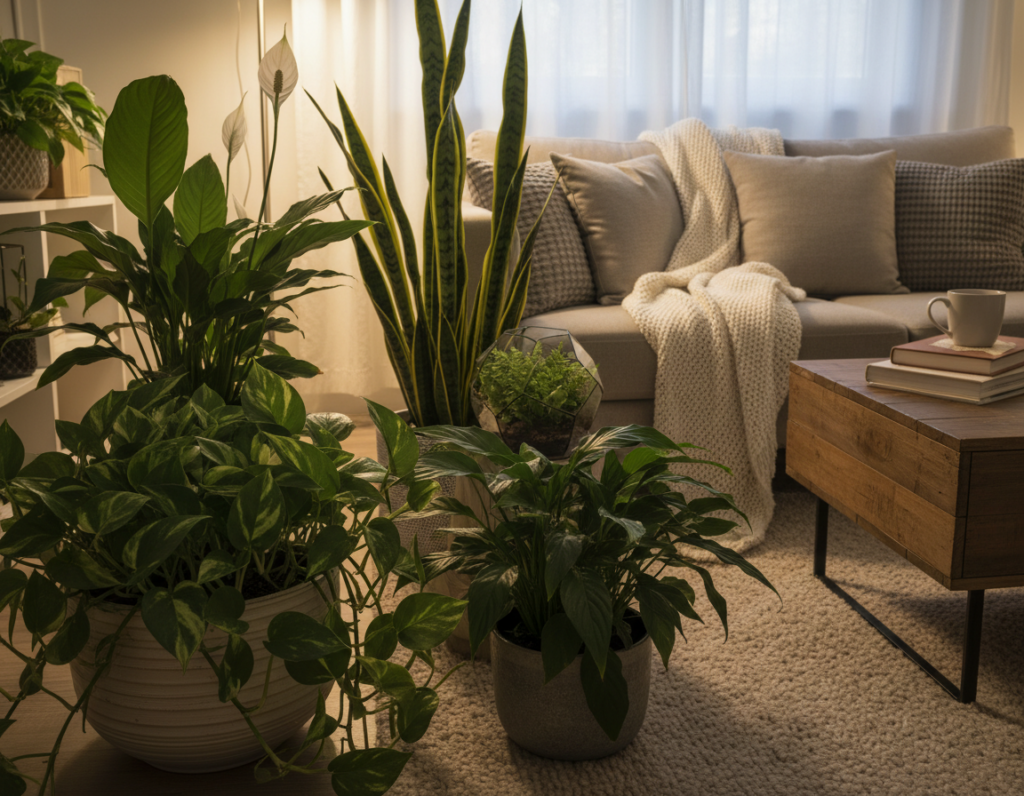
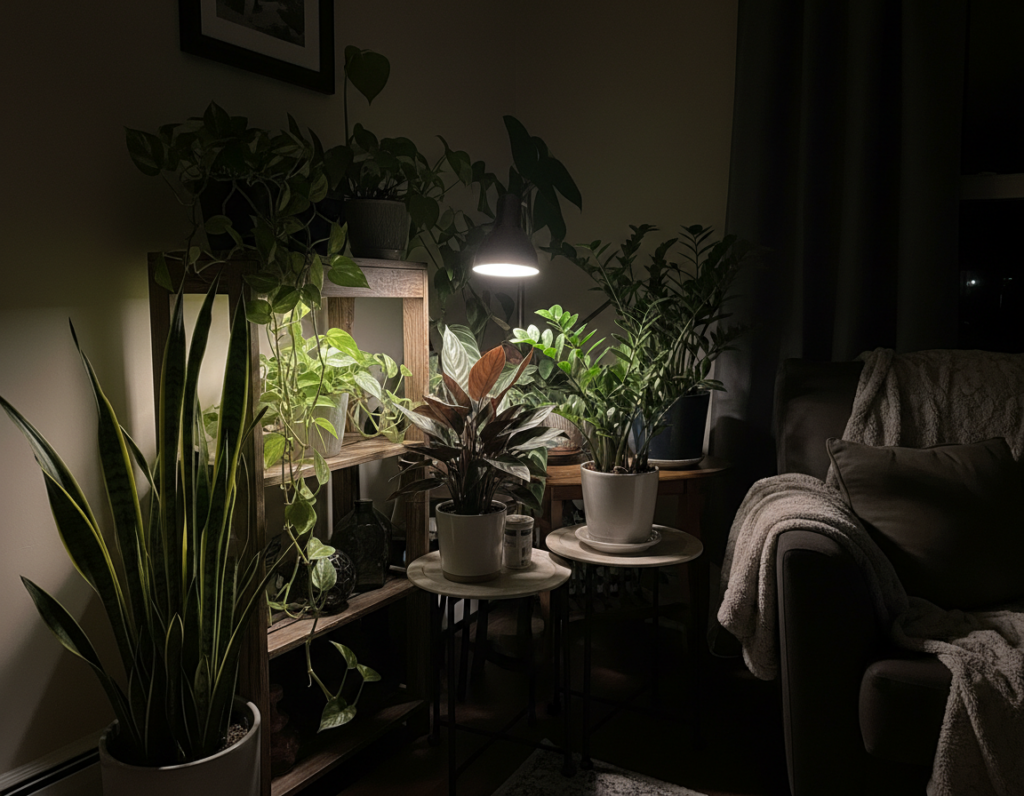
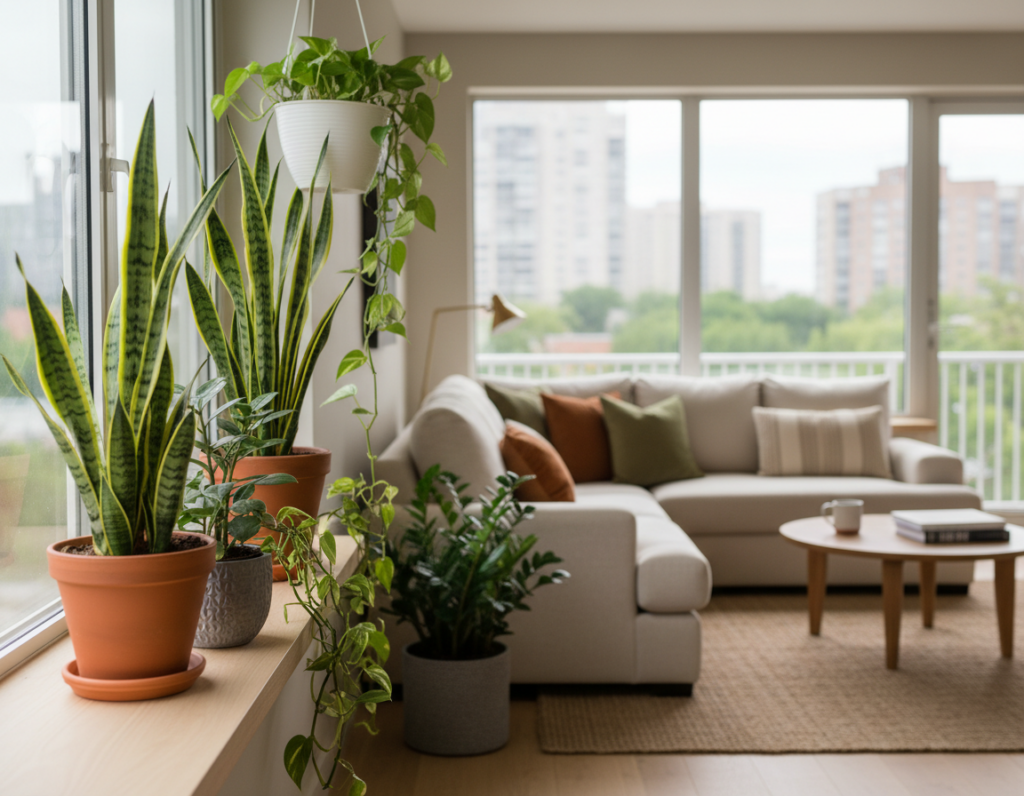
Many city dwellers ask whether “plants that survive without direct sunlight” are a real solution for dim apartments. The short answer is yes. Several hardy species, like the ZZ and snake plant, handle low light well and suit compact homes.
Choosing the right green companion saves time and worry. A single plant can brighten a hallway or a dark corner with minimal care. These options need little water and modest light to stay healthy.
Interior designers often suggest shade-tolerant greenery for windowless offices and tight urban flats. With smart selection, an indoor space can feel lush without intense sun exposure.
Key takeaways: Shade-tolerant species work well in low light. They need modest water and little fuss. Proper choice turns dim corners into inviting spots.
The Reality of Indoor Gardening Without Direct Sun
A dim room does not doom an indoor garden; careful selection and placement matter most.
Many urban homes have spaces with only ambient light, yet these areas can support healthy greenery. Low light corners suit several hardy varieties, and understanding the room’s conditions is the first step.
Some species need sun to reach peak growth, while others evolved under forest canopies and prefer shade. Choosing the right plant makes daily care easier and reduces stress from frequent watering or repositioning.
- Tip: Match a species to the available light and humidity.
- Tip: Rotate pots occasionally so each plant gets even exposure.
- Tip: Use supplemental bulbs when natural light is too weak.
“With informed choices, indoor plants can thrive even in modest light.”
Understanding How Plants That Survive Without Direct Sunlight Function
Many low-light rooms can host green life if the species match the available photon levels. Success starts with knowing how shade-adapted specimens capture and use limited light.
Chlorophyll Concentration
Shade-adapted plants often pack more chlorophyll in their leaves. This helps each leaf absorb more photons when light is weak.
Low light ranges from about 50–500 foot-candles, common in offices and inner apartments. In these conditions, foliage grows broader and thinner to increase surface area.
Forest Floor Evolution
Many varieties evolved under dense canopies on tropical forest floors. Over time, these species developed strategies such as CAM photosynthesis or large leaves to make the most of dappled beams.
Soil quality and moisture also shape results: poor draining mixes harm roots, while steady moisture supports steady growth. In low light, plants often produce fewer flowers and focus on green mass instead.
“An informed approach to light and soil yields the best outcomes for indoor collections.”
- Light intensity guides placement and care.
- Choose species suited to your room’s range.
- Monitor soil moisture and adjust feeding sparingly.
The Science Behind Shade-Loving Foliage
Shade-adapted foliage uses structural tricks to capture low ambient light and keep growth steady.
Broad leaves act like natural solar panels. Many species develop wide, thin blades to increase surface area and absorb more photons in dim rooms.
These varieties pack more chlorophyll per square inch. That shift lets a single leaf capture enough energy when overall light is weak.
While many plants need sunlight to trigger full photosynthesis, shade-preferring specimens process energy efficiently from faint beams. They often focus on leaf growth rather than abundant flowers.
- Broader leaves = more light capture.
- Higher chlorophyll concentration aids low-light photosynthesis.
- Growth strategies favor foliage over blooms in low intensity light.
“Understanding leaf form and pigment helps explain why some indoor species thrive in dim corners.”
Top Selections for Dim Apartment Corners
A thoughtful choice of hardy species turns an underlit corner into a visual anchor with minimal fuss.
The Resilience of Snake Varieties
Snake plant earns praise for near-indestructible growth and upright stems. It tolerates low light and needs sun only in small amounts.
Its dark green foliage adds vertical interest and can grow several feet tall with minimal care.
The Elegance of Peace Lily
The peace lily brings refined form and striking white flowers. It blooms in low to medium light and helps purify air.
Regular checks of soil moisture and moderate watering keep blooms healthy.
Versatile Pothos Vines
Pothos, or Devil’s Ivy, is an easy grow choice for hanging baskets and shelves.
Its cascading leaves adapt to many room conditions and offer lush beauty with little fuss.
- Chinese evergreen adds variegated colors to shaded areas.
- ZZ and similar species tolerate drought for weeks between waterings.
- Rotate pots and monitor soil to avoid overwatering in winter.
“Pick species that suit the room and routine for long-term success.”
Hardy Varieties for Windowless Office Spaces
A well-chosen hardy variety brings color and calm to interior offices with no windows.
Snake varieties and the Peace Lily are top choices for closed work areas. They handle fluorescent light and low daily care, making them ideal for busy teams.
Many indoor plants keep tidy profiles and lush leaves. Some offer occasional flowers; others focus on texture and form. Each choice improves air quality and adds visual warmth.
- Durable specimens tolerate varied office conditions and low light cycles.
- Minimal watering schedules fit weekly routines and reduce stress on staff.
- Placement near desks or shared areas creates focal points and boosts morale.
“Select hardy varieties to transform a drab workspace into a welcoming, productive area.”
Elegant Choices for Bathroom Sanctuaries
Bathrooms make excellent sanctuaries for moisture‑loving greenery when conditions are right.
High humidity, moderate temperatures, and diffuse light create an ideal room for several low‑light favorites. A well-chosen selection adds texture, fresh air, and soft white blooms to a compact space.
Humidity Requirements
Maidenhair ferns prefer very high humidity and benefit from distilled water to keep their delicate leaves vibrant.
Peace lily is an excellent air purifier and thrives in steamy bathrooms, often producing white flowers even with low panes of light.
- Snake plant tolerates moisture and limited light, making it a practical bathroom companion.
- Chinese evergreen adds refined color and does well in steady humid areas.
- Keep soil moist but never waterlogged to prevent root rot and stress.
Grouping these specimens raises local humidity and creates a spa-like atmosphere. Use distilled water for sensitive species and watch for blooms that indicate healthy conditions.
“A humid bathroom rewards thoughtful selection—choose moisture-friendly types and care for soil and leaves to keep them flourishing.”
Essential Care Tips for Low-Light Greenery
A reliable care rhythm helps low‑light foliage stay healthy over time.
Water sparingly. Only water when the soil feels dry an inch down. This prevents root rot and keeps the potting mix healthy.
Wipe the leaves gently with a soft cloth to remove dust. Clean foliage absorbs more light and looks fresher.
Avoid heavy feeding. Over‑fertilization can produce weak, leggy stems and sparse flowers. Use a light feed in the active season only.
Monitor conditions. Check the light level weekly. Even shade‑tolerant varieties like peace lily and snake tolerate a limited range; too little light slows growth.
- Keep specimens away from cold drafts and direct heat sources.
- Give taller types room to expand—some can reach several feet with proper care.
- Maintain steady routines: consistent water, occasional leaf cleaning, and brief light checks.
“Simple, steady care keeps shade-loving greenery vibrant and resilient.”
Avoiding Common Mistakes with Shade-Tolerant Species
Neglecting drainage and potting mix is a leading cause of decline for low‑light species. Proper routines protect roots, color, and growth even when light is limited.
Overwatering Hazards
Overwatering is the top culprit. It causes root rot and yellowing leaves fast.
Check soil moisture every few weeks. Only water when the top inch feels dry to the touch.
Poor Soil Quality
Heavy mixes suffocate roots. Use a well‑draining soil blend to keep air and water balanced.
Filtered or distilled water helps sensitive species that react to tap minerals. Rotate pots occasionally to prevent stagnant conditions and monitor light and humidity.
- Avoid placing plants in harsh sun; shade varieties prefer low to moderate light.
- Test drainage by lifting saucers after watering—no pooled water should remain.
- Match soil and pot size to each species to support steady foliage and occasional flowers.
“Proper soil health and sensible watering are the foundation of a thriving low‑light collection.”
For more guidance on choosing ideal specimens and mixes, see this guide on indoor plants that don’t need sun.
The Role of Artificial Lighting in Dark Rooms
Timed grow lights give indoor collections a reliable daily rhythm and steady growth.
Artificial lighting provides the energy low‑light specimens require to photosynthesize. Full‑spectrum LED grow lights closely mimic daylight and support steady leaf development and occasional flowers.
In windowless or dim rooms, a quality fixture and a timer create consistent light cycles. This helps a plant keep healthy leaves and preserve natural rhythms through winter.
Care involves matching intensity and duration to species. Many indoor plants need two to four times daily exposure compared with ambient bulbs. Use a timer to avoid overexposure and simplify routines.
- Choose full‑spectrum LEDs for balanced color and efficiency.
- Place lights at the recommended distance to prevent pale leaves or burned tips.
- Monitor soil moisture and water sparingly—artificial light does not replace proper watering.
“Integrating artificial light expands what can thrive indoors and keeps collections vibrant year‑round.”
Strategic Placement for Maximum Visual Impact
Intentional groupings guide the eye and define functional areas in a home.
Creating Focal Points
Positioning matters. Group specimens by height and texture to form a clear focal point. A mix of taller, upright varieties and low, trailing foliage creates depth and interest.
Use snake plants and a peace lily to add vertical drama in dim corners. These two provide contrast in leaf shape and color while staying low‑maintenance.
Consider mature size: some can reach several feet tall. Leave space so growth does not crowd furniture or block pathways.
- Cluster by height to create layers.
- Mix species for varied leaves and occasional blooms.
- Use colorful pots to tie a display into the room palette.
Care tip: Check soil moisture regularly. Different areas in a room dry at a different rate, so adjust water and routine by spot.
“Thoughtful placement turns empty corners into curated statements.”
Recognizing Signs of Light Stress in Your Plants
Watch how stems lengthen and leaves thin—these are clear early warnings of poor light conditions.
Pale or yellowing leaves usually mean the specimen needs more usable light. If green fades or spots appear, consider moving it closer to a brighter area or adding a full‑spectrum lamp.
When a plant becomes leggy or stretches toward a single source, growth shows it is searching for better light. Reduced or missing flowers also signal stress and call for relocation.
Some shade‑tolerant types like snake or peace may still decline in very dim rooms. Leaf drop and stalled growth are common signs of improper conditions.
- Check foliage weekly for color and firmness.
- Note growth rate and whether stems lean toward light.
- Adjust placement before leaf loss becomes severe.
“Early observation and small moves often restore vigor and encourage new growth.”
Benefits of Adding Greenery to Your Home
Introducing green elements to interiors supports cleaner air and a calmer pace of life. A few well-placed plants can improve indoor air quality and create a more relaxing environment.
Low‑effort care often yields big rewards. Many house selections need little water and modest light, yet return high visual beauty and improved air.
Keeping healthy soil and consistent but light feeding preserves long-term vigor. Simple routines—occasional watering, dusting, and rotation—are enough for most species.
Adding living greenery reduces stress and can boost focus and productivity in a home office or shared room. Caring for a single plant also offers a calming, rewarding hobby.
“A few thoughtful choices deliver aesthetic charm and real health benefits to daily life.”
- Improved air quality and calmer atmosphere.
- Low-light tolerant species require minimal water and care.
- Good soil and occasional attention ensure lasting appeal.
- Suitable for homes of every size—small apartments to larger houses.
Selecting Premium Specimens for Your Collection
Choosing a premium specimen starts with a careful inspection of roots, stems, and foliage. Look for firm stems, dark green leaves, and potting soil that holds shape but drains well.
High-quality choices include Snake Plant and Peace Lily for their easy grow habits and visual appeal. Chinese evergreen offers striking colors and patterned foliage for collectors who want variety.
Check for compact root systems and absence of pests before buying. Healthy soil and tidy roots mean the specimen will adapt faster to a new home.
- Inspect leaves for uniform color and no spots.
- Feel stems for firmness and flexible growth.
- Ask when the plant was watered last—many thrive with water every few weeks.
Final choice balances beauty and practical care. A well-chosen species with good roots and vibrant foliage rewards the collector with steady growth and occasional blooms.
“Select strong stock now to enjoy lasting beauty and easier care later.”
Conclusion
Even small, shaded nooks can become thriving spots with the right selection and care. A few well-chosen plants—like Snake Plant or Pothos—add life and calm to dim corners. Thoughtful placement and steady routines make low light areas welcoming.
Focus on soil quality and a simple water schedule. Check light levels and give each plant a little time to adjust. Avoid overwatering and keep leaves clean so foliage captures available light.
In short, many houseplant choices will do well in low light conditions if owners learn what plants need and tend to basic care. Start small, observe, and build a lasting indoor garden that brings daily joy.