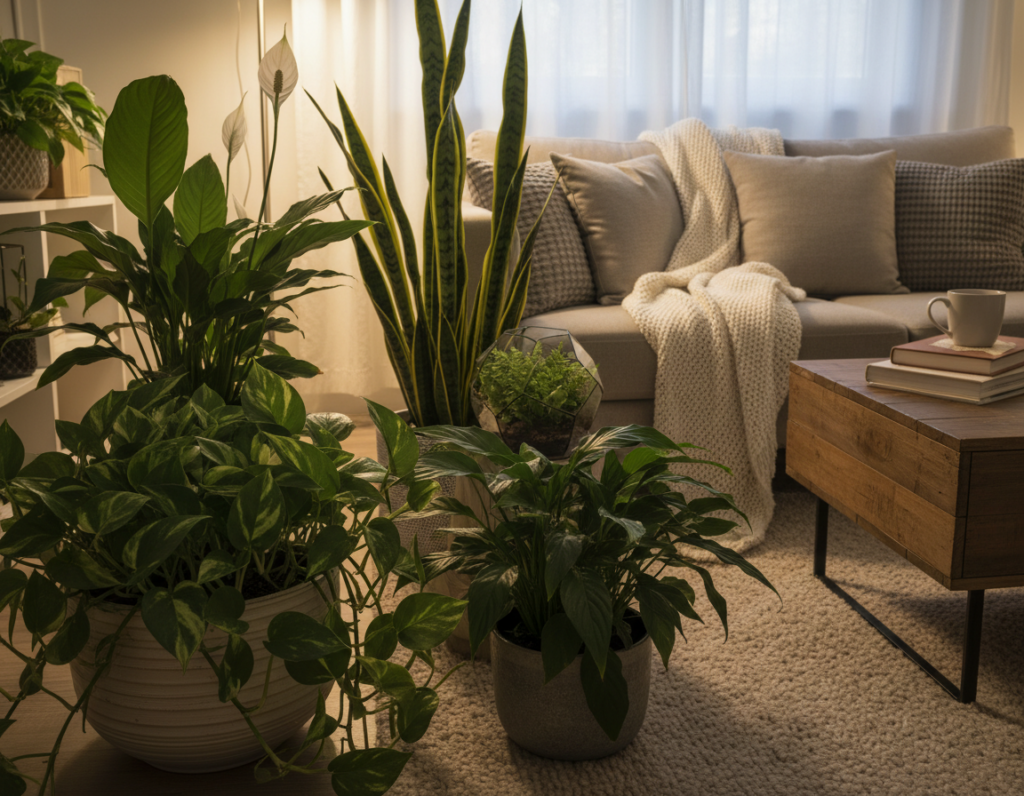
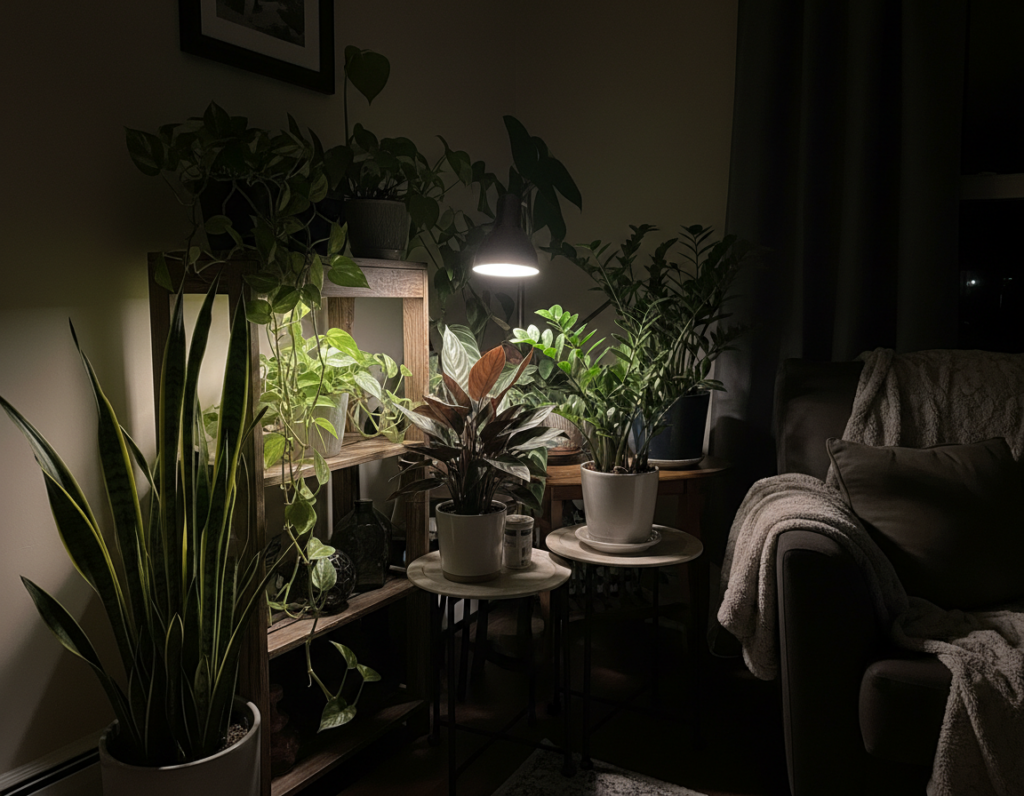
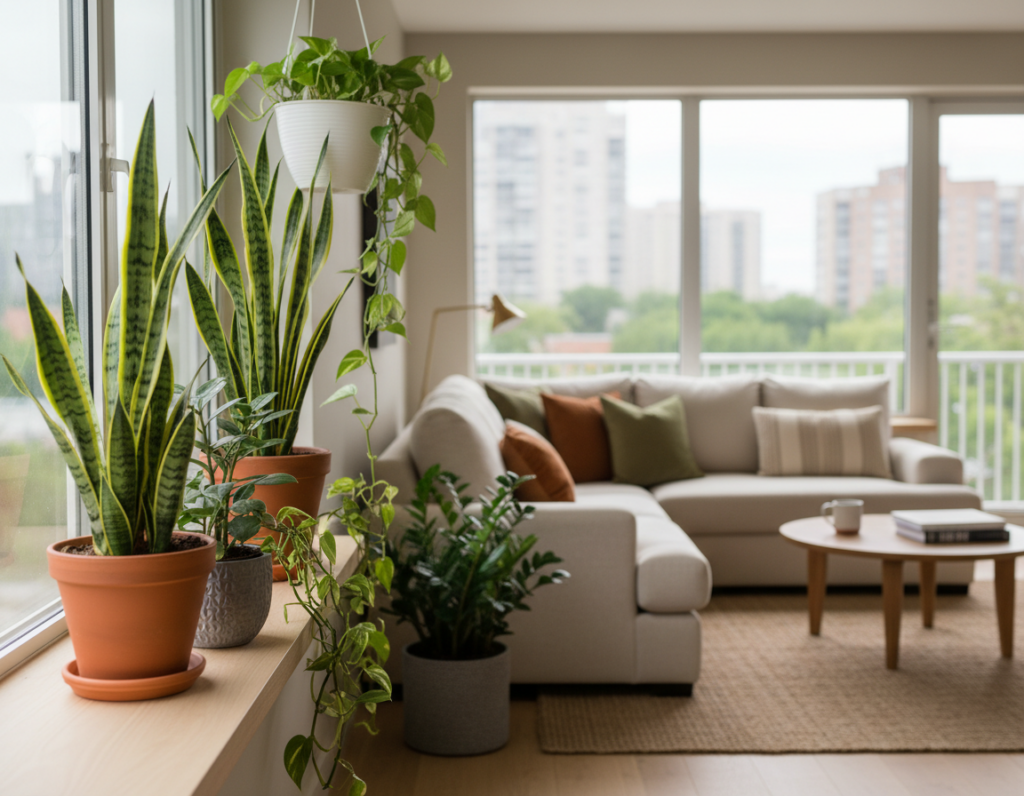
He has kept more than twenty houseplants at once and grew up in a family with deep gardening and agricultural roots. That background gave practical rules about matching a species to its place.
Finding the right plant can feel hard when a room gets little light. Many people try the same common varieties and then blame their space.
Experts say plants need the correct environment to do more than survive. Learning which types will thrive takes time, but the payoff is a vibrant home that lasts year-round.
If you’re looking beyond myths and choose the best low light options, even dim rooms can support life. This guide begins with simple choices that fit tight space and tight schedules.
Understanding Low Light Conditions in Your Apartment
Not every room gets direct sun; knowing how to read light levels helps a gardener choose wisely.
Indirect light means bright, diffused rays that never hit a surface directly. It often occurs in spaces set back from a window, behind sheer curtains, or facing north. Most species that tolerate shade prefer this softer exposure.
Defining Indirect Light
Indirect light is steady but gentle. It supports slow, steady growth without the stress of full sun.
Identifying Darker Rooms
Walk each room at different times. If you must switch a lamp on during daylight, the space is probably too dim for many houseplants.
- Measure distance from the window; farther spots receive less light.
- North-facing windows often provide ideal conditions for shade-tolerant species.
- A shaded corner can work if you choose the right plant or add a grow light.
By assessing these conditions, anyone can pick the best corner and create a favorable environment for greenery in their home.
Debunking Common Myths About Indoor Plants for Low Sunlight Apartments
Many online lists claim that money trees and ficus varieties will thrive in dim rooms, but greenhouse experts often disagree. These species usually need brighter light than charts suggest and can decline despite careful water and soil care.
A family member with gardening experience may confirm that some species simply cannot perform without adequate light. Wasting time and money on the wrong choices is a common regret.
Better options include the peace lily and the chinese evergreen. They tolerate dull corners and often reward owners with steady growth and fewer problems.
Keep in mind that a label reading “tolerant” can mean survival, not thriving. Proper placement and routine care still determine long-term success.
- Avoid high-light species if windows are weak.
- Choose proven varieties that match the room’s actual light.
- Focus on the best low light choices to save time and stress.
For a practical list of reliable options and care tips, see the best low light choices to guide your next purchase.
The Resilience of Snake Plants and Dracaena Varieties
For compact spaces with modest exposure, snake plants and dracaena proved their resilience over years. These species suit people who want architectural foliage without constant fuss.
Benefits of architectural foliage
Snake plants offer striking, upright leaves that create a modern silhouette and work well in narrow corners. They are widely considered one of the most resilient species in low light conditions and often survive years of general neglect.
The dracaena adds height and air-cleaning benefits. In practice, a dracaena has been shown to grow about a foot over two years in a dim corner, making it a good choice when vertical form matters.
Practical care and why they succeed
- Minimal watering: let the soil dry between sessions to avoid root rot.
- Low maintenance: both tolerate occasional neglect and steady, modest growth.
- Air benefits: these varieties help improve room air and visual depth.
Tip: Overwatering is the leading cause of failure. Proper watering preserves these durable houseplants.
For more guidance on choices that tolerate limited light, see this concise guide on plants that don’t need strong sun.
Why ZZ Plants Are Perfect for Dim Corners
The ZZ plant brings glossy texture and quiet strength to a dim corner, brightening a room with minimal fuss.
Its dark, reflective green leaves catch stray rays and help make a shadowed space feel more inviting.
ZZs suit busy households because they need sparse watering and little daily care. They tolerate drought and long gaps of neglect without decline.
Benefits of Architectural Foliage
- Sturdy form: upright stems and sculpted leaves add structure and height to corners.
- Low maintenance: excellent option if you’re looking for a resilient plant that thrives low light.
- Light-reflective leaves: glossy green leaves brighten a dark room with subtle shine.
- Companion-ready: the ZZ’s bold silhouette pairs well with dracaena and other houseplants.
Overall, the ZZ is a reliable choice when a corner seems impossible to fill. Minimal watering and occasional care keep it healthy and attractive with almost no fuss.
Elegant Cast Iron Plants for Traditional Spaces
A cast iron plant brings a hush of endurance and deep green texture to classic rooms. Its arching leaves read as timeless next to antique wood and layered textiles.
The species is famed for surviving in very low light conditions and staying attractive with little fuss. It is highly resilient, so it suits any room that seems too dark for other choices.
Why homeowners choose it:
- Classic look that complements heirloom furniture and formal decor.
- Hardy nature makes it a strong pick for beginners and busy households.
- Arching green leaves soften modern lines and add quiet elegance to small spaces.
In short, the cast iron plant fills empty corners with steady color and low effort. It remains a staple when people want enduring greenery that lasts in shaded rooms.
Trailing Philodendrons for Shelves and Built-ins
Trailing philodendrons bring gentle movement and green rhythm to shelves and built-ins. They adapt to dim corners and create a layered look without much space or fuss.
Versatility in Decor
These vines suit high shelves where stems can drape and soften edges. In good indoor conditions a vine may reach up to ten feet over several years, adding dramatic flow.
Managing Growth Rates
Prune regularly to control length and encourage bushier growth. Trimming keeps the display full and prevents legginess.
- Let the soil dry slightly between watering sessions to avoid root rot.
- Expect slower leaf and overall growth in low light; patience rewards steady, healthy vines.
- Check moisture with a finger; consistent checks save time and stress.
“Placed well, a trailing philodendron softens hard lines and makes a room feel collected.”
Overall, these plants grow well with minimal effort and fit tight space and varied conditions. They remain a top choice when easy, flowing greenery is needed.
Selecting Larger Indoor Trees for Sculptural Appeal
Choosing a larger tree gives a room instant scale and a sculptural center.
They create a focal point by adding height and visual weight to an otherwise flat corner. A dracaena is a common pick because it brings vertical form and modest air benefits.
Many varieties that thrive in the shade adapt to limited light near windows. The weeping fig is a rainforest native that tolerates shade but often enters shock if moved too much.
Proper soil and drainage matter more as size increases. Use a stable, well-draining mix and a pot with a clear drainage path to support steady growth and healthy roots.
- Match scale: pick a specimen that fits the room’s height and furniture.
- Prioritize needs: choose a houseplant that suits the light and available space, not just decor.
- Plan placement: a single large tree can transform a corner into a lush, lasting feature.
“With steady care, larger trees can live many years and become the room’s defining element.”
Essential Care Tips for Thriving in Shade
Simple routines make a shaded corner reliable. Small habits help a specimen stay healthy when light is limited.
Watering Strategies
Keep a steady rhythm. Check the soil with a finger before watering. If the top inch feels dry, water sparingly.
Avoid letting the soil remain wet. Overwatering causes rot and slows growth. Let pots drain and wait between sessions.
The Importance of Dusting Leaves
Wiping dust from leaves lets more light reach the surface. Clean foliage absorbs rays better and helps a houseplant photosynthesize.
Use a soft cloth or a gentle shower to remove buildup. This simple step improves health and reduces pests.
Rotating for Even Growth
Turn each specimen every few weeks so all sides face the window. Even exposure prevents lopsided growth and encourages balanced form.
Good air circulation and occasional leaf cleaning keep the room environment healthy. If a dracaena shows slow growth, that steady pace is normal in shade.
“Consistent, gentle care ensures long-term vitality in dim conditions.”
- Check soil by touch before watering.
- Dust leaves to improve light absorption.
- Rotate pots to promote even growth.
- Keep air moving to prevent pests.
Safety Considerations for Households with Pets
Safety comes first when adding green life to a home that includes cats or dogs. In low light rooms, some common species still pose risks. The dracaena is toxic to cats and dogs and must be kept well out of reach.
Before bringing any new plant into the house, check toxicity from reliable sources. A peace lily is attractive, but it can harm curious pets if they chew the leaves.
The chinese evergreen is also popular and can be dangerous. Place risky specimens on high shelves or inside closed cabinets to reduce access.
Good practice means choosing safe varieties when possible. Some ferns and other pet-friendly choices reduce worry and still add texture to a room.
“Prioritize safety: research toxicity, control placement, and supervise curious animals.”
- Research toxicity before purchase.
- Keep tempting leaves away from common pet areas.
- Practice careful watering and manage soil to prevent accidental ingestion.
- When in doubt, pick species known to be non-toxic and give everyone peace of mind.
Conclusion
A well-chosen specimen can transform a dim corner into a calming focal point. With the right match of species and placement, a room gains texture, scale, and a quiet sense of peace.
Success often comes from simple habits: check soil before watering, dust leaves, and rotate the pot. They keep growth steady and reduce common problems. If someone struggled before, patience and small adjustments usually pay off.
Always consider pet safety and the needs of each specimen when adding a new piece to the home. Follow the care tips in this guide and a healthy, attractive collection will reward the homeowner for years.