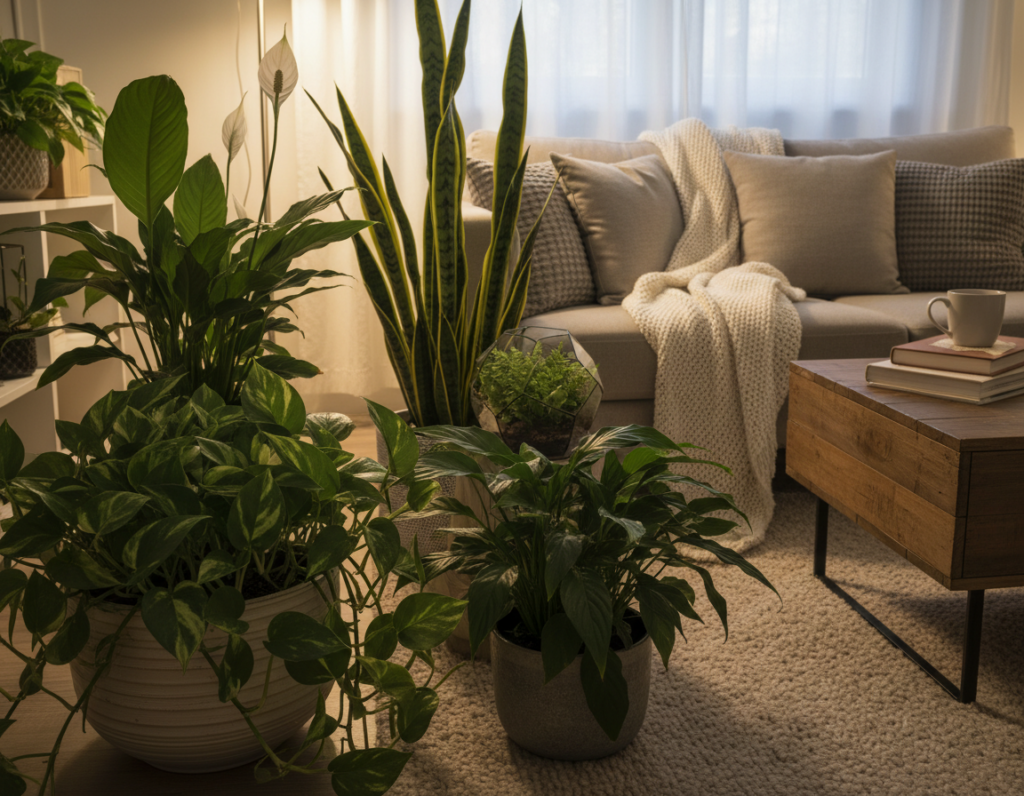
Many residents in the United States struggled in the past to keep greenery alive when natural light was scarce. This guide explains simple choices that helped them bring fresh air and calm to the home.
Choosing the right plant made the difference. Local garden experts advised matching a species to the room’s conditions. That step turned failed attempts into steady success.
Readers will learn which houseplants fit low-light rooms and how to care for them with minimal effort. The result is a living space that feels brighter and full of life without extra work.
Understanding Light Requirements in Small Apartments
Understanding how much light a small unit actually receives is the first step to choosing greenery that will thrive. A quick check of windows and bright spots helps match a plant to each living area.
Defining Indirect Light
Indirect light means bright but filtered sunlight. It is common a few feet back from windows where light reaches a room without direct sun beams.
Experts at The Sill note that low light does not mean no light; it simply describes a spot with gentler, indirect light.
Assessing Your Space
- Note which rooms face north or are blocked by buildings; these often have low-light conditions.
- Identify corners that get some daylight versus those in deep shade all day.
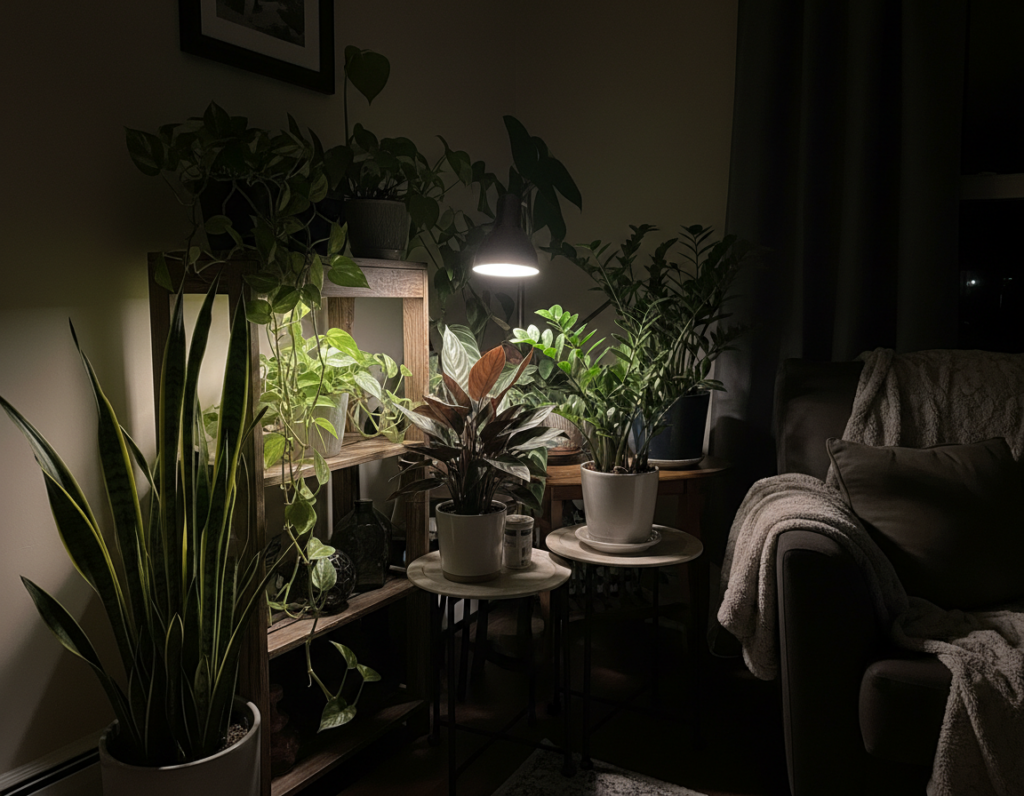
- If a room needs a lamp on during the day, consider a supplemental grow light to support slower growth.
- Remember many houseplants tolerate dim spots but will grow slower than in bright, sunlit areas.
Understanding these factors makes it easier to pick the right plants and keep each plant healthy in a small, indoor home.
Top Shade Loving Indoor Plants for Apartments
A well-chosen selection of low light species gives a home steady growth and healthy foliage.
Selecting the right variety is essential because many common trees and indoor types fail in very dark rooms. A plant suited to low-light conditions will grow steadily and look healthy instead of merely surviving a day.
Experts warn against placing these specimens in direct sunlight; bright, hot rays can scorch leaves. High humidity favors some houseplants, so bathrooms and kitchens often make ideal spots.
- Group several species to turn dark corners into a lush focal point.
- Keep them near windows that provide indirect light rather than full sun.
- Pay attention to watering and air moisture to match each plant’s needs.
With a careful match of variety to room conditions, tenants in the United States found success keeping greenery that thrives with low maintenance in low-light conditions.
The Resilience of the Snake Plant
The snake plant is widely regarded as one of the most resilient choices for low light rooms. It tolerates temperature swings, irregular watering, and limited light better than many trees and common varieties brought into small homes.
Placement and Watering Needs
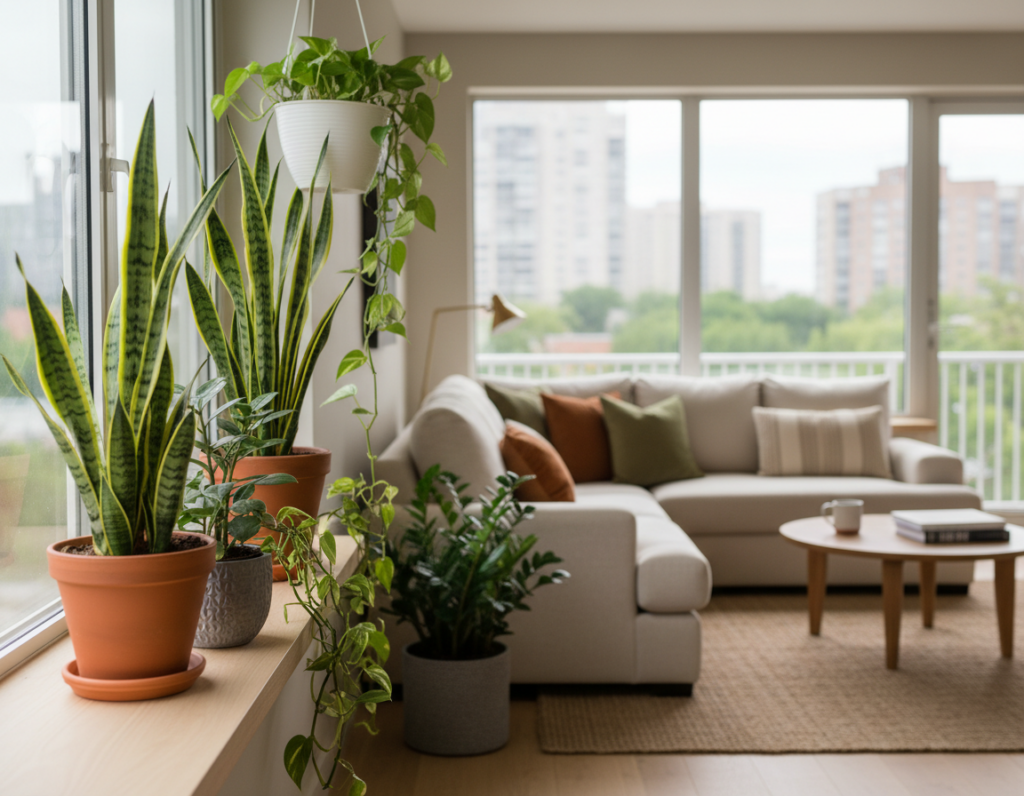
The best spot is near a window that supplies indirect light, or tucked into a dim corner where it can tolerate low light. These plants grow vertically, which helps save floor space in a small living room.
Water sparingly. Let the soil dry completely between waterings. Overwatering is the leading cause of failure; wet soil invites rot and kills healthy growth.
- They tolerate low light and irregular care, making them ideal for beginners.
- Thick, sword-shaped leaves offer sculptural texture and steady growth.
- Use well-draining soil and a pot with drainage to keep the root zone dry.
In short, snake plants deliver low-effort beauty and dependable performance in tight, dim spaces.
Why ZZ Plants Thrive in Dim Corners
ZZ species survive where other greenery often fades. A single plant can lift a dim room with very little care.
Glossy, dark green leaves reflect whatever light is present, making a corner feel a bit brighter. The foliage stays neat and structured, so it suits shelves and narrow ledges.
ZZs store water in thick rhizomes underground. That storage lets them go longer without a drink than many trees or common houseplants.
- The ZZ species tolerates low light and grows slowly, so it needs little fuss.
- Use a well-draining soil mix to avoid stagnant water at the roots.
- Place it in a stable spot with moderate temperatures and check soil only every few weeks.
In short, the ZZ offers hardy growth with glossy leaves that reflect light. For someone seeking low-effort greenery that will tolerate low conditions, it is a top choice.
Adding Texture with the Cast Iron Plant
The cast iron plant brings sturdy texture and deep green leaves to dim hallways with almost no fuss.
Aspidistra is prized because its slightly arching foliage endures low light and less-than-ideal conditions. This quiet species fits tucked corners or beside heavy furniture and adds classic, timeless texture.
Basic care is simple. Water infrequently but give a generous soak when the top soil dries. Use well-draining soil and a pot with drainage to avoid root problems.
- The cast iron plant will tolerate low light and slow growth makes it low-maintenance.
- It does not demand high humidity, so it suits many rooms in a typical U.S. rental.
- Quality soil supports steady, graceful foliage and long-term health.
In short, this plant is a reliable choice for anyone who wants lush greenery without daily fuss. It adds depth and resilience to the home while needing only basic care.
Versatile Pothos for Shelves and Hanging Spaces
A single pothos can turn a high shelf or bracket into a trailing cascade that brightens a small room. This variety adapts to limited light and many room conditions, making it popular in the United States.
Trailing Growth Habits
Pothos vines grow quickly and drape attractively from high shelves or hanging containers. Their glossy leaves create steady foliage that lifts a corner without daily care.
They tolerate lower light and modest humidity. Let the top inch of soil dry between water sessions to avoid soggy roots.
Propagation Basics
Propagation is simple. Take a 4-6 inch cutting with a node, place it in water until roots form, then transfer to potting mix.
- Adaptable: The golden pothos suits many shelf heights and hanging plants setups.
- Easy to trim: Regular pruning keeps vines tidy as the plants grow.
- Fast results: Cuttings root quickly, so new growth appears within weeks.
Essential Care Tips for Low Light Foliage
Small adjustments to daily routines keep low light foliage healthy and attractive in dim rooms.
Check the top soil with your finger before you water. If the soil feels dry an inch down, it is usually safe to add water. Most plants prefer to dry out slightly between watering; overwatering causes root rot more than thirst does.
Rotate containers every few weeks so growth stays even when one side faces the light. Gently wipe dust from the leaves to help them absorb the limited light each day.
If leaves yellow or growth stalls, reassess light levels in the room. Consider moving the plant to a spot with more indirect light or adding a small grow light when natural sunlight is insufficient.
- Check soil dry: finger-test before watering.
- Rotate regularly: promote even growth.
- Clean leaves: remove dust to improve light capture.
Incorporating Supplemental Grow Lights
Supplemental lighting can transform a dim corner into a reliable growth zone without major changes to a rental. A renter-friendly fixture gives steady, predictable light so greenery keeps steady growth through short winter days.
Choose fixtures that fit the home. Models such as Soltech’s Vita or Aura blend with decor and plug into a standard outlet. They avoid drilling and remain portable as pots are moved near windows or shelves.
Choosing Renter-Friendly Fixtures
Good fixtures do more than brighten a shelf. A quality grow light provides the right spectrum to support foliage and occasional blooms while conserving energy.
“Portable grow lights extend the day for plants and help them stay vibrant year-round.”
- Use a plug-in unit like Vita or Versa to avoid permanent installs.
- Position lights near windows to supplement weak sun and extend the day length.
- Keep soil moisture steady and pair consistent light with proper water and humidity care.
In practice: move the fixture as stems reach, and consult guides to set hours. For a short how-to on arranging greenery in tight rooms, see integrate houseplants.
Common Mistakes When Selecting Apartment Greenery
Picking a specimen that matches a room’s actual light and humidity keeps greenery alive longer.
One frequent error is choosing species that need bright sunlight when a unit only offers low light. That mismatch leads to slow growth and pale foliage.
Overwatering is the most common killer. Too much water causes root rot and yellow leaves that are hard to reverse.
Many buyers pick trees or showy greenery solely for looks. If a plant cannot handle the home’s conditions, it will struggle despite good intentions.
Always read care tips before purchase. Note soil type, humidity needs, and how often to water. These simple checks prevent most failures.
- Avoid plants that demand full sunlight in dim rooms.
- Do not overwater; test the soil before adding water.
- Choose species that fit your home’s humidity and room size.
- Resist buying large trees for a small living space if light is limited.
By avoiding these pitfalls, renters can keep thriving houseplants that bring lasting life to their home.
Conclusion
A small, well-chosen plant can turn a dim corner into a focal point that feels alive.
Choosing species that suit low light makes care simple and results steady. They rewarded patience with gradual growth and cleaner air in the home.
Owners should check soil moisture often and only add water when the top inch is dry. This habit stopped most problems and kept roots healthy.
Start with one plant, learn its needs, and expand slowly. With consistent, basic care, many who once doubted their skill found success and calm in a living room or hallway.