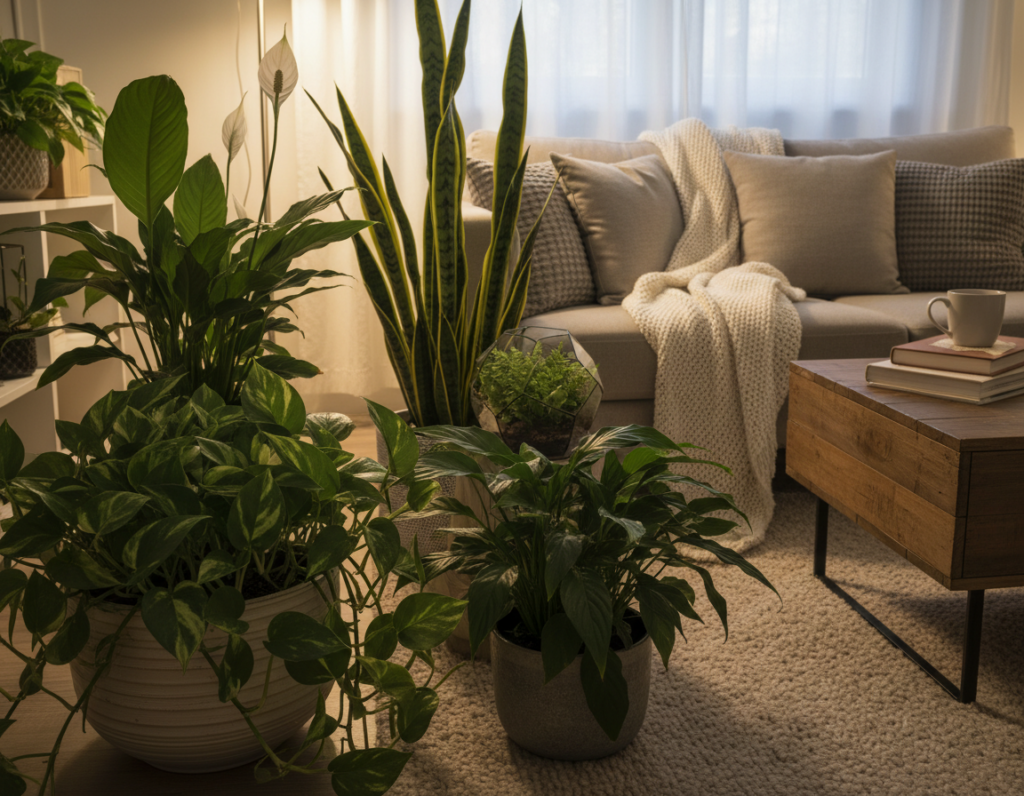
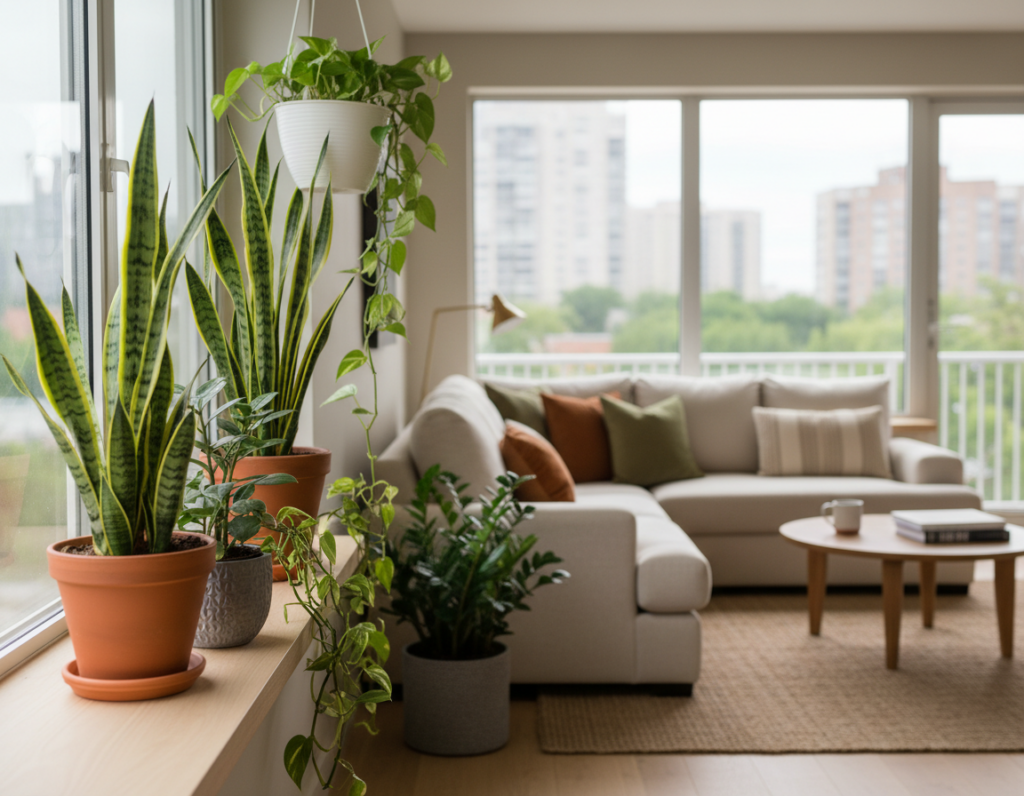
Creating a warm, inviting space in a compact flat required thoughtful design choices that put comfort and personal style first. This page explored how integrating nature into living areas improved the overall feel of the home.
Many people found that adding greenery became a top decor strategy for making small urban apartments feel welcoming. By choosing the right species and placement, a sterile room transformed into a lush sanctuary that reflected the resident’s personality.
The guide offered actionable steps for selecting plants, arranging furniture, and balancing color to support relaxation and function. Each tip was practical and easy to apply in tight layouts.
Readers were given clear next steps to curate a beautiful, comfortable space they would look forward to coming home to every day.
Why Plants Transform Small Living Spaces
A few well-placed green specimens can change how a small living area feels, turning rigid lines into flowing, organic forms.
Natural Softness
The organic lines of a healthy plant soften harsh architectural edges often found in modern, compact rooms. Soft foliage introduces fresh texture that complements furniture and finishes.
In tight layouts, houseplants act like living textiles. They add gentle movement and visual warmth without crowding a space.
Biophilic Connection
People have a deep need to connect with nature, and bringing greenery indoors satisfies that biophilic instinct. This connection fosters calm and improves a sense of well-being throughout the home.
- The organic lines soften sharp corners.
- Green foliage gives static rooms a sense of life.
- Natural elements reduce stress and support comfort.
- Choosing the right plant creates a welcoming atmosphere for guests.
Essential Cozy Apartment Plants Ideas for Your Home
A handful of well-chosen houseplants can redefine a small living room by adding height, texture, and a calming green focus.
Key selections include options that fit tight floor plans and varied light conditions. The Pothos sports trailing, golden or lime-variegated leaves and adapts well to shelves.
- Monstera Deliciosa: large, glossy leaves with signature splits give an architectural touch to the interior.
- Pothos: a vining workhorse that tolerates a range of light and shelf placement.
- Fiddle Leaf Fig: tall, violin-shaped leaves provide a modern focal point even in compact rooms.
- Prayer Plant: delicate tabletop foliage that folds up at night, adding subtle motion.
- ZZ Plant: waxy, dark green leaves that demand little care and brighten tight corners.
“Choose species that match light and humidity, and a small home gains big style and comfort.”
Selecting Varieties That Thrive in Limited Light
Smart selection of hardy varieties keeps foliage healthy in corners that never see direct sunlight. Many indoor species do best with bright, indirect light rather than harsh sun.
Adapting to Indirect Sunlight
Observe how each room receives light through the day. Note shaded hours and which window faces north or is blocked by buildings.
Choose species naturally adapted to lower light conditions. That ensures a plant will thrive in a small space and reduce maintenance.
- Place tolerant varieties in corners that lack direct sunlight.
- Avoid putting shade-loving types into harsh afternoon sun; they often burn.
- Check daily light patterns before buying so selections match local conditions.
With the right varieties and placement, even a compact apartment can support lush greenery. Focusing on indirect light makes it easier to sustain healthy foliage long-term.
The Role of Humidity in Indoor Plant Health
Indoor humidity governs how efficiently a plant moves water and nutrients from root to leaf. When air is too dry, transpiration speeds up and leaves can dry, curl, or brown along the edges.
Proper moisture in the environment keeps foliage green and helps houseplants retain turgor. Steady humidity lets stomata function normally so photosynthesis and growth continue without stress.
Simple steps improve local humidity. Grouping specimens creates a microclimate that raises nearby moisture naturally. A small humidifier also stabilizes levels in dry rooms.
- Maintaining appropriate humidity levels is often overlooked by new indoor gardeners.
- Consistent moisture prevents brown leaf edges and supports long-term growth.
- Use grouping or a humidifier to create a more stable environment.
For practical guidance on safe methods, consult reliable humidifying tips to match levels to each species and protect plant health.
Maximizing Vertical Space with Hanging Greenery
Hanging greenery turns bare walls and ceilings into usable, living surfaces that free up precious floor area.
Hanging baskets are perfect when floor space is limited in an apartment. Macramé hangers and woven baskets are stylish ways to suspend a trailing plant from ceiling hooks or wall brackets.
This approach fills empty corners and preserves tables and floors for daily use. The result is a layered, lush look that pulls the eye upward and makes small rooms feel larger.
- Use sturdy ceiling anchors rated for weight to secure suspended containers.
- Choose trailing varieties with good air flow so foliage stays healthy.
- Place hangers near light sources to match a plant’s needs without crowding surfaces.
“Suspending greenery creates depth and adds a decorative element without taking up valuable square footage.”
Choosing the right hanging plant ensures the display thrives and becomes a lasting feature in small apartments.
Choosing the Right Pots for a Polished Aesthetic
The right pot acts like a frame, highlighting a plant as a deliberate decor choice.
Natural materials such as terracotta and ceramic give roots a breathable home and age gracefully over time. Warm, earthy tones or deep greens and blues create a calm palette that suits many interiors.
Woven baskets work well as decorative covers for nursery containers. They lift the visual weight of a plastic liner and add texture without sacrificing function.
Always check drainage. A pot with holes prevents water from pooling and reduces the risk of root rot. For a tight layout in an apartment, choose containers that match scale so each specimen looks intentional.
- Select breathable materials to support root health.
- Use decorative covers like woven baskets to upgrade nursery pots.
- Match color and scale so plants blend with your decor.
“A thoughtful container protects roots and completes the room’s look.”
Mastering Light Requirements for Vibrant Foliage
Plants thrive when light matches their needs. Proper illumination keeps leaves rich, prevents legginess, and supports steady growth in a compact living room.
Full Spectrum Lighting
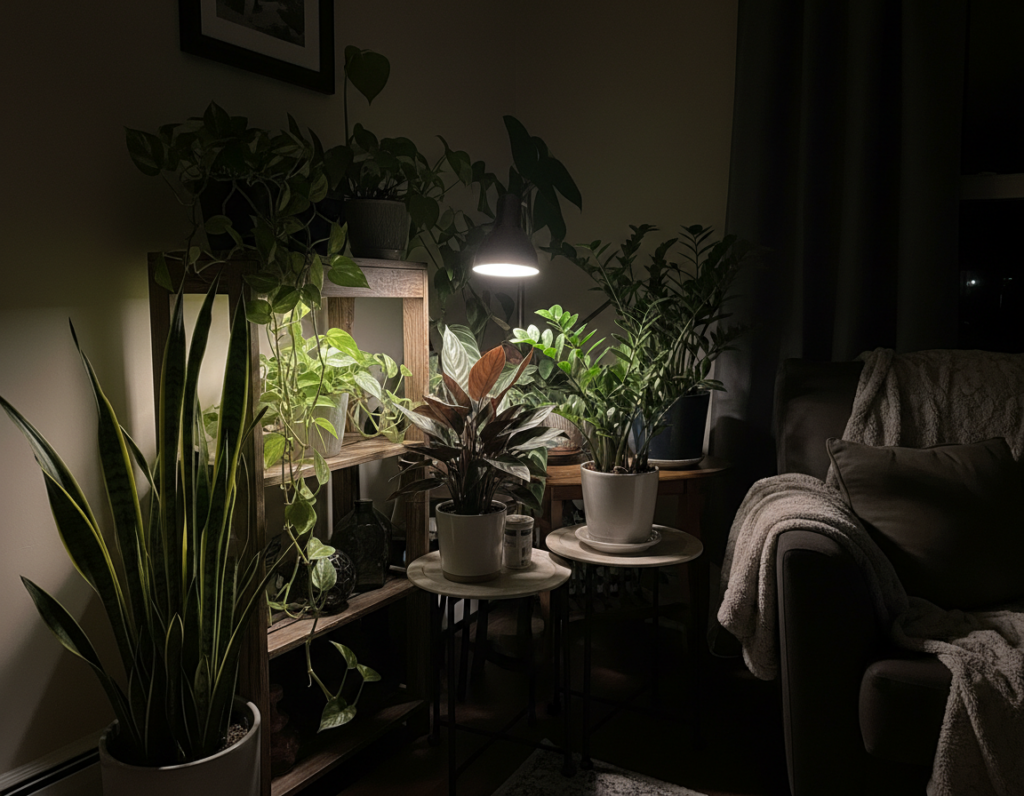
Full-spectrum bulbs mimic sunlight. A Vita Grow Bulb fits standard lamps and supplies broad-spectrum energy so a plant gets balanced light all day.
That steady source helps foliage develop true color and resilience in spots that lack natural sunlight.
Avoiding Harsh Hues
Some grow lights cast purple or blue tones that look harsh on decor and can distort perceived leaf color.
The Versa Tabletop Grow Light gives neutral, plant-friendly illumination for a table or desk without those intense hues.
Positioning for Growth
Placement matters. The Aspect X Stello Pendant Stand Set is a freestanding stand ideal for positioning a larger specimen in the room.
- Keep lights at the recommended distance so leaves receive even exposure.
- Use indirect light near windows and supplement with grow lights where needed.
- Rotate specimens weekly to encourage balanced growth.
“Proper positioning of your light source ensures plants receive the energy they need for consistent, healthy foliage growth.”
This page offers simple ways to integrate these lighting solutions into home decor so the display looks polished and performs well.
Benefits of Grouping Plants for Visual Impact
Combining different heights and textures in one area amplifies presence and improves local humidity for each specimen. This approach turns scattered containers into a cohesive vignette that reads like a curated indoor garden.
Clusters create a strong focal point and make a small space feel intentional. When similar water and light needs are grouped together, the micro-environment supports healthier growth.
Grouping also helps with indirect light distribution. Taller specimens shade shorter ones slightly, which can benefit shade-tolerant varieties and reduce stress from intense rays.
- Clustered arrangements amplify texture and height for a more dramatic look.
- Similar care needs in a group raise local humidity and lower maintenance.
- A well-composed set lets one plant accent another for balanced visual flow.
“A focused grouping can transform a dull corner into a vibrant living focal point.”
Incorporating Greenery into Bathroom Environments
A small bathroom can become a humid, green retreat with the right selections and placement.
Bird’s Nest Fern is an excellent choice for these environments because it loves humidity and displays lush, rounded leaves that suit wet rooms well.
Many humidity-loving houseplants thrive in bathrooms where steam raises moisture. This makes them easier to keep healthy without extra misting.
Use shelves or hanging displays to save prime floor space in compact bathrooms. Wall-mounted racks or a single hook can create vertical interest and keep surfaces clear.
Beyond looks, selecting the right vegetation improves air quality by filtering common toxins and freshening the air in limited spaces.
“Incorporating greenery into a bathroom creates a spa-like living experience and makes daily routines feel more luxurious.”
- The bathroom is often overlooked but can be a lush oasis with humidity-loving species.
- Creative shelving and hanging solutions save space and add style.
- Choosing the right plants supports cleaner air and a calmer living environment.
Understanding Soil and Watering Needs
Good soil structure paired with sensible watering is the backbone of successful indoor gardening. A well-draining mix prevents water from pooling and protects roots from rot.
Most houseplants prefer the soil to dry slightly between sessions of water. Checking moisture levels by touch or a meter helps avoid overwatering, a leading cause of decline in small homes.
Use a pot with drainage holes so excess liquid can escape. That simple step keeps the root zone healthy and improves air flow around roots.
- Proper soil selection gives plants the right balance of moisture and aeration.
- Monitor soil moisture regularly to match each species’ care needs.
- Maintain stable light, humidity, and temperature conditions to support steady growth.
“Regularly checking the soil helps identify when a plant truly needs water, keeping leaves vibrant and roots strong.”
Statement Plants for Architectural Interest
A striking leafy specimen can anchor a living area and provide an instant architectural focal point. A single large plant often functions like a sculptural element, clarifying sightlines and making the room feel intentional.
The Bird of Paradise grows up to six feet tall and shows paddle-shaped leaves that read like a living screen. Its vertical scale creates real presence and frames seating or an entryway.
- The Fiddle Leaf Fig offers bold, violin-shaped leaves and a tree-like silhouette that reads as furniture-level architecture.
- Both varieties need bright, indirect light to sustain lush foliage and steady vertical growth.
- Picking by common name or by the plant’s unique shape helps match a specimen to the room’s style.
- Placed thoughtfully, a large statement plant becomes a natural sculpture that defines the entire space.
“A single well-placed specimen can organize a room and elevate its design without extra clutter.”
Low Maintenance Options for Busy Lifestyles
When schedules are tight, selecting resilient varieties lets greenery thrive with minimal attention.
The Spider Plant is ideal for people who move fast. This self-propagating species tolerates a wide range of light and keeps producing offshoots that make sharing easy. It also helps filter indoor air while requiring simple soil and basic care.
Haworthia, also known as the zebra plant, is a compact succulent that needs very little water. Its fleshy leaves store moisture, so it survives missed watering and low sunlight without fuss.
- The Spider Plant tolerates varied light and repopulates on its own.
- Haworthia needs minimal water and simple soil with good drainage.
- Both varieties thrive in spots with indirect light and low daily care.
“Choose hardy species that match your life rhythm to enjoy greenery without extra upkeep.”
Creative Ways to Display Your Indoor Garden
Using vertical and layered displays stretches floor area visually and adds depth to compact living zones.
Elevate a specimen with a decorative stand to create a statement piece in the living room. A raised pot brings a plant closer to eye level and defines the vignette without adding clutter.
Hanging baskets and macramé free floor space while showing off trailing leaves. They work well near windows that give indirect light and suit bathrooms where humidity favors many species.
Group several pots on a table or shelf to form a lush cluster that boosts local air and moisture levels. This approach makes small spaces feel cohesive and sanctuary-like.
- Use unique containers to add texture and color.
- Place a spider plant on a mid-height stand for easy care and display.
- Check soil moisture and water according to levels, even in hanging pots.
“Thoughtful staging turns greenery into a polished feature that supports both form and function.”
Troubleshooting Common Growth Issues
When growth slows or leaves change color, quick checks can reveal the issue before it worsens. Early troubleshooting saves time and keeps a plant healthy.
Start with simple observations. Look for yellowing or drooping foliage, which often points to too much water or too much direct light. Cleaning dusty leaves with a damp cloth improves light absorption and helps recovery.
- If leaves turn yellow, check recent watering and adjust if the soil stays wet.
- Use well-draining soil to prevent root rot; overwatering is the most common indoor issue.
- Monitor air flow and light—insufficient air or harsh sun can halt new growth.
- Regular plant care, like wiping leaves and rotating pots, supports steady growth.
Troubleshooting growth issues early prevents long-term damage and keeps specimens a healthy part of the home. If problems persist, evaluate placement, drainage, and routine care before changing species.
“Simple checks—water, light, soil, and clean leaves—solve most common problems.”
Enhancing Your Home with Natural Textures
Natural textures bring soft, organic contrast that enriches modern interior spaces. A single plant can introduce a sculptural line that offsets clean furniture.
Mixing leaf shapes and finishes creates layers of interest. Bright light will highlight glossy leaves while matte foliage offers a quiet backdrop.
Combining different foliage types builds a rich, tactile display that reads as intentional decor rather than clutter.
- Choose plants with varied leaf shape and edge detail to add texture.
- Use height and scale to create depth without crowding the floor.
- Place specimens where they catch soft light to show leaf structure.
Every addition contributes to the overall feel of the home. Thoughtful placement of greenery and a focus on texture help make a living space feel curated and warm.
Conclusion
Even one well-placed specimen can lift a room’s mood and improve air and visual balance, especially in a small apartment where every choice counts.
Match a plant to its light needs, check soil moisture, and follow a simple care routine. Position specimens so leaves get even light and rotate them to prevent uneven growth.
Use hanging displays or a single statement plant to create height without clutter. Thoughtful decor choices will boost air quality and make living areas feel more complete.
With small, steady steps, this guide helps readers bring lasting green life into their home.