Adding greenery can transform an office into a calm, productive place. The guide highlights how tiny additions, like a 12-inch Syngonium podophyllum, bring lush leaves without crowding valuable work space.
Busy professionals often seek low-maintenance options that suit a compact layout. These houseplants balance form and function, brightening corners and boosting mood in a home office.
Thoughtful placement matters. Use hanging mounts or compact pots to free surface area and keep the work area tidy. With basic care, these specimens stay healthy even with a packed schedule.
Choosing the right species for specific office layouts is a smart first step. It helps build a sustainable indoor garden that fits current routines and enhances visual appeal.
Why Small Desk Plants for Apartments Are Essential
Bringing living greenery into compact spaces has become a design priority in 2026. The biophilic trend treats these pieces as functional decor that supports mental health and indoor air quality.
Designers note that adding houseplants to a living room or office can change how a room feels. They break up screen time and create a calmer work rhythm.
Urban residents report that placing greenery near floor corners or shelving helps balance a busy layout. A few well-chosen specimens make a studio feel more like a garden retreat.
- Improves perceived air freshness and reduces stress during long work sessions.
- Defines living spaces and adds texture without overwhelming the room.
- Acts as low-effort decor that supports focus and productivity.
“Living elements are essential to healthy, productive interiors,” says contemporary design guidance.
Assessing Your Workspace Lighting Conditions
Begin with a quick audit of how much light reaches your work area. This simple check guides species choice and placement in modern office spaces.
Natural Light vs. Fluorescent
Natural sun near a window speeds growth but can burn leaves if intensity is high in summer. Monitor glare and move specimens a few feet back when midday rays peak.
Many offices rely on fluorescent bulbs. Some species, like an 8-inch Bird’s Nest Fern, thrive in low light provided by those fixtures. Choose resilient varieties when natural light is limited.
- Match species to measured light levels rather than guesswork.
- Use grow bulbs where daylight is absent to support growth and air purification.
- Rotate placement weekly so each plant gets balanced exposure.
The Importance of Nighttime Rest
Plants need a dark period to process energy, just like people. Turn off office lights at the end of the day to maintain a reliable day/night cycle.
“A consistent night interval helps a plant recover and keeps foliage vigorous.”
Low Light Champions for Dim Office Corners
Low-light corners can host resilient greenery that thrives without constant care. The ZZ plant (Zamioculcas zamiifolia) stores water in thick rhizomes, so it can go weeks without a drink. That trait makes it ideal when an office faces neglect or irregular watering schedules.
The snake plant (Dracaena trifasciata) adds vertical interest with upright foliage. It also keeps producing oxygen at night, which benefits a living workspace and supports better air quality.
Proper soil moisture is the key to success. Both varieties prefer to dry slightly between waterings to prevent root rot. Routine checks of the soil surface are enough for busy professionals.
- ZZ plant survives low light and long gaps between waterings.
- Snake plant offers tall leaves that save surface space and need minimal care.
- Group these houseplants in corners to create a low-maintenance living sanctuary.
“Choose hardy varieties that suit dim conditions and limited attention.”
Vertical Solutions for Limited Desk Space
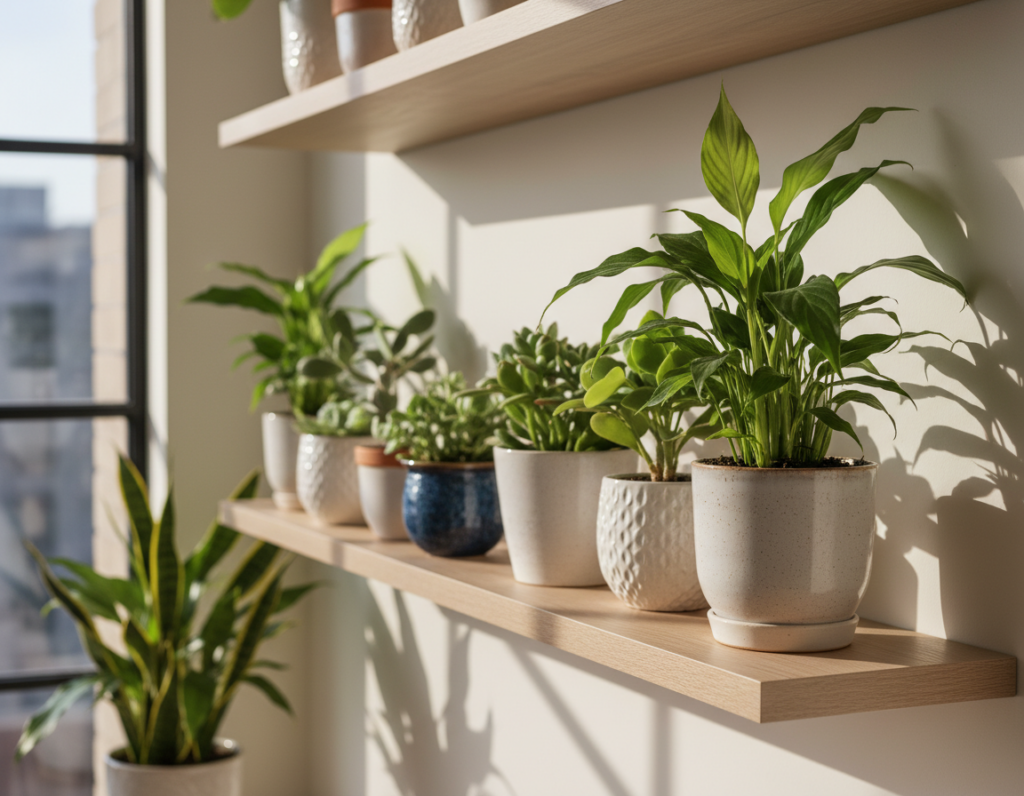
High shelves and hanging mounts turn unused heights into productive plant zones with dramatic green leaves.
Vertical setups free surface area while adding life to an office. They suit tight layouts and create layered interest at different levels.
Utilizing Hanging Planters and Shelves
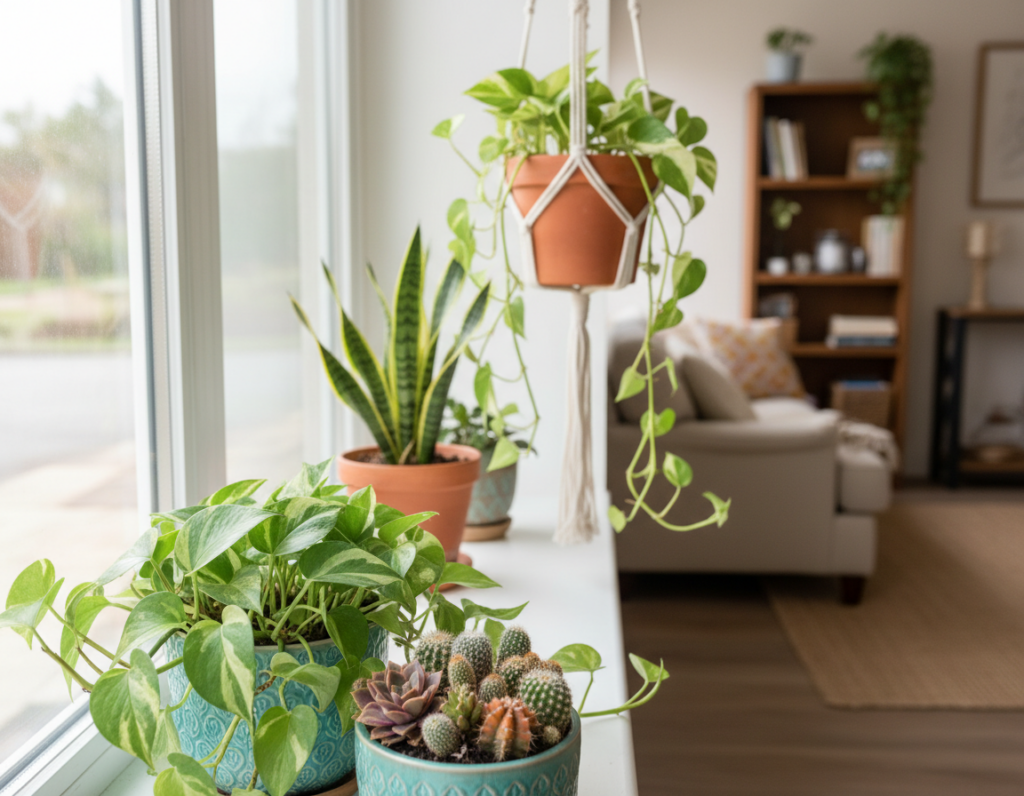
Choose trailing varieties like the Beautifall® Snowy Morning Pothos. It can grow up to 108 inches long, so it thrives cascading from high shelves.
- When floor space is limited, hanging planters let you display plants without cluttering a desk.
- Monitor soil moisture in each container to support steady growth and avoid missed waterings.
- Install shelves at staggered heights to train vines to climb or spill and to save valuable surface space.
- Hanging greenery raises local humidity and can improve air feel in home office spaces.
“Vertical displays deliver lush visuals and keep work areas clear.”
High Impact Statement Plants for Sunny Spots
When a workspace gets ample light, one bold specimen can rewrite the whole aesthetic. A single Monstera Deliciosa, placed near a sunny window, can define the room and draw the eye.
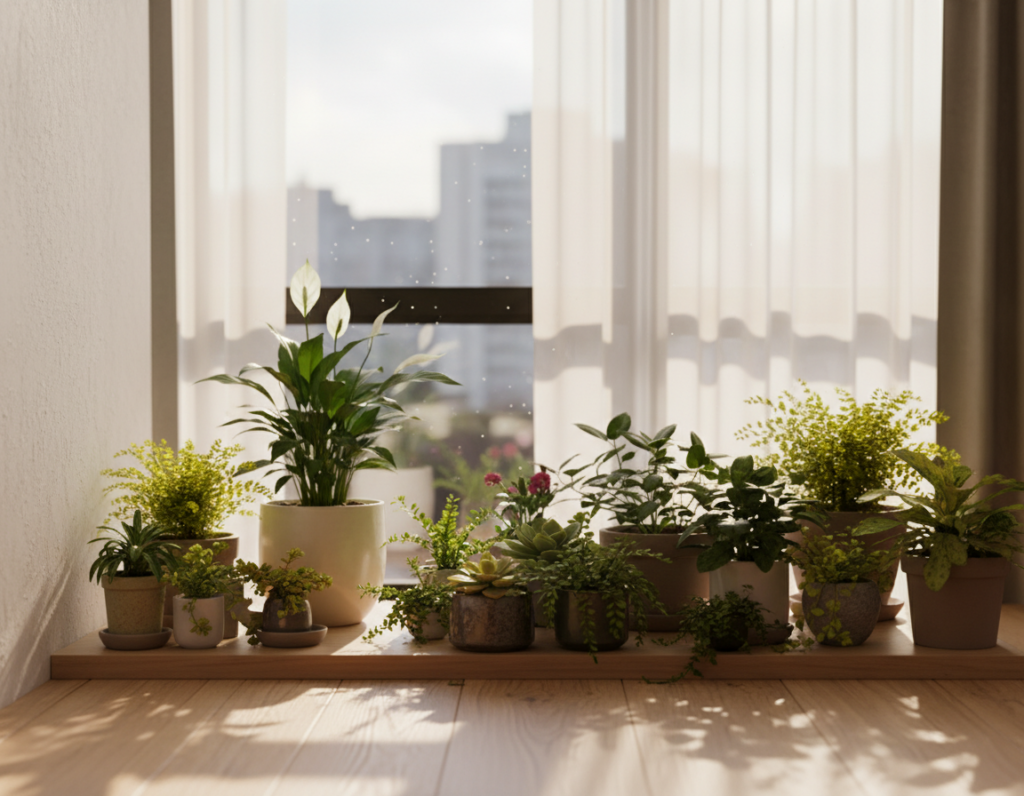
Group plants on a bright shelf or by a window to create a concentrated display that thrives in intense light. The Color Full® Like a Prayer™ plant adds drama with burgundy-purple undersides that show when its leaves fold at night.
Statement houseplants often prefer richer soil and higher humidity. Place a shallow tray of water beneath the grouping or use a humidifier to keep foliage pristine.
- Use hanging varieties to fill empty corners if the spot receives steady light.
- Select unique varieties to keep the indoor garden a focal point that impresses visitors.
- Keep a simple care routine so the statement specimens remain healthy as they grow.
“A single dramatic specimen can anchor the room and lift mood throughout the office.”
Essential Care Tips for Busy Professionals
A simple routine keeps office greenery healthy even during the busiest weeks.
Busy workers can protect growth and air quality with a few quick checks. These habits fit easily into a daily rhythm and reduce long-term maintenance.
Watering Schedules
Check the top inch of soil every two weeks to decide if a plant needs water. This rule works for most office plants, including forgiving varieties like Peperomia argyreia.
The snake plant tolerates neglect and only needs water when soil is fully dry. Staggered waterings keep roots healthy and prevent overwatering.
Soil Moisture Management
Managing moisture is critical because overwatering causes root rot in even tough houseplants.
- Use well-draining soil and pots with drainage holes.
- Monitor humidity and adjust watering on high or low humidity days.
- Group plants with similar moisture needs to simplify care.
Rotating for Even Growth
Turn each pot one-quarter toward the window each week to distribute light and keep green leaves balanced. Small rotation prevents lopsided growth and preserves leaf shape.
“A regular rotation makes plant care simple and supports even development.”
Integrating Modern Grow Lights into Your Setup
Smart lighting lets professionals expand their indoor garden without relying on sun. Modern fixtures bring full-spectrum light to low light corners and extend growth cycles for houseplants in windowless office spaces.
The Soltech Versa offers precise coverage with 310° horizontal rotation and 180° vertical articulation. It sits easily on a shelf or a desk and directs light exactly where leaves need it.
These units run efficiently and emit very little heat, so they are safe near a pot, container, or carpeted floor. They supply the wavelengths that trigger photosynthesis and steady growth while reducing the need to water as often.
- Support plants in dim corners without moving them to a bright window.
- Move the lamp between shelves, hanging spots, and a work surface to balance exposure.
- Use low-heat lighting to protect soil and to preserve local humidity and air quality.
“Modern lighting technology has transformed how we maintain greenery in compact spaces.”
Benefits of Adding Greenery to Your Home Office
Greening a home office supports mental clarity while improving the air people breathe. A few living additions can lower daily stress and boost focus during long work days.
Improved air quality comes from steady foliage that filters common indoor pollutants. That freshening effect helps the whole room feel cleaner and calmer.
Hardy choices like a snake specimen or other durable varieties need limited water and simple care. They tolerate inconsistent routines and may go weeks without fuss.
- Creates a pleasant visual anchor that softens modern office lines.
- Raises local humidity slightly and stabilizes moisture near work zones.
- Fits into hanging or corner layouts to save valuable surface space.
“Keeping houseplants in a work area reduces stress and supports concentration.”
Conclusion
A curated selection of houseplants can quietly lift mood and sharpen focus in any workspace. Choosing the right specimens rewards minimal effort with long-term benefits.
By watching soil moisture and light, busy professionals keep greenery healthy. Regular cleaning of the leaves prevents dust build-up and helps plants photosynthesize efficiently.
The snake plant remains a top pick for those with limited time. Its tolerance for low light and inconsistent watering makes it ideal when consistent plant care is a challenge.
Start with modest choices and expand confidently. For easy display ideas and tabletop options, see easy tabletop hanging plants.