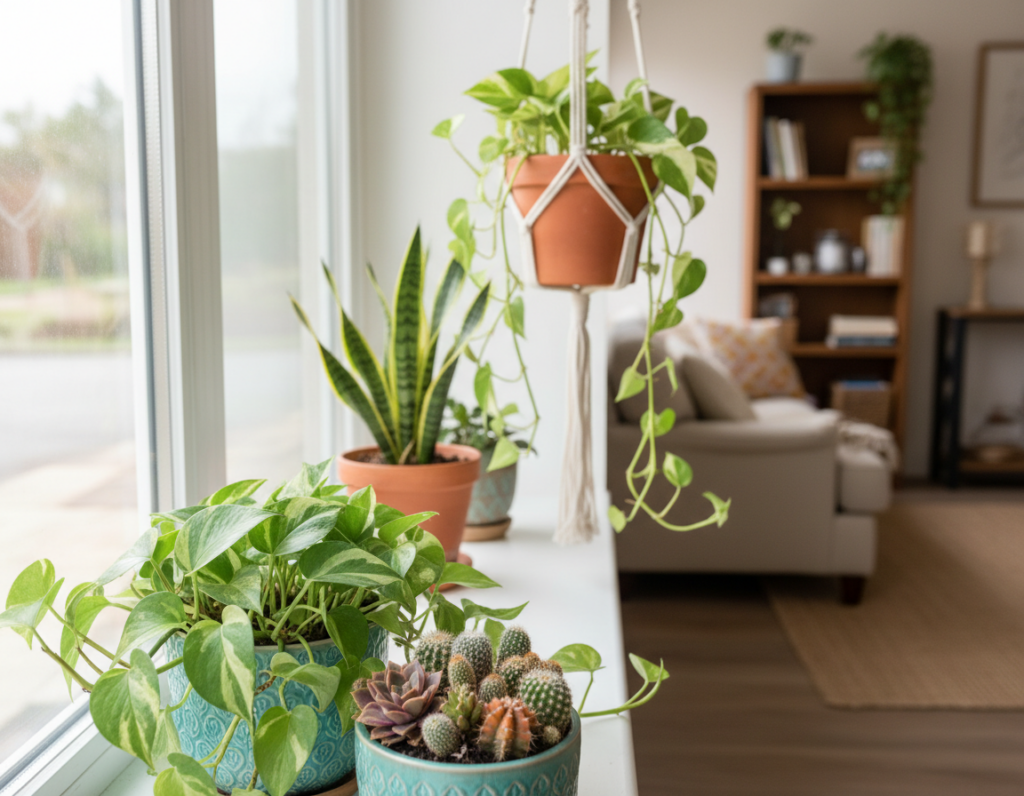
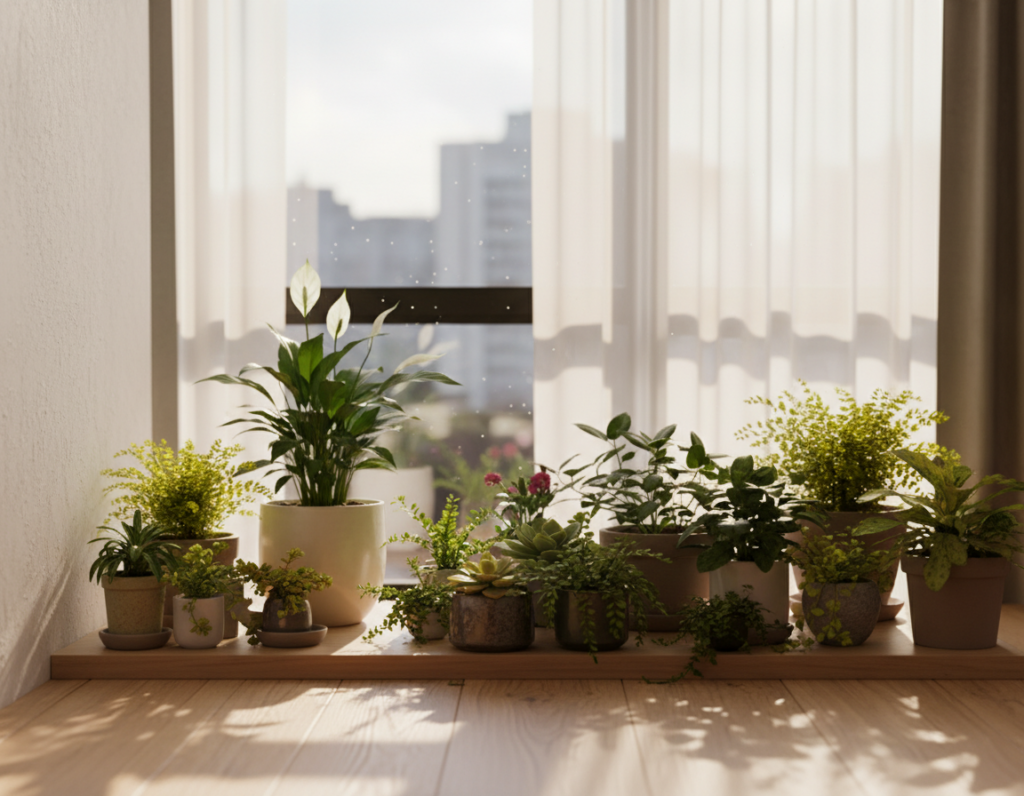
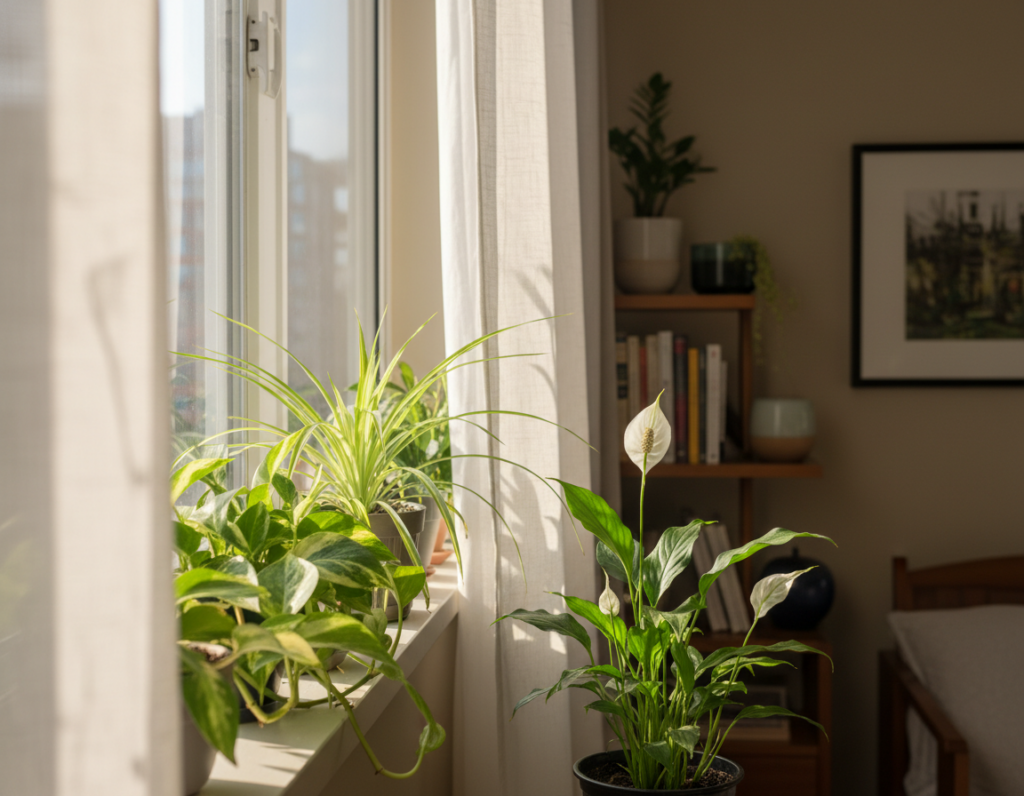
Urban dwellers often want green touches without crowded living space. Planters Etcetera notes that gardening in pots fits modern life and offers decorative solutions for compact apartments.
Choosing the right container matters. A fitted vessel helps a houseplant thrive by supporting roots and regulating water. Many varieties are bred to keep a compact shape. They suit shelves, windowsills, and tabletops with ease.
By matching light, water, and feeding to each plant, a person can build a long-lasting indoor garden. These options purify the air and brighten a home without demanding lots of floor space.
Quick takeaway: select size-appropriate containers, learn each species’ needs, and pick varieties labeled for compact growth. With a little attention, apartment life can include lush, healthy greenery that fits the space and routine.
Why Small Pot Indoor Plants Are Perfect for Apartments
Apartment dwellers prize compact greenery because it adds style without claiming floor real estate. These choices deliver big visual payoff while fitting shelves, windowsills, and tight corners.
Many people find that a couple of lush indoor plants in attractive pots can outshine other décor. They are easy to move around the home to catch the best light. That mobility helps a houseplant stay healthy and adapt to changing seasons.
Smaller specimens also need less soil and water, so routine care feels manageable for busy residents. They act like a mini garden that improves indoor air and brings a calm, natural touch to living spaces.
“A few well-placed specimens can transform a cramped living area into a refreshing, balanced environment.”
- High decorative value without using much space
- Easy relocation to find ideal light
- Lower maintenance — less soil, less watering
Integrating plants small pots into decor creates inviting, breathable rooms that suit apartment life.
Selecting the Right Varieties for Compact Spaces
Selecting species by growth habit and mature size helps a person place greenery that fits a shelf or windowsill. This reduces the need for extra trimming and keeps a living area tidy. A quick check of mature height and trailing length saves time and frustration.
Arrowhead Vine
The Arrowhead Vine (Syngonium podophyllum) reaches about 12 inches tall with trailing vines that can extend to 72 inches. It adapts to lower light and develops attractive arrow-shaped foliage over time. For best results, the houseplant prefers indirect light and well-drained soil.
Angel Wing Begonia
The Bold Belles® Dappled Morning™ Angel Wing Begonia grows 8 to 14 inches tall and shows dark green leaves with silvery spots. This variety offers dramatic foliage without taking much shelf area. It needs bright, indirect light, moderate water, and steady humidity to keep its colors vivid.
- Fit the growth habit: choose varieties that match your available space.
- Care basics: indirect light, proper drainage, and regular water checks keep green leaves vibrant.
- Variety matters: different shapes and colors of foliage respond to specific conditions and care.
Trailing Beauties for Hanging Baskets
Hanging baskets turn vertical surfaces into flowing green features that free up floor space. A well-placed display creates depth and keeps surfaces clear for furniture and traffic.
Trailing specimens grow exceptionally well in suspended containers. Many varieties send vines downward and add a soft, cascading effect that livens a room.
The Golden pothos is a classic choice for hanging displays. Its vines can grow several feet even with limited light, so it suits renters and busy people who want quick results.
- Save floor area: use vertical hanging to maximize usable room.
- Low fuss: many trailing types adapt easily and reward basic care.
- Light placement: hang where the specimen receives suitable brightness for steady growth.
“Check moisture regularly — long foliage needs consistent hydration to stay lush.”
With minimal maintenance, a single hanging plant can create a strong decorative statement. Regular checks for moisture and occasional trimming help vines stay vigorous and elegant.
Ferns That Thrive in Humid Bathroom Environments
High humidity and low light turn a typical bathroom into a fern-friendly microclimate. These houseplants like steady moisture and shaded corners, so they suit tight spaces and help bring living foliage into a home.
Bird’s Nest Fern
The Bird’s Nest Fern (Asplenium antiquum) grows between 8 and 24 inches tall. It thrives in the high humidity of a bathroom and shows broad, glossy leaves that add depth to a vanity or shelf.
Blue Star Fern
The Blue Star Fern (Phlebodium aureum) reaches 10–14 inches and produces attractive blue-green foliage. It performs well with limited light and regular moisture, making it a striking houseplant for a shower-side ledge.
Button Fern
The Button Fern (Nephrolepis cordifolia) stays compact at 8–12 inches tall. It prefers consistent water and humid air and fits neatly into grouped displays.
- Group these selections in plants small pots to create a spa-like feel.
- Use a tray of pebbles to raise moisture around the green leaves.
- Keep light low to moderate and check soil so it never fully dries.
Succulents for Sunny Windowsills
Succulents thrive on a sunny windowsill because they prefer bright light and need water less often than many other plants. They store moisture in thick, green leaves, so they tolerate the lower humidity of most apartments.
Many types reward proper placement with striking flowers when given bright indirect light for part of the day. Still, avoid letting direct sun scorch foliage during peak heat.
Care is simple: let the soil dry fully between waterings to prevent root rot. Rotate specimens occasionally so each side receives even light and compact growth stays balanced.
- Best use: dress a windowsill with varied leaf shapes for texture and interest.
- Watering: dry soil, then a thorough soak; do not keep wet.
- Light tip: morning sun plus bright indirect light later keeps colors and blooms strong.
Low Light Performers for Darker Corners
Dark corners often hide potential for dramatic, leafy accents that need little light. A well-chosen specimen brings texture and movement without claiming much space. These selections suit rooms where sun is scarce but living foliage still brightens the mood.
Prayer Plant
The Prayer Plant (Calathea roseopicta) grows 12–24 inches tall and features dark green leaves with striking veins. This variety adapts to low light corners of the home and thrives in shaded conditions.
It benefits from occasional bright indirect light to keep its colors vivid. Consistent humidity and steady moisture are key, so place the houseplant on a shelf near a humidifier if possible.
- The leaves fold up at night, creating subtle motion that adds interest over time.
- Minimal space needs and modest care make it ideal for compact living areas.
- Check soil regularly and provide filtered water when needed to support healthy foliage.
“The Prayer Plant rewards patience with bold patterns and gentle movement.”
Understanding Light Requirements for Healthy Growth
A reliable light plan keeps foliage compact and colorful, and it starts with understanding intensity and duration. Stacy Ling of Bricks ’n Blooms stresses that this is essential for steady growth and fewer surprise problems.
Most houseplants need a balance: enough brightness to fuel photosynthesis but not so much that leaves scorch. Indirect light is the safest choice for many specimens because it offers steady energy without harsh rays.
If a plant stretches toward a window and shows long gaps between leaves, it is likely not getting enough light. That legginess signals the need to move the container or supplement with a grow lamp.
- Assess daily light: check morning and afternoon brightness for each spot.
- Rotate regularly: even exposure prevents one-sided growth.
- Adjust seasonally: change placement as daylight shortens or lengthens.
“Proper light management is the foundation of successful indoor gardening.”
Mastering Watering and Drainage Techniques
Mastering when and how to water keeps roots healthy and foliage vibrant in compact homes. This skill prevents the most common failures with indoor plants and makes routine care predictable.
Signs of overwatering are usually clear. Yellowing leaves and soft stems show a plant is struggling to breathe in waterlogged soil.
Root rot can follow if moisture stays high. Check the top inch of soil before adding water. If it feels damp, wait a few days.
Practical drainage solutions
Use containers with drainage holes and a coarse, well-draining mix to let excess water escape. A layer of stones under the soil is less effective than proper holes, so prioritize drainage-ready containers.
- Place a saucer to protect surfaces and empty it after watering.
- For very damp rooms or high humidity, open windows briefly to reduce excess moisture.
- When caring for plants small pots, water lightly and check often to avoid saturation.
The Nerve Plant is especially sensitive. It prefers even moisture and higher humidity to keep its delicate leaves from wilting. When managed with steady routines, houseplants respond with stronger growth and fewer surprises.
“A consistent schedule and good drainage are the foundation of long-term plant health.”
The Importance of Well-Drained Soil
Roots need both air and room to breathe; drainage determines whether they get it. Using a high-quality, well-drained soil mix prevents water from pooling around roots and reduces decay risks.
When a person fills a container, the medium should be porous enough to let air reach the root zone. That balance of moisture and oxygen supports steady growth and helps a plant absorb nutrients efficiently.
Many plants small pots have limited root space. They benefit from a blend that drains fast yet holds enough moisture between waterings. A mix with perlite, coarse sand, or bark improves flow and lowers fungal threats.
Combine proper soil with good light and routine care to create the best environment for foliage and roots. If the soil stays wet for too long, fungal problems can damage a plant and block water uptake.
- Choose mixes labeled for drainage and add coarse amendments if needed.
- Use containers with drainage holes and a saucer to protect surfaces.
- Check moisture before watering to avoid over-saturation.
“Investing in well-drained soil gives plants the foundation they need for long-term vigor.”
Pruning Strategies to Maintain Compact Sizes
A focused pruning routine lets foliage stay dense without needing a larger container. Regular snips curb how quickly small plants grow and prevent stems from overtaking a shelf or sill.
Trim during the active season so the houseplant recovers fast. Removing excess stems and spent leaves encourages more foliage and can boost flowers later in the year. After pruning, place the specimen in bright indirect light to support new growth and energy rebuilding.
Use clean, sharp tools to avoid spreading disease. Wipe shears with alcohol between cuts and discard any infected material. Check soil and water needs after pruning; slightly increased hydration and steady conditions help shoots emerge.
- Timing: prune in spring or summer for best recovery.
- Technique: cut above a node to encourage branching.
- Care: keep light steady and monitor moisture after trimming.
“Consistent shaping keeps houseplants attractive and delays the need to repot.”
Managing Humidity Levels in Small Apartments
Maintaining steady moisture in the air is one of the simplest ways to keep greenery vibrant in tight living quarters.
Why humidity matters: tropical species suffer when air is dry. Dry air causes leaf tip browning and slows growth. Steady humidity supports healthy leaves and stronger foliage overall.
Practical steps are easy to implement. Grouping plants together creates a microclimate that raises moisture around them. A small humidifier or a pebble tray with water also boosts local humidity without changing the whole home.
- Group several specimens to retain moisture and create a humid pocket.
- Use a humidifier or place containers on a tray of pebbles to reduce browning.
- Monitor each plant’s needs and adjust levels based on light and temperature.
Consistency is key: fluctuating humidity stresses foliage and slows recovery after trimming or repotting. Regular checks keep greenery steady even when heating or cooling cycles change.
“A simple humidity routine helps plants stay lush and reduces common stress-related problems.”
For tips on arranging greenery in limited rooms, see this guide to integrating houseplants.
Troubleshooting Common Foliage Issues
Spotting subtle changes in color or texture can be the first clue to a fungal problem. A short daily check of each specimen helps catch trouble early.
Identifying fungal pathogens often starts with the leaves. If dark green foliage shifts to yellow or shows odd shapes, a fungus may be active.
Common signs and quick actions
The Nerve Plant, noted for its veins, can get spots in a bathroom that is too damp and poorly ventilated. Isolate the affected houseplant immediately.
- Remove damaged leaves and improve air flow near the shelf or window.
- Adjust water and check soil to prevent lingering moisture that feeds fungi.
- Move the variety to brighter light if possible and avoid overhead watering.
Early intervention limits spread to other plants. Keep a close eye on leaves of each plant and act fast to keep an indoor plants collection healthy.
“Isolate affected specimens and correct moisture to stop pathogens from spreading.”
Choosing the Best Planter Materials
Material choice shapes how a container performs and how a plant looks in tight living quarters.
Fiberglass earns high marks from Planters Etcetera for its durability and lightweight build. It resists cracking and is easy to move, which helps when adjusting for light or rearranging a small space.
When picking materials, consider how they react to bright indirect light. Some metals and dark ceramics can heat up and stress a specimen. Choose options that stay cool and let roots breathe.
- Support: a well-made container protects roots and helps the plant stay stable.
- Aesthetics: the right finish turns a simple green specimen into a decorative feature for the home.
- Longevity: quality materials keep your indoor garden tidy and thriving for years.
Tip: match material and style to your decor so your collection reads like a cohesive design. For many renters, fiberglass balances function and form better than heavier alternatives.
Benefits of Air Purifying Greenery
Air cleansing by greenery delivers real health and comfort gains in apartments. A single specimen can remove common indoor toxins and raise overall air quality quickly.
Many popular varieties thrive in well-drained soil, which keeps roots healthy while they filter the environment. Choosing the right medium helps each plant work efficiently and last longer.
Regular care keeps foliage effective. Watering, drainage, and occasional pruning maintain leaf health so the air cleaning function continues without interruption.
- Natural filtration: living foliage reduces volatile compounds and refreshes rooms.
- Low maintenance: several species need only basic routines to perform well.
- Wellness boost: greenery reduces stress and improves mood for residents.
By mixing varieties, a home gains continuous cleaning power through changing seasons. These living elements are both decorative and functional, making an apartment feel fresher and more inviting.
Seasonal Care Adjustments for Indoor Gardens
Changing seasons alter how a plant uses light and water, so adjustments protect growth and blooms.
In winter, reduced daylight and lower humidity mean many houseplants need less water and less frequent feeding. Give soil time to dry between waterings and lower the watering volume.
Watch leaves for stress. Dropping leaves, slowed growth, or fewer flowers signal a need to move the specimen to brighter light or adjust moisture.
Simple seasonal checklist:
- Reduce water and check soil moisture more often.
- Rotate or relocate to catch available light during short days.
- Raise local humidity for tropical foliage using groupings or a small humidifier.
During transitions, keep maintenance steady. Regular checks of soil, light, and humidity help plants grow steadily and fit the available space in the home.
“Paying attention over time ensures a living environment that adapts with the seasons.”
Conclusion
A balanced approach—matching species to light, water, and humidity—lets a homeowner keep a thriving green corner without extra hassle. Good selection and steady care make the difference between a temporary display and a lasting feature.
Selecting the right plant is the first step toward a rewarding, long-term indoor garden. Regular pruning, proper soil, and seasonal adjustments support steady growth and reduce surprises.
Whether a beginner or experienced gardener, they will find a perfect specimen to suit their space and routine. A healthy plant improves decor and adds measurable benefits to air quality and daily comfort.