Transforming an ordinary living area into a vibrant sanctuary is simple with the right greenery. Urban dwellers can revive a neutral room by selecting one well-placed houseplant that brings texture and life.
In 2026, bringing nature indoors remains a top trend. Choosing the right indoor plants helps a home feel fresh all year. It also makes the most of limited space and adds visible warmth.
Every unused corner offers a chance to introduce living foliage. A single plant can become a focal point that ties together decor and light. For ideas on compact options and styling, readers can explore small indoor plants to find species that suit their routines.
With a few smart choices, even tight spaces feel intentional and inviting. Proper selection and placement keep houseplants healthy and your home welcoming.
The Biophilic Shift in Modern Apartment Living
More residents now treat greenery as a core feature of modern home design, not just decoration. The trend reframes foliage as a tool for better air and mood rather than a simple accent.
Designers and renters alike adopt biophilic ideas to improve daily living. Plants become functional elements that filter air, buffer noise, and add sensory comfort in tight layouts.
- Improves indoor air quality and perceived well-being.
- Offers creative solutions for an apartment with limited floor area.
- Helps residents turn standard units into personal sanctuaries in tall apartments.
Prioritizing quality greenery supports a sustainable, low-effort ecosystem. With intentional selection and placement, anyone can gain measurable mental and physical benefits from indoor nature.
Selecting Small Corner Apartment Plants for Dim Nooks
Choose species that thrive with little light and minimal care. These options fit tight spaces and bring life to shaded niches. Each offers a distinct look and steady performance in indirect light.
ZZ plant
Waxy, deep green leaves give the ZZ plant a polished presence. It stores water in thick rhizomes, so it tolerates long gaps between watering.
Snake plant
The snake plant produces oxygen at night, making it ideal for a bedroom. Its vertical, sword-like shapes create a bold statement without much fuss.
Cast iron plant
This slow-growing houseplant is famously forgiving. It will not overrun a living room after years of growth and endures low light conditions.
“Choose forgiving foliage to add a steady touch of green without daily upkeep.”
- These indoor plants adapt to indirect light found in many rooms.
- Minimal watering and easy care suit busy living routines.
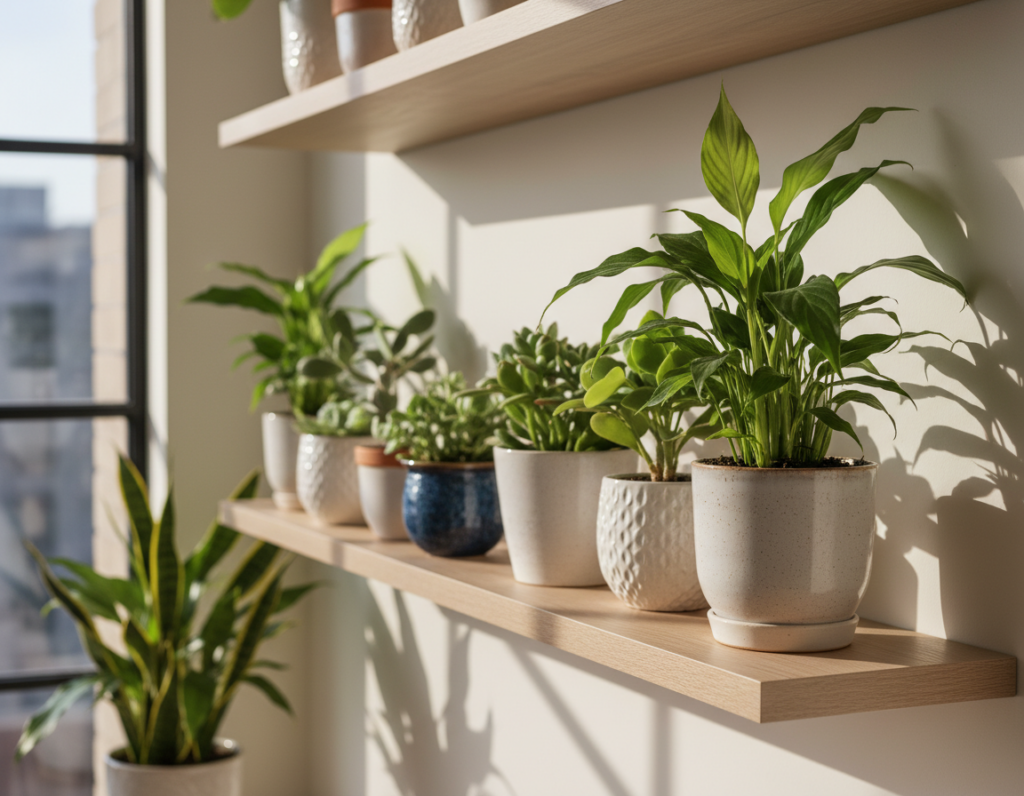
- A well-placed shelf can display lush green leaves while saving floor spaces.
Vertical Solutions for Limited Floor Space
Maximizing vertical real estate is a practical way to add green life without crowding pathways. Hanging displays and wall-mounted shelves free up floor space while keeping foliage within sight and reach.
Trailing Pothos
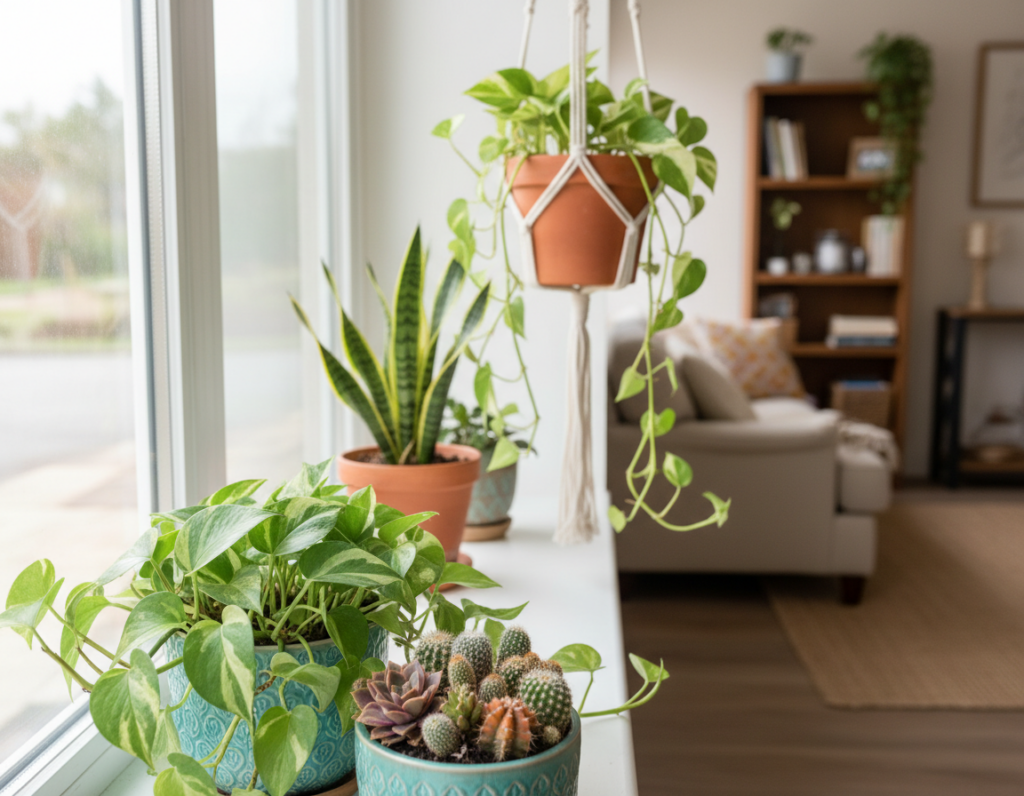
Golden Pothos is a classic for good reason. Its cascading vines can be trained to climb walls or spill over a shelf, creating flow and texture along a wall.
It thrives in indirect light and tolerates irregular care. Use hanging baskets or wall clips to guide vines and save valuable floor space.
Hanging Spider Plants
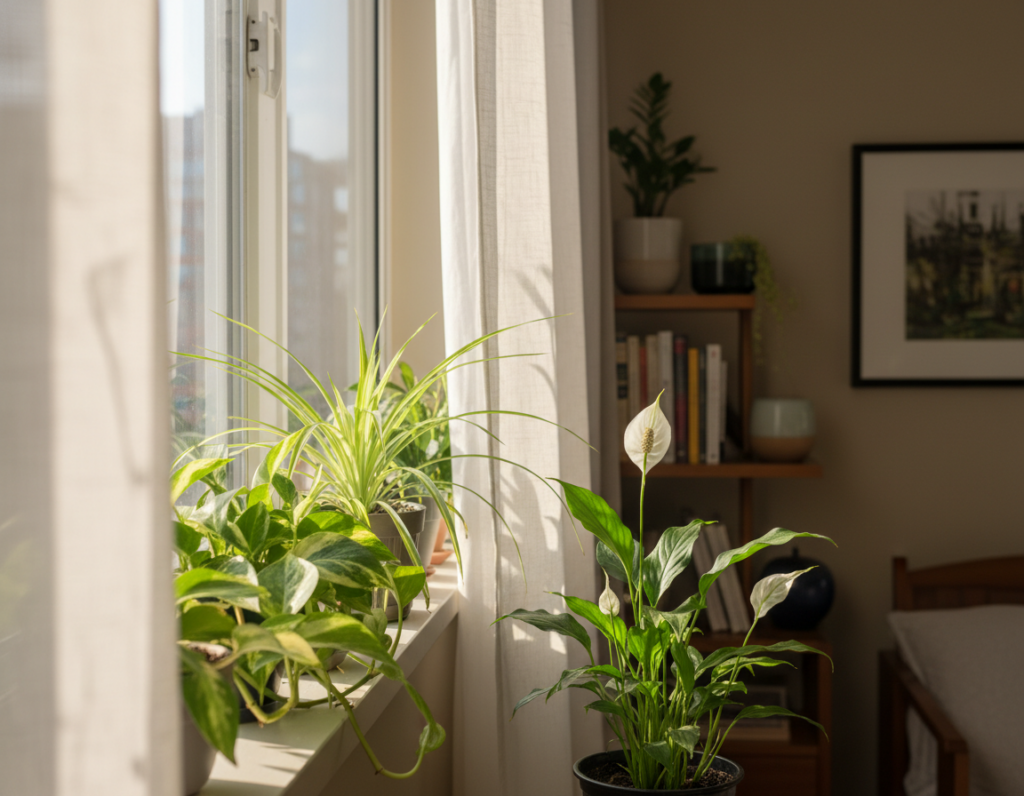
The spider plant is pet-safe and forgiving, making it a popular choice for households with curious cats or dogs. Its arching leaves and baby plantlets add a lively, whimsical touch.
Place it in a bright spot with indirect light. Suspended baskets or tiered shelves let the spider reach down without using floor area.
“Utilize height to expand green coverage without sacrificing circulation or function.”
- Hanging baskets add lushness while preserving floor space.
- Vines and hanging varieties perform well in indirect light.
- Wall-mounted containers and shelves create layered green views across spaces.
High Impact Statement Plants for Sunny Corners
A single hero green can instantly upgrade a bright corner and set the tone for an entire room. The Monstera Deliciosa, often called the “Swiss Cheese Plant,” offers large, fenestrated leaves that make a bold aesthetic statement.
The Fiddle Leaf Fig brings sculptural presence to any sunlit spot. It prefers bright, consistent light and responds well to weekly rotation for even growth.
Choose a statement plant when you want maximum visual return from minimal floor space. Large green leaves create a lush look that reads as intentional and modern.
- A single hero like the Monstera Deliciosa can define a room’s vibe when placed in a sunny corner.
- The Fiddle Leaf Fig needs steady light and weekly rotation to ensure even leaf growth.
- These statement species feature dramatic foliage that adds a bit of tropical flair to a living area.
- Support rapid growth by giving plenty of indirect light and consistent care.
“Every leaf on a healthy Monstera contributes to the overall aesthetic, making it a favorite for modern interior design.”
For recommendations on tall, dramatic options that suit vertical spaces, see common tall house plants.
Essential Care Tips for Thriving Indoor Greenery
Consistent habits often decide whether indoor foliage thrives or merely survives. This section gives focused, practical guidance for daily upkeep. It helps keep a living room or bedroom green and healthy without fuss.
Watering Schedules
Establish a routine. A steady watering schedule is the single most important part of plant care. It keeps soil balanced and supports steady growth.
- For a snake plant in the bedroom, let the soil dry fully between waterings to avoid root rot.
- Spider plant prefers regular moisture; check the top inch of soil before you water.
- If you group plants together, they form a microclimate that helps retain humidity for foliage health.
Watch leaves for signs of stress. Drooping or yellowing often means water or light conditions need adjustment.
“A bit of routine, more than perfect technique, keeps houseplants thriving in a busy home.”
Final tip: adapt timing by season and room conditions. Even hardy choices tolerate some neglect, but steady care yields the best long-term results.
Integrating Grow Lights into Your Urban Sanctuary
Strategic LED fixtures let residents grow greenery where natural light won’t reach. Modern options make it easy to add reliable light without altering a rental.
Full spectrum LEDs provide the wavelengths needed for photosynthesis. They support steady growth, root development, and healthier foliage even in very low light areas.
Full Spectrum Benefits
Full spectrum light mimics daylight and helps a plant process energy efficiently. It reduces leggy growth and improves leaf color.
- Supports soil microbes and root vigor.
- Helps a single specimen or a mini garden thrive in darker spaces.
- Consumes minimal electricity and emits little heat—safe for compact living.
Renter Friendly Fixtures
The Soltech Versa offers wide rotation and tilt so owners can aim light at exact spots. It sits on a shelf or desk, so no drilling or permanent mounts are required.
Practical care: adjustable LEDs simplify daily routines by delivering consistent light schedules. Stylish fixtures also integrate with decor, whether on shelves or hanging mounts.
“Using adjustable grow lights makes it possible to transform shaded spaces into lush, living areas.”
Choosing the Right Containers for Small Spaces
Smart container choices let residents expand green life without losing usable floor space. Peperomias are compact and versatile, so they work well on a desk, shelf, or a tight corner.
Choose pots with drainage holes to avoid water pooling around roots. Proper drainage is key to simple care and healthy houseplants.
Use hanging baskets for trailing vines to free up shelves and floor space. Wall-mounted shelves create tiered displays that increase vertical interest and keep pathways clear.
- Select containers that match decor to integrate greenery into the room.
- Use compact pots for desktops and shelves to maximize usable space.
- Pick baskets and mounts suited to the growth habit of each plant.
“Thoughtful containers turn modest spaces into cohesive, living displays.”
Bottom line: pair the right container with each plant’s needs, prioritize drainage, and use hanging or wall solutions to make the most of limited spaces.
Improving Air Quality with Strategic Plant Placement
Placing greenery with intention shapes indoor air and comfort more than random décor. A compact layout boosts function when each specimen gets proper exposure and care.
Bedroom Air Purification
Positioning matters. Strategic placement of plants in the bedroom can improve air quality and support better sleep. An Aloe Vera plant thrives on bright, indirect light and fits well on a windowsill or small table.
Even one healthy specimen creates a fresher-feeling room. Many houseplants filter common indoor toxins and raise perceived air quality. This makes them a practical choice for a restful space.
Practical tips:
- Put Aloe Vera near a window with indirect light so it stays healthy and effective.
- Group two to three species to form a tiny indoor garden that raises humidity and filtration.
- Keep plants away from vents and direct heat to preserve soil moisture and root health.
“Proper placement ensures each plant receives the light it needs to remain healthy and effective.”
Managing Humidity and Soil Health in Apartments
Healthy soil and balanced humidity are the quiet drivers of thriving indoor foliage. The top inch of soil should be dry before watering many common apartment specimens to protect roots and prevent rot.
Check the soil regularly. Use a finger or a moisture meter to confirm the top inch is dry. That simple test avoids overwatering, the most common cause of stressed growth.
Good soil structure and appropriate moisture levels support steady leaf development and natural shapes. Proper soil management helps each leaf act as an indicator of room humidity and general conditions.
- Soil health: add organic matter or a light potting mix to improve drainage and root aeration.
- Humidity: use a tray with pebbles or a humidifier for tropical foliage kept away from direct light.
- Routine: monitor moisture and adjust water schedules by season to sustain growth.
“By watching the top inch and matching humidity to species needs, foliage stays vibrant and resilient.”
Conclusion
A handful of well-chosen greens can change how a room feels and functions. By selecting hardy options like the snake plant or spider plant, anyone can add vibrant life without high upkeep. This approach suits small spaces and busy routines.
Whether using hanging displays or a single statement specimen, the right choice brings balance and style to a home. Consistent light and basic care keep houseplants healthy and make daily living more pleasant.
Start with one plant and add a bit more over time. Each addition helps a living garden take shape and makes an apartment feel like a true oasis—making perfect use of available spaces while improving how rooms look and feel.