Bringing greenery into a workspace can lift mood and sharpen focus. Research shows that the right selections increase productivity by up to 15% and help absorb noise and echoes. This introduction outlines simple choices and care tips to create a calmer, more efficient desk area.
The best selections thrive in varied light and tight space. Choose varieties that match your available light, water routine, and soil needs. Proper care — consistent watering, basic maintenance, and occasional leaf cleaning — keeps foliage healthy and air cleaner.
Whether placed on a desk or the floor, small greenery adds a natural touch that reduces stress and boosts attention during long sessions. With 15 top options to consider, there is a suitable choice for every room and design style, offering a sustainable way to enhance productivity and well‑being.
Why Greenery Matters for Your Workspace
Bringing a bit of foliage into a work area often acts like a silent stress reducer for staff. Studies link living green elements to lower anxiety, reduced blood pressure, and clearer thinking during busy days.
A small collection of office plants also lifts mood and builds team spirit. Even one well-placed plant gives a visible touch of life that improves morale and makes the space feel welcoming.
Greenery cleans the air and softens harsh surroundings when paired with the right light. Regular water and basic leaf care keep each specimen healthy so it can continue filtering toxins and boosting focus.
- Lower stress: Natural foliage calms nerves and supports well-being.
- Better air: Select varieties help remove common airborne chemicals.
- More focus: Green elements create a friendlier space that sparks creativity.
Essential Benefits of Home Office Apartment Plants
Simple botanical additions often translate to measurable gains in focus and output. Short bursts of greenery help build a calmer setting that supports concentration and reduces distractions.
Boosting Productivity
Adding the best office plants to a desk or shared area can increase productivity by improving attention span and cutting down audio echoes. Research links visible foliage to sharper focus during complex tasks.
- Noise control: Leaves absorb sound, helping deep work.
- Consistent care: Managing light and water creates a steady microclimate for better performance.
- Air quality: Choices like the peace lily support cleaner breathing air, which aids cognitive function.
Reducing Stress
Greenery acts as a natural stress buffer. Seeing green calms the mind and lowers tension during long deadlines.
“A tidy bit of foliage often makes a workspace feel more welcoming and less clinical.”
Routine attention to trimming leaves and checking light keeps each plant healthy so it continues to deliver benefits for mood and productivity.
Assessing Light Conditions in Your Office
Start by measuring how much natural light moves through the room during a typical day. This quick check reveals key light conditions and helps place each specimen where it will thrive.
Many office plants do best in bright indirect light. That means sunlight filtered through shades or a north-facing window so leaves avoid scorch.
If a workspace has low light from tinted glass or nearby high-rises, choose species that tolerate dim, artificial lighting. Monitoring lighting levels over a few days gives a clearer picture than a single glance.
- Map the space: note bright, shaded, and dim zones.
- Watch the leaves: yellowing or stretching shows too little light; browning edges indicate too much.
- Adjust placement to balance growth and air circulation.
“A simple light map prevents costly mistakes and keeps greenery healthy.”
Selecting Low Maintenance Varieties
Low-effort species let people enjoy a green desk without daily upkeep. Choosing hardy options makes it easy for busy professionals to add life to a workspace with limited fuss.
Identifying Hardy Species
Pick resilient types that tolerate varied light conditions and brief lapses in attention. The peace lily is a classic example: it thrives with minimal care and signals thirst with drooping leaves.
Look for specimens labeled for low light and low water needs. These houseplants endure dry air and irregular schedules without constant maintenance.
- Check soil: well-draining mixes reduce root rot and cut down on frequent watering.
- Match lighting to the plant’s tolerance to avoid leaf burn or legginess.
- Choose options that need pruning only a few times a year to keep care minimal.
With the right selection and basic soil care, even a small green setup stays vibrant. Proper attention at planting and smart placement in the office will keep the display healthy with very little ongoing maintenance.
Best Hanging Plants for Vertical Space
Hanging greenery makes the most of vertical areas and keeps desks clear. These options add texture and improve humidity by releasing moisture into the air through transpiration.
Pothos
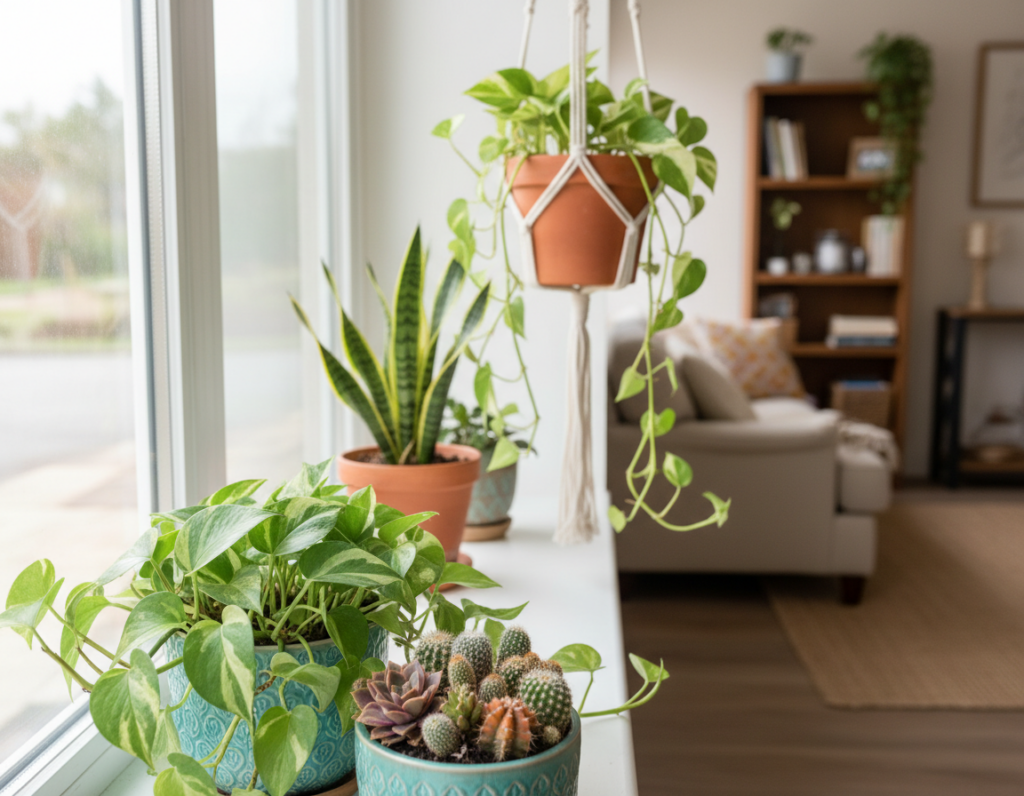
Pothos is ideal for suspended baskets. It grows well in varied light and trails long vines that free up floor and desk surfaces.
Spider Plants
The spider plant produces baby offshoots that cascade to form a lush curtain. A spider plant tolerates different lighting and needs only occasional watering.
Kangaroo Fern
With arching fronds and deep green leaves, the Kangaroo Fern thrives in indirect light. It adds unique texture and helps soften noise levels in a busy workspace.
- Space saving: Hanging options keep surface areas open for work.
- Low maintenance: Check soil moisture and avoid harsh direct sun.
- Humidity boost: Transpiration raises air moisture, which can improve comfort.
These hanging choices require simple care: moderate light, light watering, and periodic soil checks. They are practical options for anyone wanting more greenery without sacrificing room or surface area.
Creative Ways to Style Hanging Greenery
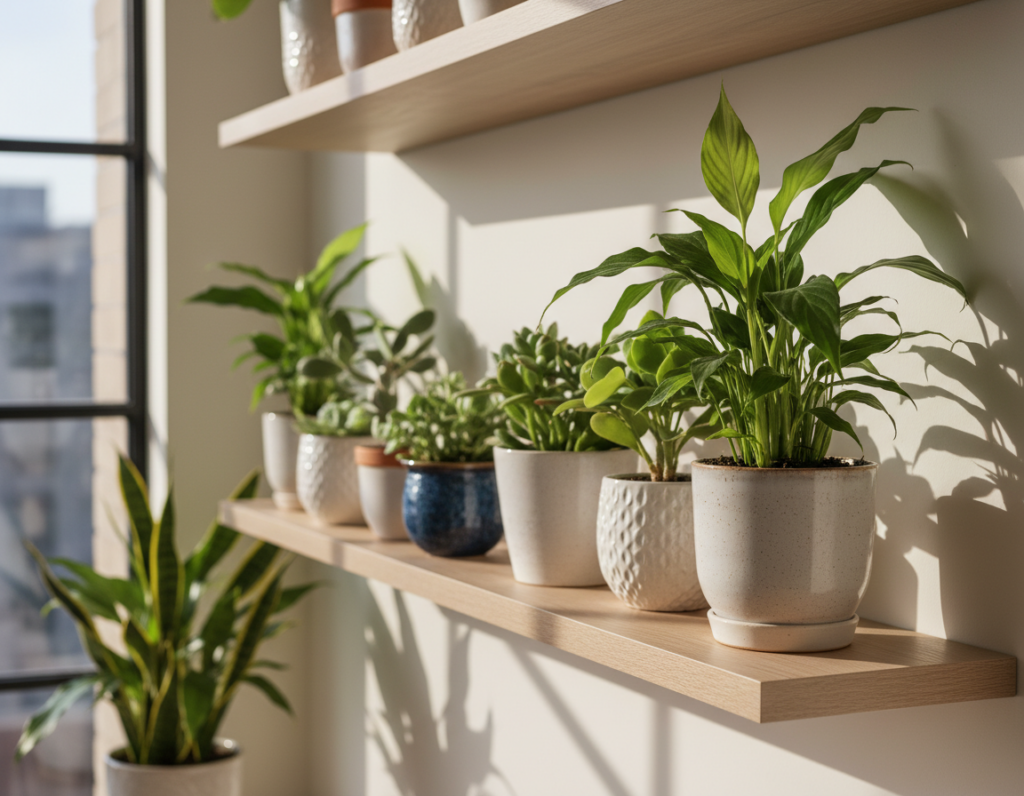
A well-curated hanging arrangement adds depth and warmth without taking up desk or floor real estate. Use texture and tiering to make a wall feel intentional and lively.
Macramé hangers and moss balls give a natural touch and soften hard surfaces. Metal wall rings like the Ravi Ring let a person suspend pots at varying heights for visual interest. Ceiling hooks and sturdy wall brackets help cluster pieces and build a layered display.
- Stagger heights to create depth and make the space feel larger.
- Install hanging shelves or planters to add function and style.
- Use vertical gardens for big walls, noting they may need more setup and water planning.
- Secure all fixtures to prevent accidents and protect leaves and foliage.
- Regular misting keeps humidity steady and helps trailing plant growth.
“Creative hanging displays can turn a dull wall into a conversation piece.”
Top Tabletop Plants for Small Desks
Small, sculpted foliage on a desk provides a steady focal point that eases mental fatigue. Tabletop selections should fit tight spaces and need minimal fuss so they support work without distraction.
Chinese Evergreens
Chinese evergreen is a show-stopping choice that thrives in low light and is prized in Feng Shui as a good luck charm.
Its glossy green leaves add texture without occupying much space. It tolerates irregular water and prefers well-draining soil.
Snake Plants
Snake plant has sleek, upright leaves and high resilience, which makes it perfect for busy professionals.
It needs little water and handles varied light, including indirect light. This hardy option ranks among the best office choices for low-care greenery.
- Space smart: Top tabletop selections fit small desks without crowding work areas.
- Air and focus: These choices improve air quality and give a calming visual break with green leaves.
- Easy care: Proper soil, occasional watering, and modest light keep them thriving.
For more curated options, see a curated desk plant collection to match size and style to any workspace. A peace lily also works well if given the right amount of indirect light and regular water.
Incorporating Plants into Shared Work Areas
Strategically placed greenery can carve quiet nooks and soft boundaries in open-plan work areas. This approach helps define individual workstations while keeping sightlines open and airy.
A good office layout uses living dividers to soften hard surfaces and reduce visual clutter. Placing a low row of pots between desks or a tall specimen near communal tables encourages privacy and team cohesion.
These selections act as natural sound buffers. Leaves and layered foliage lower ambient noise and help people concentrate during busy periods.
- Choose varieties that suit the available light to keep shared zones vibrant.
- Rotate and water communal units on a schedule so each plant stays healthy.
- Use groupings on a desk or partition to foster a sense of collective responsibility.
“Shared greenery improves mood and creates a quieter, more comfortable workspace.”
Hardy Options for Windowless Offices
Even without direct sunlight, durable specimens can bring life and cleaner air to enclosed work zones. Choosing tough varieties helps maintain a calm, productive space under artificial light and steady temperatures.
Cast Iron Plants
The Cast Iron Plant earned its name for remarkable resilience. It tolerates low light and fluctuating conditions with minimal fuss.
This hardy plant needs little attention and survives on irregular water schedules. It keeps deep green leaves that add steady foliage to a desk or floor area.
- Ideal for windowless rooms because it can live with very little natural light.
- Requires little attention, so busy professionals rarely need frequent care.
- Pair with a snake plant or chinese evergreen for variety and color under artificial light.
- These options help filter the air and fit tight work spaces while needing modest water.
Adding a Pop of Color with Flowering Plants
A few flowering specimens can inject instant color into a workspace without crowding a desk. Bright blooms draw the eye and create a lively focal point among green leaves and textured foliage.
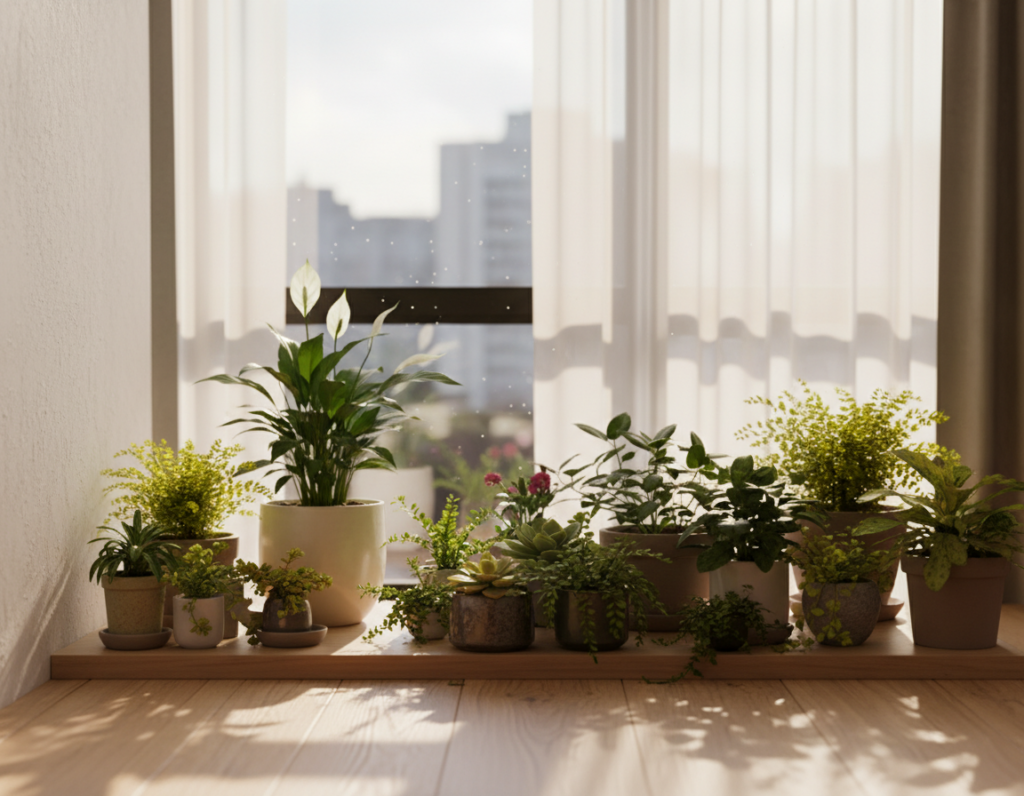
The peace lily is a reliable choice, offering white blooms and deep green leaves that suit a good office layout. It thrives in bright indirect light and signals when it needs water with subtle droop.
Chinese evergreen cultivars add patterned color through variegated leaves, giving a colorful touch without demanding intense light. Mix flowering and foliage options for balance and visual interest.
- Place flowering varieties where they receive adequate indirect light to encourage blooms.
- Deadhead spent flowers and remove yellow leaves to promote continuous flowering.
- Use flowering specimens as focal points to improve mood and enhance air quality.
For ideas on styling and care, consult a guide to decorating with greenery like the one at Proven Winners. Regular, simple care keeps blooms fresh and the workspace welcoming.
Trendy Choices to Elevate Your Desk Setup
A few well-chosen, on-trend specimens can turn a bland desk into a focused, stylish nook. These selections add movement and texture without taking up valuable space. They work well for anyone who wants a modern, calm workspace with minimal fuss.
String of Pearls
String of Pearls is a trailing succulent that brings elegance to a desk. It grows well in bright indirect light and creates a soft, cascading effect across shelves or a corner.
Keep watering light and use well-draining soil to preserve the succulent beads and prevent rot.
Prayer Plants
Prayer plants are a trendy choice for their dramatic movement: their leaves fold up at night, adding an interactive touch to a workspace.
They prefer indirect light and higher humidity. With steady care, the patterned green leaves stay vivid and add a lively touch to any desk.
- Style boost: Trendy picks like these elevate an office setup and feel modern.
- Low maintenance: Combine a snake plant for durability and sculptural form.
- Placement tips: Avoid direct sun, use well-draining mixes, and guard against temperature swings.
Best Practices for Watering and Soil Care
Matching watering to lighting and humidity levels prevents yellowing leaves and root rot. This approach keeps each specimen steady and responsive through seasonal changes.
Check soil moisture before you add water. Stick a finger one inch into the mix; if it feels dry, water lightly. This prevents overwatering, the most common cause of poor foliage.
Use a well-draining soil blend that lets air reach the roots. Good soil reduces the chance of rot and helps a plant breathe between cycles.
- Establish a regular watering schedule tied to light conditions and humidity rather than fixed days.
- Low-maintenance plants like the spider plant tolerate lapses but still need consistent care.
- Monitor leaves for signs: yellowing often signals too much water; limp foliage can mean too little.
With the right mix, steady watering, and routine soil checks, desk houseplants will stay vibrant and improve air quality and space comfort throughout the year.
Improving Air Quality Through Botanical Choices
Intentional botanical choices act as passive air cleaners while adding calm to a room. The peace lily is a reliable example; it filters common indoor toxins and shows thirst through drooping leaves.
Adding multiple specimens across a workspace increases purification levels and spreads benefits. Groupings near desks and shared areas create a cleaner, more breathable setting for everyone.
- Cleaner air: Some greenery removes volatile compounds and dust.
- Better focus: Higher air quality ties to increased productivity and sharper attention.
- Layered approach: Use a variety of species to address different pollutants.
The leaves act as natural filters that capture particles and settle dust before it circulates. Regular pruning, proper soil, and correct light keep each specimen effective over time.
“Better indoor air leads to clearer thinking and fewer interruptions during deep work.”
Managing Plant Growth and Pruning
Regular pruning keeps growth balanced so a desk display stays neat and functional. It prevents stems from crowding work areas and helps preserve the intended visual scale.
Removing dead or damaged foliage redirects a plant’s energy to new shoots. This simple step improves overall health and supports better air circulation around leaves.
Use clean, sharp tools to make crisp cuts. Sterilized shears reduce the risk of disease and speed recovery after trimming.
After pruning, monitor soil and watering needs closely. A recently trimmed plant may need slightly different watering and light conditions while it recovers.
Trim overgrown stems to keep specimens compact and suitable for shared work areas. Regular attention reduces the need for major corrective pruning later.
- Prune routinely to control size and maintain shape.
- Check soil moisture and adjust watering after cuts.
- Watch light exposure, since pruning can change how foliage receives light.
“Consistent maintenance ensures a lush, well-kept area that reflects professional standards.”
Sustainable Design for Modern Workspaces
Integrating low‑maintenance foliage into contemporary layouts helps companies meet sustainability goals while improving wellbeing. A few well‑chosen specimens cut waste by lasting longer and reducing the need for replacements.
Natural elements like soil and greenery create a calmer, more connected space. They also help regulate indoor humidity and air quality, which can lower energy use for HVAC systems.
Careful selection matters: match each plant to available light and place it where it will thrive. Proper care and routine maintenance prevent premature loss and keep the display sustainable.
- Reduce footprint: Long‑lived foliage minimizes waste and resource use.
- Boost wellbeing: A touch of nature raises morale and supports productivity.
- Smart placement: Match light and soil needs to keep each specimen sustainable.
Conclusion
Conclusion
Simple green additions deliver real benefits: they lift focus, clean the air, and make a work area more inviting.
Incorporating the best office plants—even a resilient spider plant—helps create a calmer, more productive place. Assess available light and match watering to each specimen’s needs so foliage stays healthy.
Maintain good soil, trim yellow leaves, and follow a steady care routine. These steps protect longevity and ensure each plant supports wellness and function.
Start small: choose one or two reliable varieties, place them for proper light and water, and watch the space transform into a cleaner, more inspiring spot.