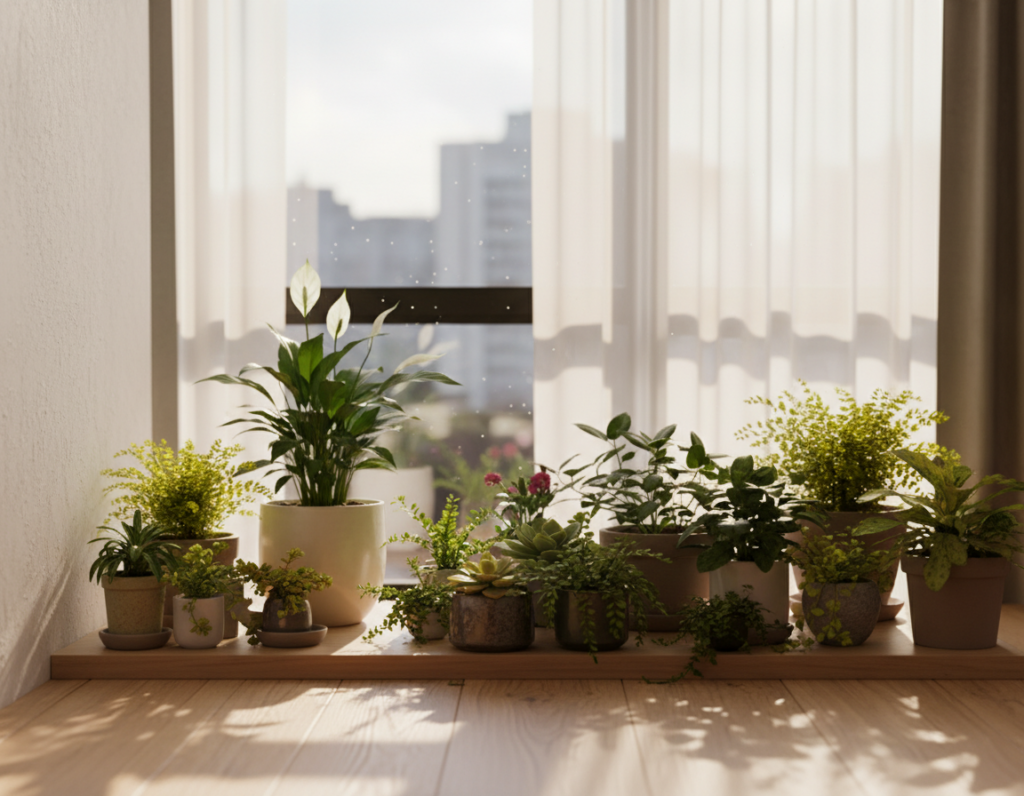
Selecting the right small window indoor plants can turn a tight rental into a calm, green retreat. They fit limited ledges and bring life to a compact living area.
Many varieties thrive when someone matches light to needs. A curated windowsill offers color, texture, and clean air without crowding the room.
Beginners and seasoned hobbyists find that a few well-chosen choices simplify care and improve aesthetics. Professional gardeners often note that compact foliage elevates an urban home instantly.
Understanding Light Conditions for Small Window Indoor Plants
Knowing how sunlight falls through glass helps a gardener pick the right leafy companions. Light levels guide choices and prevent common problems like burned leaves or slow growth. NASA studies show specific lux ranges help photosynthesis for many houseplants, so measuring is worth the effort.
Direct Sunlight vs Indirect
Direct sun gives intense rays that suit succulents and sun lovers. Indirect light is softer and better for shade-tolerant species. Identifying the name of a plant helps decide which it needs.
Measuring Light Intensity
Use a light meter or a smartphone app to check lux or foot-candles at the sill. Record readings morning, noon, and late afternoon to spot variations.
- Observe: note hours of full sun versus filtered light.
- Adjust: move pots to avoid leaf burn or give more sun if growth stalls.
- Mind the air: temperature and ventilation affect how well a plant uses light.
For a deeper guide on natural light and plant placement, see understanding natural light for plants.
Assessing Your Window Direction
Begin by naming which direction your window faces; that single detail shapes what will thrive on your windowsill. Architect Seher Saigal stresses that treating the sill as a purposeful vignette links a home to nature.
South-facing openings deliver the most intense sun and long hours of light. These are ideal for sun-loving plant types that need bright spot exposure and strong sunlight.
North-facing exposures offer gentler, steadier light and suit foliage that prefers lower light conditions. East and west aspects fall between these extremes and change as the sun moves.
“Assessing your window direction is crucial for creating a successful indoor garden that feels connected to nature.”
- Observe sunlight through the day and note where the bright spot shifts.
- Match a plant’s name and light needs to the measured exposure.
- Avoid placing sun-loving species in dim areas to prevent slow growth.
Selecting Succulents for Sunny Spots
Succulents thrive where light is strong and steady. They store moisture in thick leaves, so they tolerate dry spells and bright sun well.
Jade Plant
Jade plants need at least four hours of sun daily to grow compact and healthy. Give them a sunny window and well-draining soil. Water sparingly and let the top layer dry between waterings.
Aloe Vera
Aloe vera prefers bright, indirect light and still does well near a bright spot. Its gel soothes minor burns, making it both decorative and useful. Use gritty soil to prevent root rot.
Candelabra Cactus
Candelabra cactus loves direct sunlight and often needs lots of light to keep its sculptural form. These houseplants do best in fast-draining soil and with minimal water.
- Tip: choose soil that allows quick drainage to avoid excess water.
- Tip: rotate pots so leaves get even light and the plant grows balanced.
- Tip: many succulents, including the snake plant, are forgiving for beginners.
“Succulents reward bright care with striking form and low maintenance.”
Low Maintenance Foliage for Dim Corners
Spaces with limited light still suit tough, low-care greenery. The ZZ stores water in underground rhizomes, so it survives long dry spells and lots of shade.
Choose compact, upright options to save sill space. The snake plant’s vertical leaves need little room and tolerate low light well. A rubber plant adds drama with thick, glossy green leaves that take less-than-perfect light.
Care is simple. Many low light types are content with minimal attention, but they still need occasional water and fresh air. Check soil moisture before you water to keep leaves lush and healthy.
- Rotate pots so all sides get light and steady form.
- Use fast-draining soil and avoid constant dampness.
- Name each specimen to track needs and note which thrives in shade.
“Resilient foliage makes shaded corners feel alive with very little fuss.”
Best Trailing Varieties for Vertical Space
Vining varieties turn tight perches into layered displays that draw the eye upward.
Trailing foliage suits renters and city dwellers who need to save floor area. These species can be trained along a frame or hung to use vertical space and soften hard edges around glass.
Pothos Care
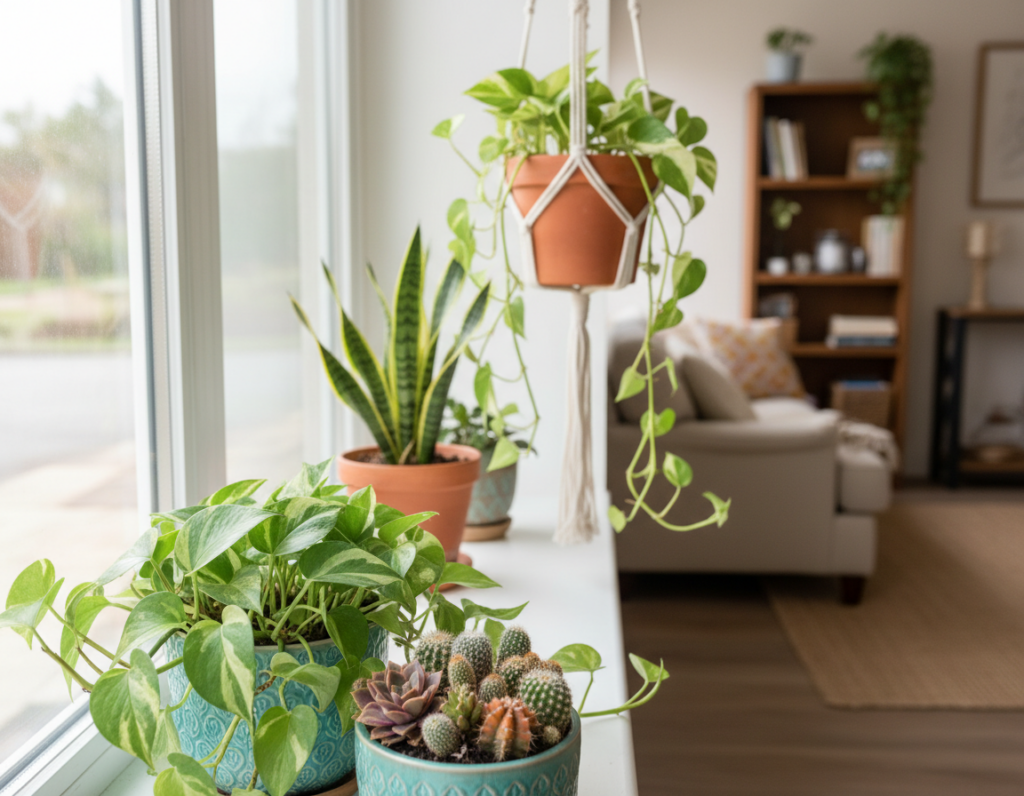
Pothos is a fast-growing vine that also helps purify the air, removing pollutants like formaldehyde and xylene. It adapts to a range of light conditions but performs best with bright, indirect light.
Check the soil so it dries partly between water sessions to prevent root rot. Healthy leaves will cascade and form a natural curtain that softens a standard window frame.
- Train: guide vines around a frame to maximize vertical space and reduce clutter on the windowsill.
- Prune: trim regularly to keep the growth compact and prevent the vine from overwhelming the space.
- Care note: name a companion like the spider plant; its spiderettes root easily and make propagation simple.
“Trailing varieties deliver height and greenery without taking over living surfaces.”
Culinary Herbs for Kitchen Windowsills
Culinary herbs thrive where warmth and steady light meet. Basil, thyme, rosemary, and mint do best with six or more hours of direct sunlight each day.
Growing herbs on a kitchen windowsill brings fresh flavor to meals and makes harvests easy. A sunny window supplies the consistent warmth and sunlight these herbs need to produce essential oils that define their taste.
Choose pots with good drainage and use a well-draining mix to prevent soggy roots. Water when the top inch of soil dries and rotate each plant so leaves get even light.
- Tip: basil and rosemary typically need at least six hours of direct sun.
- Tip: mint tolerates slightly less light but still benefits from steady sunlight.
- Tip: keep herbs within reach to encourage frequent harvesting and healthy growth.
“A bright sill makes cooking more rewarding and keeps fresh herbs at hand.”
Unique Air Plants for Minimalist Displays
Air-loving Tillandsia let designers craft minimalist displays on wood, glass, or wire. These epiphytes absorb water and nutrients through scales on their leaves, so they need no soil or heavy pots.
Why they suit compact living: they free up sill space and can be mounted vertically. This makes them ideal for apartments where a clean, modern look is desired.
Care is simple: place each specimen in a bright spot and mist or soak regularly so the leaves stay plump and healthy. Good air circulation helps them dry after watering and prevents rot.
- Mount on driftwood, glass orbs, or wall frames to save space and add style.
- They take moisture from room air, which supports indoor air balance and reduces clutter.
- No potting mix means easy rotation and creative vertical arrangements.
Quick tip: soak for 20–30 minutes weekly in drier homes, or mist several times a week in humid spaces to maintain vibrant growth.
Managing Watering Schedules
Tracking when to water prevents both dry stress and soggy soil that invite rot. A clear routine helps because different specimens have unique needs based on light and temperature conditions.
Checking soil dryness
Insert a finger about an inch into the pot to test moisture before adding water. If the mix feels cool and damp, wait; if it feels dry, give a measured drink.
Avoiding overwatering
Overwatering is the most common care mistake. Let the top layer dry for most greenery, and allow the soil to dry completely between waterings for succulents to prevent root rot.
- Match water to light: a plant in direct sunlight needs more frequent watering than one in cooler conditions.
- Remember storage: succulents store water in leaves, so they can go longer without a drink.
- Monitor regularly: consistent checks of the soil keep specimens healthy and reduce stress from both drought and saturation.
Quick tip: For a deeper routine and timing guide, consult a concise watering guide to match schedules to specific types and conditions.
“A measured approach to moisture protects roots and preserves shape.”
Protecting Your Window Sill from Moisture
A practical moisture plan prevents damage and extends the life of your sill. Wood and stone sills can warp or stain if water sits on them after a normal watering session. Taking a few simple steps protects finishes and avoids costly repairs.
Key habits make a difference. Always place a waterproof saucer under each plant pot to catch excess water. If several plants share a spot, a single large tray keeps the area tidy and guards your home surfaces.
- Protect the surface: use trays or saucers that are nonporous to stop seepage into wood.
- Choose better materials: moisture-resistant MDF handles damp conditions far better than natural wood sills.
- Be prompt: wipe up spilled water immediately to prevent mold and staining.
- Organize: group pots on a tray to simplify watering and cleanup.
“Routine checks and simple barriers keep windows and sills dry while letting greenery thrive.”
With these measures, a single plant or a collection of plants can sit safely on a windowsill without risking the finish. Regular care after watering preserves both the display and the structure beneath it.
Choosing the Right Potting Materials
Choosing the right pot and mix sets the stage for healthy growth and fewer surprises. Durable containers resist moisture and bear weight without warping.
When selecting pots, make sure the material is sturdy and has drainage holes at the base. This prevents water from pooling and invites better root health.
Use high-quality, well-draining soil. Good mixes move excess water away from roots and reduce the chance of rot. You should make sure the mix matches a plant’s moisture needs, whether it prefers damp or dry conditions.
For a rubber plant, choose a pot that supports both size and weight. Pick a tray or liner to protect furniture from leaks and spilled soil. Proper materials preserve surfaces while helping the specimen thrive when grown indoors.
- Pick moisture-resistant pots or add a waterproof tray.
- Use a soil blend tailored to the species and water habits.
- Invest in durable containers to improve long-term success.
“Right containers and mixes protect both the root system and the home surface.”
Seasonal Adjustments for Indoor Growth
Seasonal light shifts demand simple moves to keep a sill garden healthy year-round. A south-facing window can roast foliage in July and barely offer enough light by December. That swing changes how much care each specimen requires.
During winter, move pots closer to glass so they catch more direct sunlight and sustain steady growth. In colder months, shorter days mean every hour of sun matters.
In summer, protect leaves from scorching by shading or shifting them back from harsh rays. Too much direct sun can burn tips and reduce vigor.
- Adjust placement: reposition seasonally to match changing light angles.
- Monitor: watch leaf color and new shoots to spot stress early.
- Protect: use sheer curtains or move pots away during peak heat.
- Be proactive: move items as the sun shifts so the environment stays consistent for what your plants need.
Simple, regular checks and small moves keep foliage vigorous and reduce surprises across the year.
Pruning Techniques for Compact Shapes
Careful pruning sculpts compact form and directs energy toward new shoots. Occasional trims keep species like the Clusia Princess proportional to a sill and prevent overcrowding.
Use clean, sharp shears for precise cuts. This speeds healing and lowers disease risk. Remove only a few stems at a time to avoid shock.
- Maintain shape: trim to control height and width so the display stays tidy.
- Encourage fullness: regular pinching or light pruning stimulates bushy new growth.
- Sanitize tools: wipe blades between cuts to prevent pathogen spread.
- Remove dead material: cut away spent stems so energy moves to healthy foliage.
Consistency matters. A brief monthly check prevents a specimen from outgrowing its spot and keeps the arrangement manageable.
“Pruning is a simple habit that preserves form and promotes steady, healthy growth.”
Troubleshooting Common Leaf Issues
Visible changes in foliage usually point to fixable issues like light, water, or pests. Name the symptom first: brown tips, yellowing, spots, or wrinkled texture helps diagnosis.
Yellow leaves on a snake plant or jade plants often mean overwatering or poor soil. Check drainage and let the soil dry before the next watering.
Discolored leaves on a Polka Dot Begonia may show that sunlight is too harsh. Move it to a spot with more gentle, bright light until the markings recover.
A rubber plant that loses its vibrant green leaves may be coping with low light or inconsistent bright light. Try longer exposure to bright light and steady conditions.
When the soil drys out too much, succulents will show wrinkled foliage. Increase watering slightly and monitor to return the leaves to plump health.
Always inspect leaves for pests or disease; these spread fast when there are lots of specimens nearby. Treat early and isolate affected ones.
“Clear observation and small changes usually get a troubled specimen back to healthy growth.”
Benefits of Indoor Air Purification
Household greenery can quietly improve the quality of the air you breathe each day. Many common specimens act as natural filters, removing volatile compounds and making rooms feel fresher.
Research highlights practical gains from adding a few air-purifying species. NASA lists the snake as a top performer capable of removing formaldehyde and benzene from the air.
This is both aesthetic and functional: greenery softens decor while reducing pollutants. The process happens as leaves and roots absorb and metabolize harmful chemicals.
Practical advantages include better respiratory comfort and a calmer home environment. Choosing the right selections gives the dual benefit of beauty and cleaner indoor air.
- Many species filter toxins and improve air quality for residents.
- Controlled studies show lowered pollutant levels with plant coverage.
- Air-purifying species deliver visual appeal plus healthier breathing space.
“A few well-placed specimens can transform an apartment into a sanctuary with fresher, more breathable air.”
Creative Ways to Extend Your Sill Space
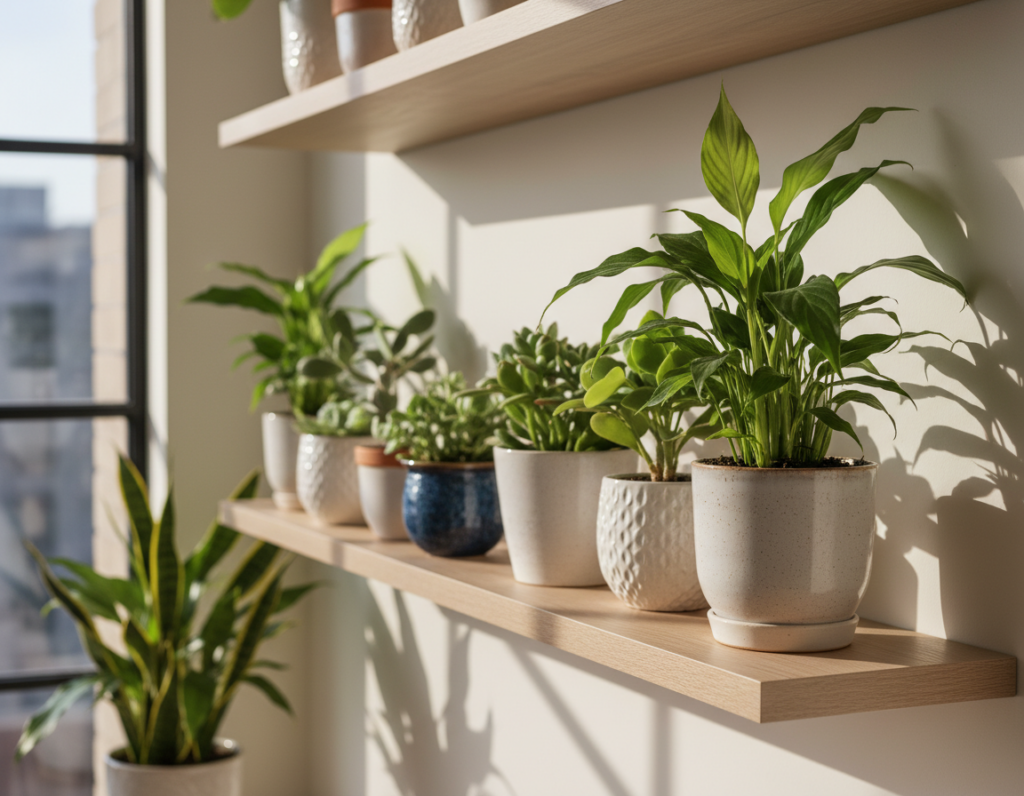
Adding a narrow shelf can turn a modest windowsill into a functional display for greener living. A purpose-built plant sill made from moisture-resistant MDF holds weight and stands up to occasional spills.
Install a custom board or floating shelf to create a dedicated spot for sun-loving specimens. Tiered stands and hanging planters near the windows let a gardener use vertical space without crowding the sill.
Choose water-resistant boards and sealed finishes so moisture does not harm the frame or finish. A single tray under grouped pots or a waterproof mat keeps surfaces tidy after watering.
- Extend: add a slim shelf to increase usable surface.
- Layer: use tiers or hangers to multiply display area.
- Protect: pick moisture-resistant materials like sealed MDF.
- Style: a well-designed extension becomes a focal point and lifts the room’s decor.
“A thoughtful sill extension adds both function and visual appeal to a compact living space.”
Conclusion
,Good results follow when a gardener pairs a plant’s needs with the room’s light. Matching species to conditions makes growing houseplants in a compact apartment both manageable and rewarding.
Whether they choose a hardy snake, a soothing aloe vera, or striking succulents, residents can craft a calm, air-purifying corner that fits the available space and the home’s rhythm.
Practical habits—protecting the sill, timing water, and giving each specimen a name—build confidence. Gardening is a steady learning curve; small experiments yield useful content about care and growth.
With routine attention, these choices will return lush growth and fresher air for years to come.