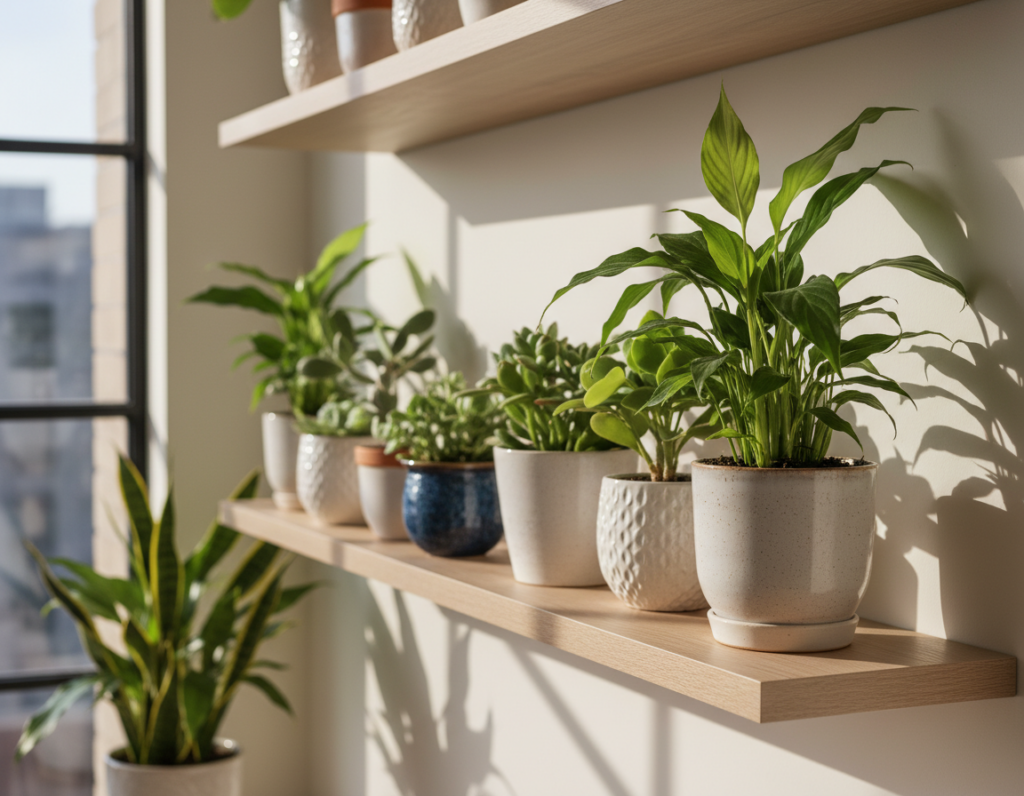
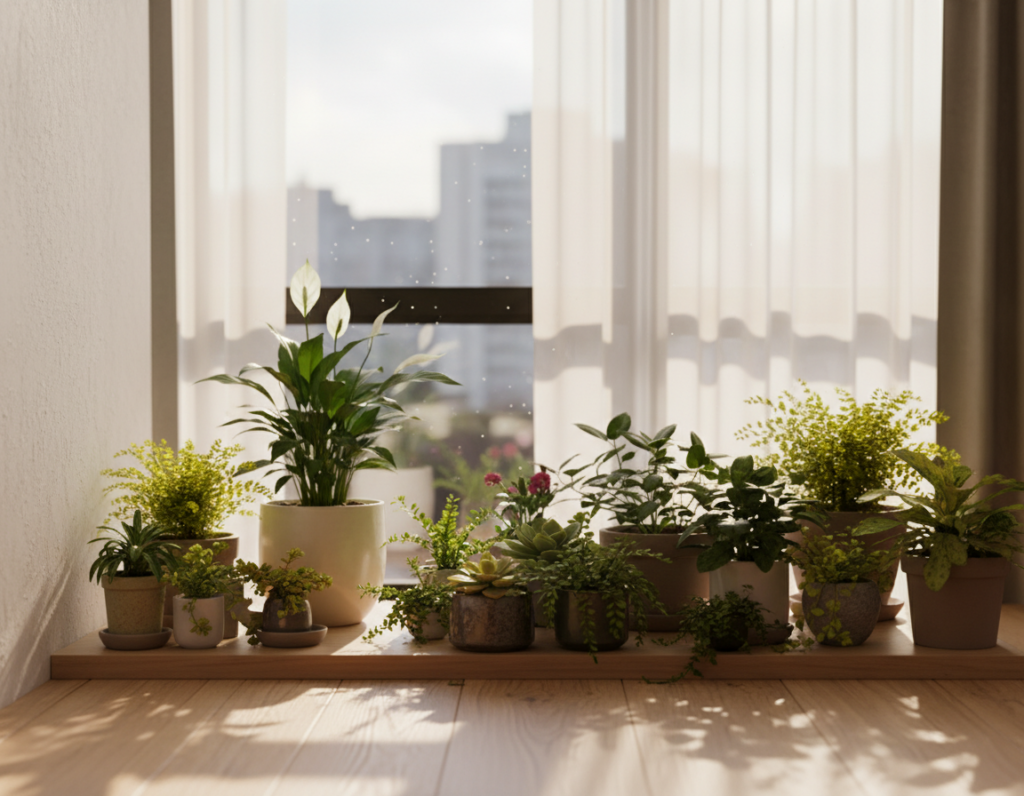
Maximizing vertical space transforms a room without crowding surfaces. Many homeowners now look up to create living displays that save floor area and add a fresh look to their home.
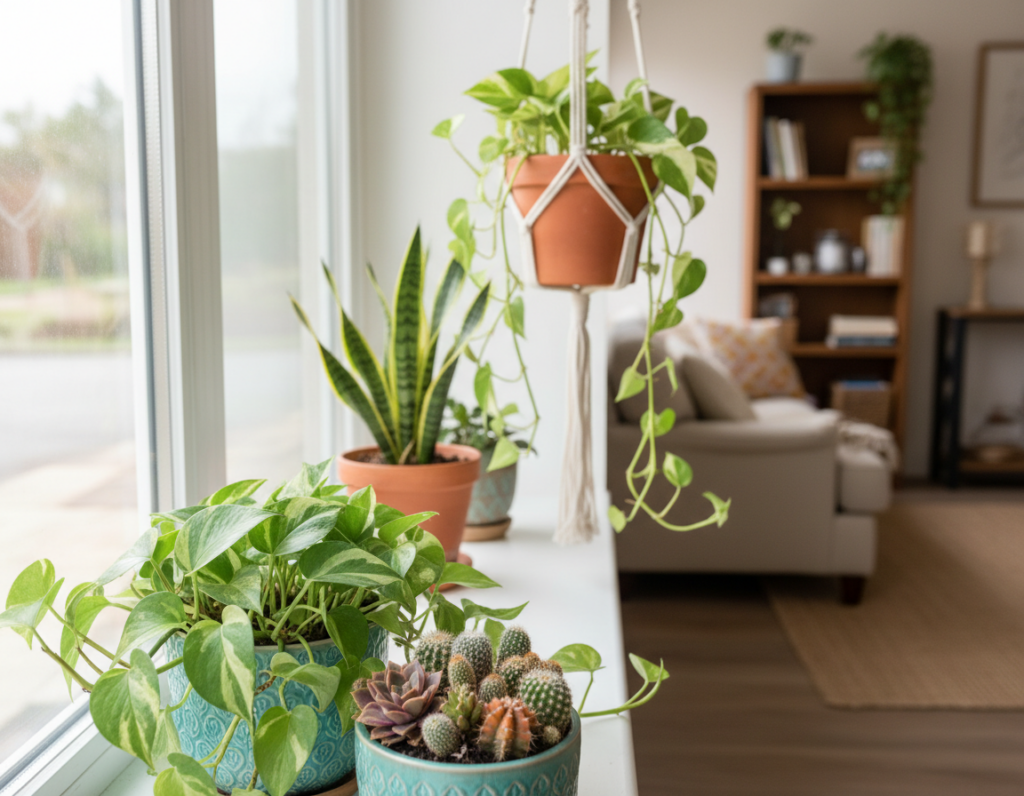
Trailing vines or airy foliage offer two clear styles: bushy, showy vines for a dramatic living room focal point, or lighter stems for a minimalist look. A simple macrame hanger or grouped baskets turns a corner into a curated green corner.
Care is straightforward when light, soil, and water are monitored. Humidity and sun exposure matter most, and proper soil and moisture checks keep leaves bright and healthy.
For a curated list and styling tips on the best indoor hanging varieties, read on to learn how to choose and maintain options that fit any space or lifestyle.
Why Compact Hanging Indoor Plants Are Perfect for Small Spaces
When countertops and floors are full, upward-growing greenery saves the day. It lets a room breathe while keeping floor space free.
Vertical displays use unused space near ceilings and windows. They help people keep favorite house greenery away from pets and children. Hanging baskets or pots suit many species, from trailing succulents to showy bloomers.
Right placement matters. Choose spots with steady light and easy access for watering and care. Proper light and water keep leaves bright and reduce stress on the plant.
- They visually lift a small flat, making the room look larger and airier.
- Many vines and trailing varieties perform best when allowed to drape naturally.
- Hanging options protect greenery from curious pets and free up surfaces.
“Hanging greenery transforms tight corners into lively focal points.”
Top Varieties of Compact Hanging Indoor Plants for Your Home
A small hanging display can mix blooms, succulents, and ferns to suit any room and light level. This section highlights easy-to-grow choices and the reasons they work in limited space.
Flowering Varieties
Chenille (Acalypha hispida) brings bold color with fuzzy red flowers and can reach up to six feet when given room to grow.
Pitcher plants (Nepenthes) are striking conversation starters that need bright light and high humidity to perform well.
Succulent Choices
String of pearls (Senecio rowleyanus) offers rounded, beaded leaves that trail beautifully and prefer plenty of filtered sun.
- String pearls — best with morning sun and well-draining soil.
- Rope-like vines such as english ivy work well in baskets and add classic drape.
- Epipremnum aureum (pothos) tolerates varied light and suits many arrangements.
Fern Selections
Boston fern (Nephrolepis exaltata) is pet-safe and great for air purification in bedrooms. Bird nest fern (Asplenium nidus) adapts leaf shape to available sun and loves humid spots like kitchens.
“Choose varieties with similar light and humidity needs to simplify care and keep a unified look.”
Tip: Group species with matching conditions in the same area to reduce maintenance and promote steady growth.
Essential Care Tips for Thriving Hanging Greenery
Consistent care routines make a big difference for plants kept off the floor. Small, steady actions help avoid common problems like brown tips or limp foliage.
Light and placement matter. Match each specimen to a spot with the right light and avoid harsh direct sun on delicate leaves.
Watering Techniques for Hanging Baskets
Take baskets down when you water them and let them drip over a sink. This prevents messy spills and protects surfaces below.
Most tropical varieties need water about once a week in summer and less in winter. Succulents and string pearls prefer drier soil and require less frequent watering.
Always check soil moisture before you water. Overwatering causes root rot in many common types such as pothos. Fertilize monthly during spring and summer for healthy growth, except for carnivorous species.
- Follow a consistent plant care guide so each specimen gets proper water and nutrients.
- Match light and humidity to the species to keep leaves full and colorful.
- Let string pearls and other succulents dry between waterings to avoid soggy soil.
- Check soil and trim dead foliage to promote fresh growth and good air flow.
“A short routine of checks and correct watering keeps hanging greenery vibrant year-round.”
For a deeper routine, consult the ultimate care guide to refine schedules and conditions for each species in the home.
Creative Ways to Display Your Trailing Houseplants
Display ideas that use vertical space can turn a corner into a living work of art. Simple mounts, layered planters, and woven holders let vines and beads of foliage draw the eye up.
Utilizing Macrame Hangers
Macrame hangers add texture and support for hanging planters. A single macrame cradle shows off a spider plant or a pot of pothos. Group three at different heights to create a mini garden that fills empty vertical space.
Creating a Living Wall
Living walls use baskets and shelves to encourage vines like english ivy to trail freely. String pearls work especially well on high shelves where their beads can cascade down. Mix trailing vines with flowering pots for contrast.
- Use a mix of baskets and planters to add depth.
- Place specimens where they get even light and easy care access.
- Cluster similar water needs together to simplify maintenance.
“Groupings that respect light and care needs produce the most striking results.”
Selecting the Right Planters for Vertical Growth
Choosing the right planter sets the stage for strong vertical growth and long-term health. Well-draining hanging planters and classic terra-cotta pots suit most species and help manage moisture.
Self-watering options simplify care for busy owners. These designs include a water gauge and a refill hole so one need not lift pots down to water.
Ensure planters have drainage. Water that pools at the bottom causes root rot and dull leaves. Terra-cotta offers breathability and a timeless look that suits many interiors.
- Choose hanging planters with a secure hook rating that matches pot plus plant weight.
- Use well-draining mixes to promote steady growth and avoid soggy soil.
- Consider baskets or saucers under terra-cotta to protect surfaces and catch drips.
Proper planter selection creates a cohesive look through the home and keeps specimens healthy while maximizing vertical space.
“Match pot type to water habits and weight limits to ensure safe, thriving displays.”
Troubleshooting Common Issues with Hanging Foliage
Many issues with dangling greenery start with light and humidity imbalances. A quick check of placement, moisture, and leaf condition solves most problems without special tools.
Managing Light and Humidity
Bird’s nest fern will often develop yellow leaves if it sits in too much direct sun. Move it to a gentler spot and increase humidity.
If an Epipremnum aureum (pothos) loses color, try a location with more bright light for a few hours daily. Spider plant (Chlorophytum comosum) is pet-safe and forgiving, but it still benefits from a clear plant care guide for humidity and watering.
- Yellowing? Reduce sun exposure for shade-loving species like bird’s nest fern.
- Faded pothos leaves respond well to more bright light and occasional feeding.
- String pearls prefer drier soil—check moisture before watering to avoid rot.
- English ivy may show pests or leaf drop when humidity is inconsistent.
- Inspect leaves regularly; early pest detection keeps a living display healthy.
“Adjusting light and humidity fixes most common issues and keeps a home display looking its best.”
Conclusion
A well-placed trailing specimen can turn a dull corner into a calm, living accent. Creating a beautiful indoor garden with the best indoor hanging selections makes efficient use of vertical space and lifts any room’s mood.
By following a clear care guide and simple plant care routines, varieties like string pearls and pothos will perform year-round. Monitor light and water levels closely—these two factors determine most outcomes.
Use the right planters and display methods to prevent common issues. For more ideas and starter choices, see this list of favorite trailing houseplants: favorite trailing houseplants. Start small, follow basic tips, and enjoy fuller, greener leaves in your home.