Choosing compact apartment plants helps people turn tight rooms into lively, air-cleaning corners without losing floor area. Small indoor options fit shelves, windowsills, and tiny tables. They bring green life to living spaces and suit studios or larger residences alike.
Many indoor plants thrive when they get the right mix of light, water, and soil. These houseplants often need less water and less soil than large species. Good care and simple tips keep leaves healthy and growth controlled.
By picking the right species, a person can create a lush feel that improves indoor air and fits any home. With a few basic care ideas, these selections make small spaces feel more peaceful and alive.
Why Compact Apartment Plants Are Perfect for Small Homes
Selecting low-footprint greenery helps homeowners add life without giving up usable room.
Small indoor options offer a quick style boost and a natural touch to any room. They work well on shelves, desks, or windowsills where larger specimens would crowd the space.
Many of these houseplants require easy care and fit a range of light and soil conditions. That makes them the one best choice for people who have limited time but want green around the home.
- They add visual interest without sacrificing floor area.
- They thrive in varied indoor conditions when chosen correctly.
- They bring a natural touch to rooms that lack outdoor access.
“Choosing the right variety can transform even the most cramped homes into lush environments,” said Stacy Ling of Bricks ’n Blooms.
For tips on care and the best low-footprint selections, consult this sample care guide. Proper attention to light and soil conditions ensures small plants thrive over time.
Best Trailing Varieties for Vertical Displays
Trailing greenery can transform a bare wall into a vertical garden with little effort. These varieties work well on shelves, high tabletops, or wall-mounted containers. They give a living touch while saving valuable floor space.
Pothos and Philodendron for Cascading Foliage
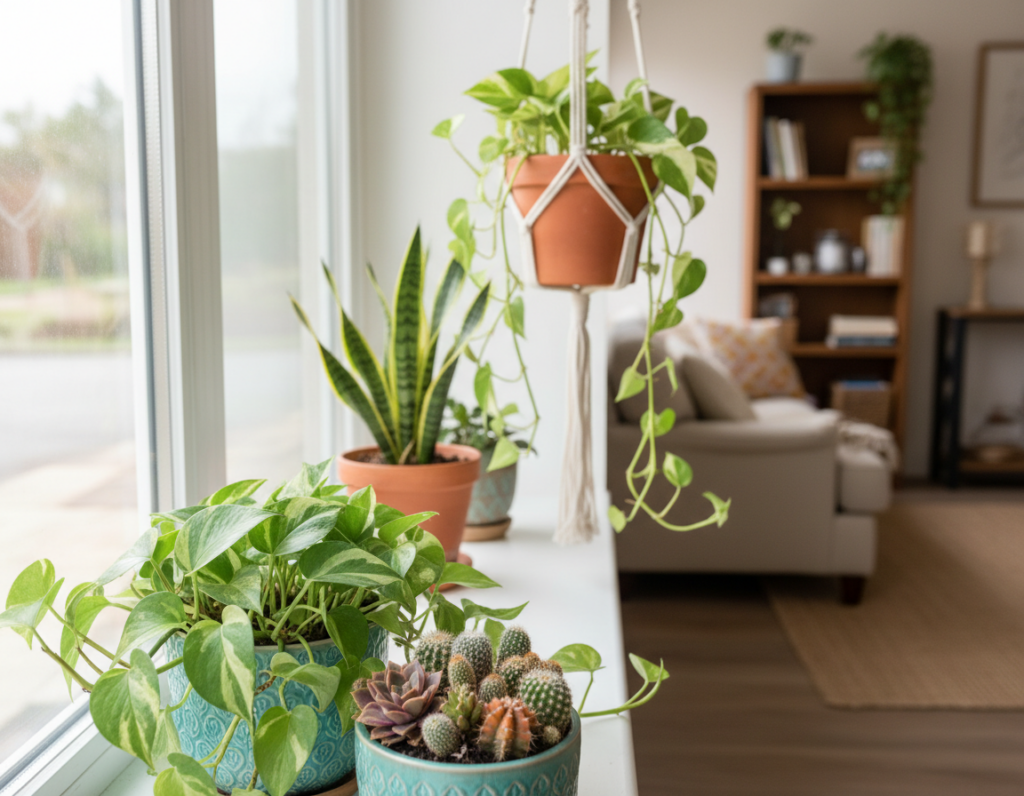
Pothos varieties like ‘Snowy Morning’ are ideal for hanging baskets, where their cascades soften shelves and bookcases. Philodendron species offer glossy leaves that drape beautifully down a wall or over a tall shelf.
Inch Plant and Wax Vine for Hanging Baskets
The Inch Plant (Tradescantia) thrives in humid spots such as a bathroom and brings colorful foliage to vertical displays. Wax vine and many houseplants can be trained in hanging containers to boost air quality and add a fresh touch to any room.
- Place trailing specimens on high tabletops to save floor area and add height.
- Syngonium podophyllum ‘Falling Arrows’ can trail up to 72 inches for dramatic vertical impact.
- Use wall-mounted containers to mix varieties and create a layered living wall.
For more ideas on selecting and styling hanging options, see this guide on hanging houseplants types. Proper light, routine watering, and well-draining soil keep trailing foliage healthy and striking.
Upright Species That Save Floor Space
Choosing tall, narrow specimens helps homeowners keep rooms open while adding vertical interest. Upright indoor plants make a smart choice when floor area is limited.
Snake Plant Varieties for Narrow Corners
Snake plant varieties such as ‘Gold Star’ and ‘Golden Hahnii’ stay under 12″ tall. They grow vertically rather than spreading outward, so they tuck neatly into a narrow corner or beside a sofa.
Many snake plants thrive across a wide range of light conditions. That makes them a reliable choice for homes with varied exposure.
- Low maintenance: snake plants need little fuss and tolerate missed waterings.
- Space-saving: upright leaves add height without taking up floor space.
- Style: elongated leaves lend a modern, structured look to small rooms.
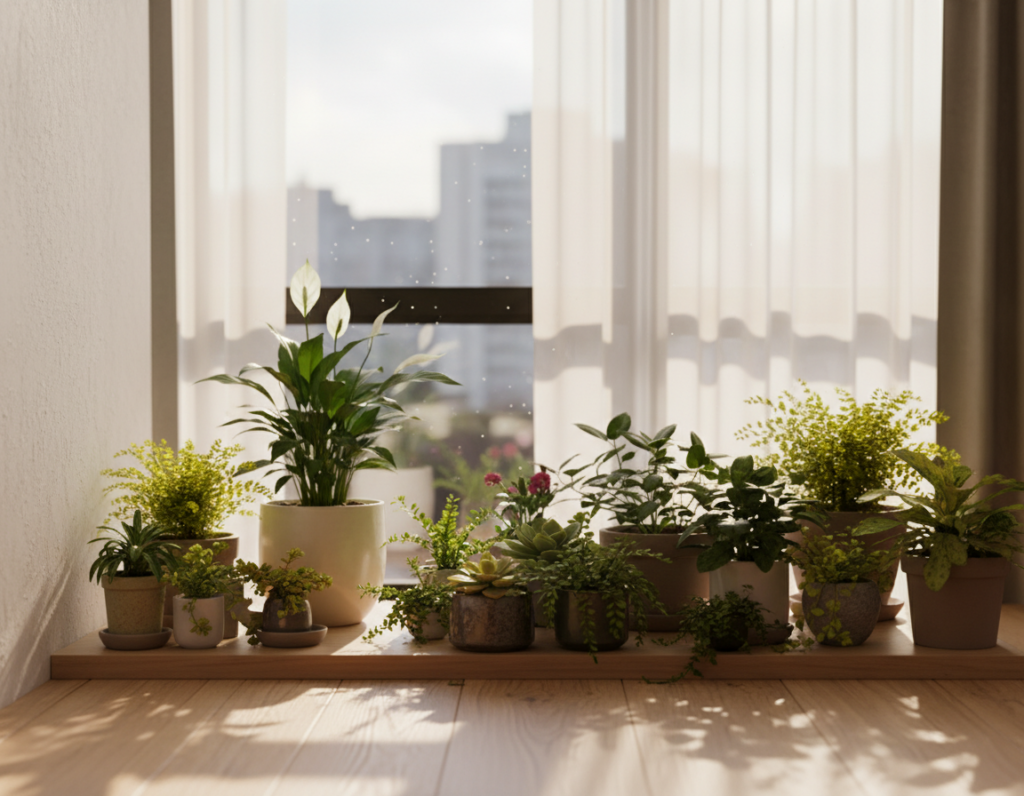
The peace lily and spider plant are other solid choices for tight spaces. Together, these houseplants offer easy care, lush foliage, and a refined presence in any room.
Hardy Succulents for Minimalist Decor
Hardy succulents bring crisp, minimalist style with very little fuss. They suit narrow shelves and a small tabletop while adding texture and subtle color.
Haworthia and Gasteria for Low Light
Haworthia and Gasteria thrive in small pots and need minimal water. They tolerate bright indirect light and do well near a window that gets gentle sun.
Living Stones for Unique Textures
Living Stones (Lithops) look like tiny pebbles and save space on a shelf or table. They need very little water and reward owners with unusual foliage and slow, steady growth.
Air Plants as Living Art
Air plants (Tillandsia) grow without soil, so they can hang from a wall or sit in a glass bowl. They need misting or an occasional soak and bright indirect light to stay healthy.
Group these hardy varieties to create a miniature garden that fits into tight spaces and requires little time or maintenance.
- Low upkeep: drought-tolerant choices require less frequent watering.
- Versatile display: mount air forms on a wall or cluster small pots on shelves.
- Textural interest: mix shapes and heights for a refined, living vignette.
Essential Care Tips for Thriving Indoor Greenery
Routine checks on light, soil, and moisture prevent most common issues with small houseplants. Simple habits help a person keep greenery healthy and compact without much fuss.
Stacy Ling of Bricks ’n Blooms stresses that the right soil mix and good drainage are vital for long-term health. She recommends placing specimens in bright indirect light and adjusting water based on season and pot size.
- Use well-draining soil and pots with holes to avoid root rot.
- Monitor water and use filtered water when possible to protect leaf quality.
- Prune in the growing season to control size and encourage fresh growth.
- Match each plant’s light and humidity needs to your indoor conditions.
“Providing the right soil and drainage is essential for the long-term health of your indoor plants.”
Following these care tips helps maintain plant quality and creates a healthy indoor air environment over a wide range of conditions.
Creative Ways to Style Plants in Tight Quarters
Think upward: vertical displays free floor space and boost room character. Simple styling can turn unused walls into a living backdrop that improves air quality and adds a natural touch to any home.
Utilizing Vertical Surfaces and Wall Mounts
Wall-mounted pockets, rail systems, and hanging baskets let a spider plant or trailing greenery cascade without using floor area. Install floating planters near a window to give small indoor specimens access to bright indirect light.
- Use a staggered arrangement of wall mounts to create depth and a mini wall garden.
- Choose lightweight pots and secure anchors to protect walls and leaves.
- Rotate containers periodically so every plant gets equal light.
Tabletop and Shelf Arrangements
Tabletop groupings work well on desks or console tables. Combine a small plant with a sculptural pot and a low lamp for a curated living vignette.
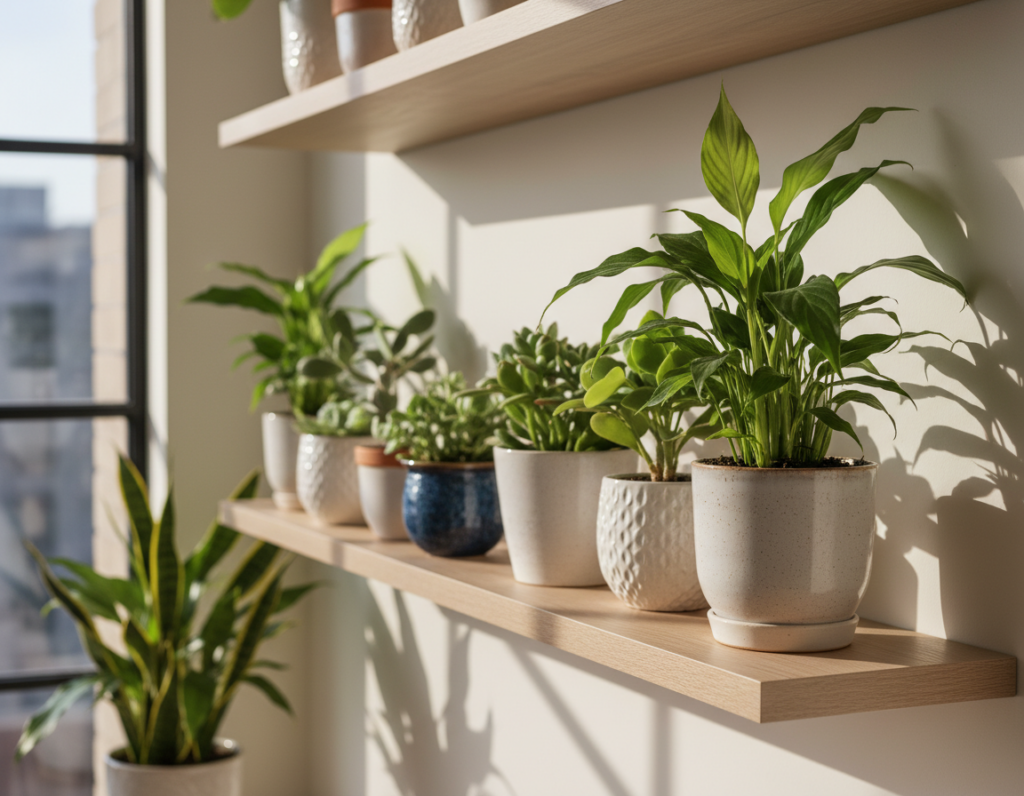
- Floating shelves maximize vertical space while holding several houseplants that prefer bright indirect light.
- Cluster pots of varying heights to highlight foliage and create a layered look in a single room.
- Match each item’s care needs to the room’s light and humidity to keep quality foliage year-round.
“Styling vertically proves you can have a lush garden in a small space by thinking creatively.”
Managing Growth Through Pruning and Potting
Controlling growth with simple pruning and the right pot size prevents overcrowded shelves. Prune a Golden Pothos about four times a year to keep vines from spilling into other areas of the room.
Move houseplants into fresh, well-draining soil when roots start to crowd a pot. Regular repotting preserves root health and overall quality.
Monitor water and light as seasons shift. Adjust watering and light exposure to match changing conditions and to prevent stress on leaves and stems.
Keeping a specimen in a smaller pot naturally slows growth, which helps maintain a tidy garden on narrow shelves. Proper pruning techniques also shape a plant so it stays proportional to its space.
- Prune training stems to control length and encourage fuller foliage.
- Use porous mixes and pots with drainage to protect root systems.
- Check soil moisture and water quality regularly to sustain vigor.
“Consistent pruning and attentive potting extend the life and look of indoor greenery.”
Conclusion
A few well-chosen green specimens can make any living area feel brighter and calmer. They add life to a small space and bring a natural touch to the home without overwhelming it.
Follow basic care for the best results: match each plant to the right light, check soil and water routines, and trim back long leaves as needed. Regular attention keeps growth in check and preserves a tidy look.
Whether selecting succulents, trailing vines, or a narrow snake variety, start small and expand. Good placement and simple upkeep let your indoor greenery thrive and improve air quality. Begin today and enjoy the lasting rewards.