Compact greenery lets homeowners enjoy lush foliage without crowding a room. These choices maximize limited space and add a calm, living touch to a tabletop or shelf.
The Falling Arrows® Champaign Reign™ Syngonium podophyllum shows how a compact habit can still offer drama. It reaches about 12 inch height while vines may trail long as it matures. A young specimen sits well on a nightstand; mature vines suit a hanging display.
Care focuses on basics: the right light, regular water checks, and well‑draining soil. Every variety has a unique growth habit, so knowing each plant’s needs ensures long-term success.
For more options and detailed profiles of the best houseplants for limited spaces, see this guide on small houseplants.
Why Mini Indoor Plants That Stay Small Are Perfect for Your Home
Small-format foliage gives rooms personality while preserving valuable floor area. These choices suit renters and apartment dwellers who need greenery without sacrificing living space. A compact specimen can brighten a nightstand or desk and still leave the floor free.
Many popular houseplants are bred to maintain a modest footprint. They fit shelves, windowsills, and tiny corners with ease. This makes decorating easier for both beginners and experienced gardeners.
Choosing the right small indoor plant fills the home with life without clutter. Proven Winners and similar brands curate varieties that hold shape and size well. The result is an organized, calming room that feels fresh and lived‑in.
- Easy placement: ideal for a nightstand or desk.
- Space-smart: perfect where floor area is limited.
- Low fuss: many require minimal routine care.
Selecting the Right Foliage for Compact Living
Choosing the right foliage means matching form, color, and mature size to your space. Consider how leaves will fill a shelf, table, or wall over time. Check light, humidity, and soil needs before bringing a new specimen home.
Succulent Varieties
Succulents are ideal for a tabletop display. They use less water and come in a wide variety of shapes and colors.
Because many succulents stay neat, they suit a desk, nightstand, or grouped shelf. Their low water needs make them forgiving for busy households.
Ferns and Tropicals
The Living Lace® Hurricane bird’s nest fern is a standout. Its twisted, swirling leaves reach 8–24 inches and add dramatic texture to a bathroom or humid room.
Tropical varieties prefer moist soil and higher humidity. Use wall-mounted planters or hanging pots to save floor space and let foliage cascade from a high shelf.
- Tip: Match mature leaf size to the intended spot so the plant fits the table or shelves.
- Tip: Hanging planters keep the floor clear and highlight trailing foliage.
- Tip: For a deeper dive, consult this detailed selection guide.
Best Low-Light Varieties for Dim Corners
Dim corners can still glow with foliage suited to low and indirect light. A few hardy selections bring texture and color to shaded spots without demanding bright sun.
Prismacolor™ Birkin philodendron is an excellent choice for a corner with medium indirect light. It forms a compact clump and shows shiny dark green leaves with creamy pinstripe veining.
Philodendron and Pothos Selections
Pothos and philodendron varieties tolerate lower light and many are forgiving for new growers. The snake plant also performs well across varied conditions and adds vertical interest.
- Water tip: let the soil dry completely between waterings to avoid root rot.
- Light note: even low‑light houseplants need some indirect light to keep leaves glossy.
- Foliage range: expect a wide range of patterns and textures to enliven a shaded corner.
- Beginner friendly: most selections adapt to slow drying and mixed conditions.
Bright Light Lovers for Sunny Windowsills
Sunny sills reward high‑light varieties with richer color and lively foliage. The Urban Arches® Pixie Punk™ spider plant features broader leaves and bright green coloring with slender white margins. It thrives when given steady bright indirect light on a south or east window.
Place these selections where light is strong but not scorching. A too‑hot window can burn delicate leaves. Hanging baskets work well; they let foliage drape and catch light from a nearby window or bathroom.
Many houseplants that prefer bright indirect light also enjoy higher humidity. Kitchens and bathrooms often supply that microclimate. Check soil regularly: active growth means more frequent water and a watchful hand.
- Display tip: group a variety on a shelf to create a warm, greenhouse effect in limited space.
- Care note: keep moisture steady and avoid temperature spikes at the sill.
- Color boost: brighter light usually makes foliage and colors more vivid.
Creative Display Ideas for Limited Square Footage
Using vertical and suspended displays expands where greenery can live in a compact home. These approaches maximize usable floor and table area while keeping living foliage visible and healthy.
Vertical Wall Gardens
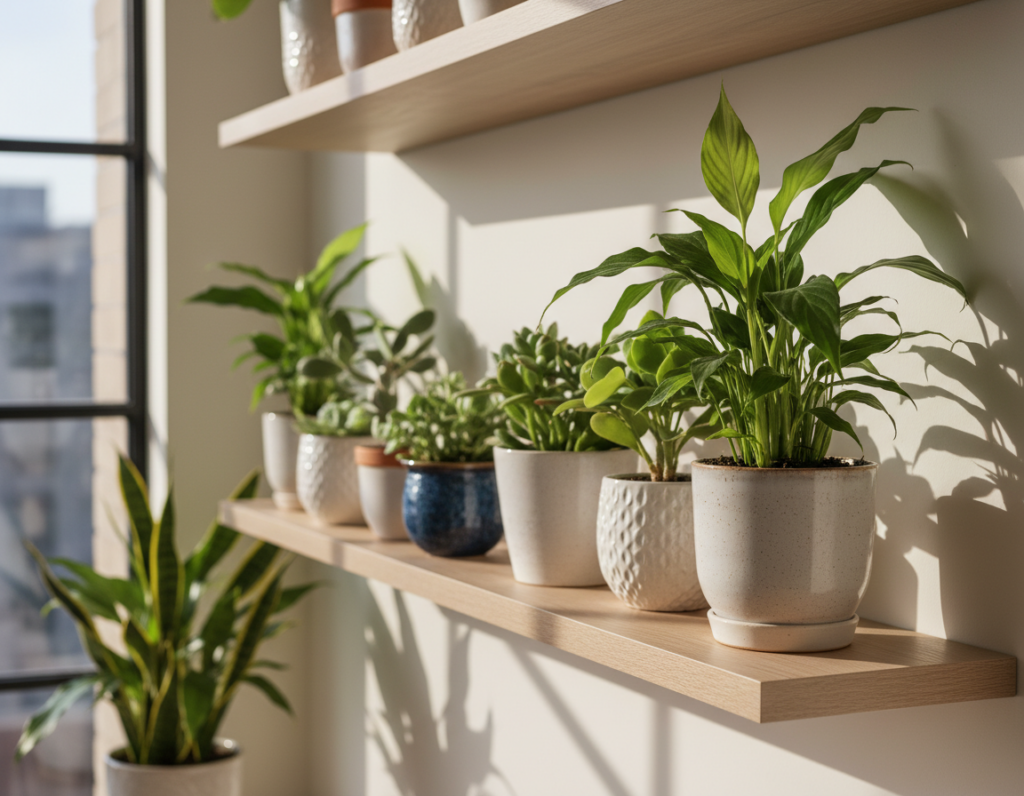
Wall gardens free floor space and create a living focal point. Floating shelves or pocket planters work well near a window to give foliage steady bright indirect light.
Choose modest growers like Peperomia obtusifolia, which reaches 6 to 12 inches and suits a shelf or nightstand. Secure mounts and check weight limits when filling holders with moisture-retentive soil.
Hanging Planters
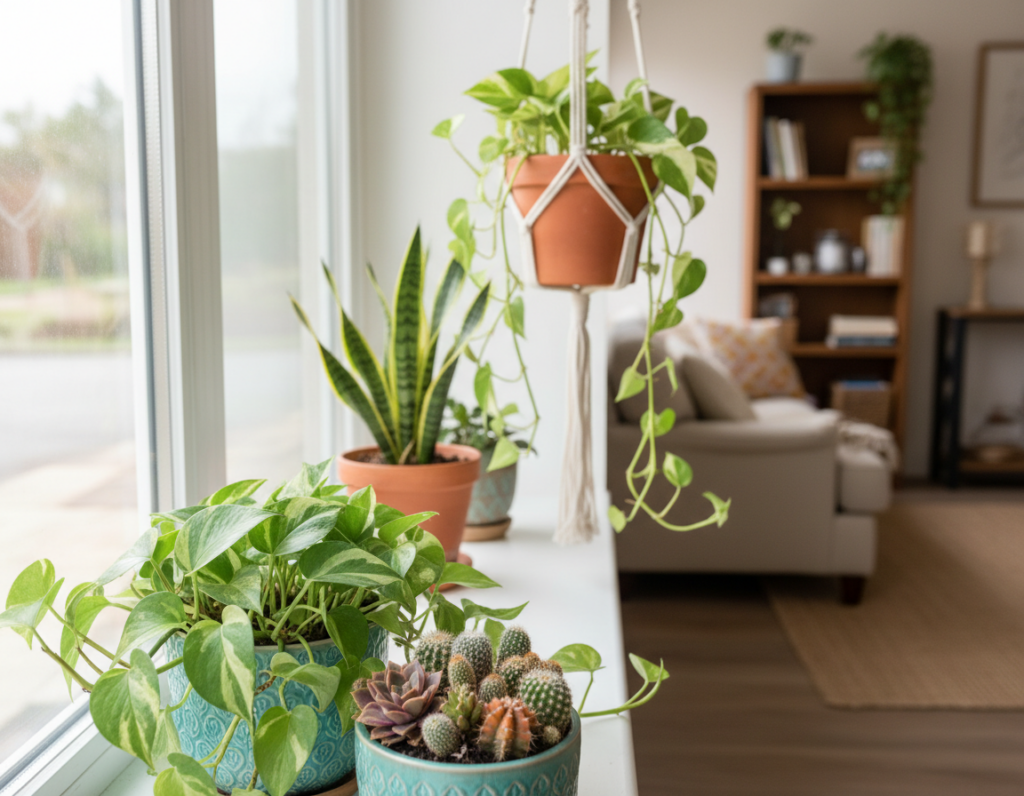
Hanging solutions draw the eye up and highlight trailing varieties. Pothos and fern selections drape beautifully from hooks, saving floor and table space.
Use sturdy hardware and group a few at varied heights for depth. This keeps leaves away from busy surfaces and creates a lush room effect without cluttering the floor.
Desktop Groupings
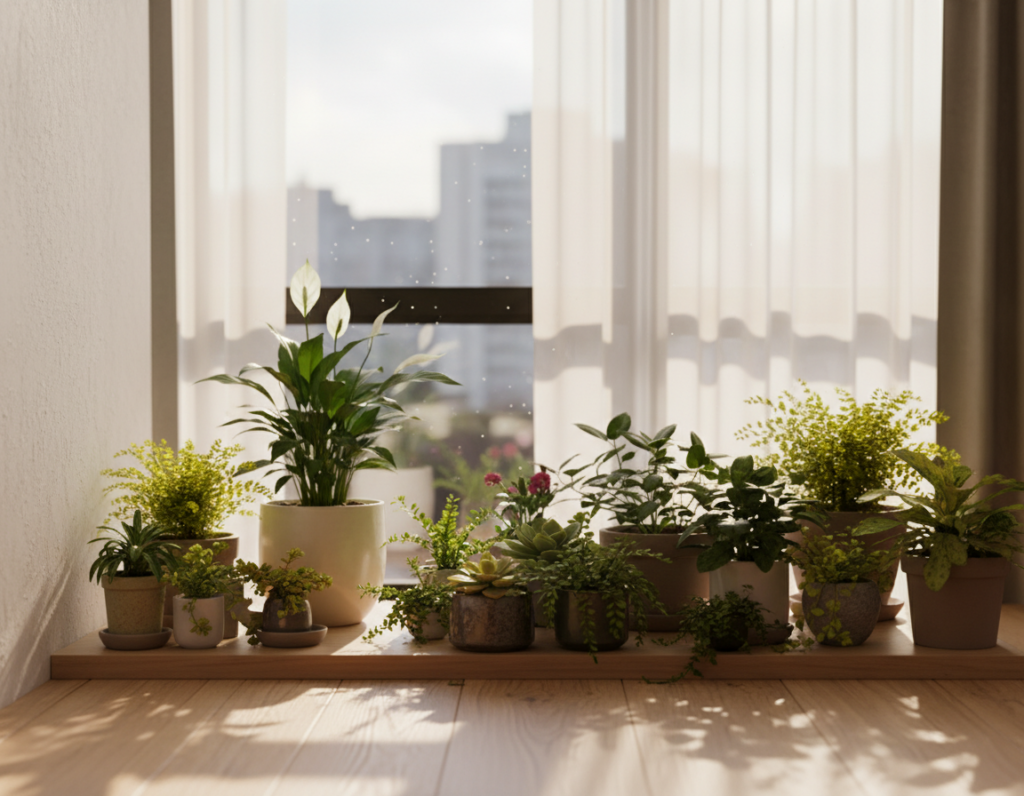
Cluster a handful of compact specimens on a desk or tabletop to boost focus and reduce stress. Grouping makes watering and light checks easier and helps maintain consistent soil moisture for each plant.
- Arrange by light need so those needing indirect light share a spot.
- Leave breathing room so leaves don’t overcrowd a single shelf or table.
- Consider a 12-inch mature height when choosing rubber or taller varieties.
Essential Care Tips for Maintaining Petite Plants
A steady, simple routine keeps petite foliage healthy and predictable in any room. Regular checks stop problems before they start and save time over the long term.
Water and soil: Check the top layer of soil before watering. Most indoor plants do best when you allow the soil to dry completely between waterings to prevent root rot.
Light and rotation: Place each plant where light suits its needs. Rotate containers every few weeks so leaves get even exposure and balanced growth.
Environment and hygiene: Keep humidity steady and wipe leaves often. Clean foliage absorbs more light and shows fewer pests.
- Use quality potting soil for nutrients and drainage.
- Give each specimen breathing room so it can grow without overcrowding a shelf or nightstand.
- Monitor conditions in the home—temperature and moisture matter as much as light.
Managing Growth Through Pruning and Potting
Simple pruning techniques and occasional repotting make it easy to manage growth over time.
Pruning controls size and encourages bushy habit. For many specimens, including Ficus lyrata ‘Bambino’, pinching a stem just above a leaf node redirects energy and creates fuller foliage.
Always use clean, sharp shears to reduce disease risk and speed recovery. For a trailing specimen in a hanging basket, trim back long stems to keep shape and prevent legginess.
Potting choices also limit growth. Repot into a slightly larger container when roots crowd; fresh soil supplies nutrients and better drainage. Using well‑draining soil helps avoid rot and eases water management.
- Prune above nodes to promote branching and denser foliage.
- Repot every 1–2 years or when roots push from drainage holes.
- Keep large growers like the rubber tree compact by restricting pot size and pruning regularly.
Managing growth keeps each specimen fitting its shelf, wall, or tabletop spot. For more options on compact varieties, consult this guide to small houseplants.
Troubleshooting Common Issues with Small Houseplants
Most common issues with compact foliage are easy to fix with a quick check of light and soil. Start by noting the plant’s placement on a shelf, nightstand, or tabletop and the nearby window exposure.
If a pothos or snake plant shows yellowing leaves, it often means the soil is too wet. Let the soil dry completely before watering again and check drainage.
Overwatering is the top problem for desk or nightstand specimens. A simple finger test or moisture meter saves time and prevents root issues.
- Light: move stressed foliage between a bathroom, wall shelf, or window to match bright indirect light or medium indirect light needs.
- Hanging: prune sparse runners and ensure the hanging spot gets enough bright indirect light to promote fuller growth.
- Rubber plant: losing lower leaves usually signals low light or drafts; try more medium indirect light and stable conditions.
- Grouping: cluster varieties on a table or shelves to monitor care and catch pests quickly.
Every variety has unique needs. Spend time learning each plant’s preferred water, light, and soil routine to resolve issues faster and keep foliage healthy over time.
Conclusion
Bringing compact foliage into tight corners brightens rooms without claiming valuable floor area. These best indoor plants, provide a professional, low‑fuss way to add a natural touch to any room.
By choosing the right houseplants for each light condition, a person can fit lush greenery on shelves, desks, and tabletops. Regular care and correct light management keep specimens healthy and vibrant over time.
Whether a beginner or an experienced gardener, they will find many options among the small indoor selections. With a little planning, anyone can create a curated green corner that feels like a tiny garden in the home.