Choosing greenery for a shared home matters for anyone who lives with animals or young kids. The ASPCA reports that over 10,000 cats and dogs were treated for houseplant ingestion in 2020. That number shows why thoughtful selection is essential.
Careful selection helps keep foliage and flowers as a benefit, not a hazard. The right houseplants can cleanse the air, add color by a window, and lift mood without risking harm.
Owners should learn about light, water, and soil needs before bringing a new plant home. They can place ferns or non-toxic foliage up high or in a sunny room where curious cats and dogs have less access.
With the right choices, an apartment can become a lush, pet-friendly sanctuary. Simple steps—research, placement, and proper care—protect both family and greenery while keeping the house vibrant and healthy.
Why Pet Safe Small Indoor Plants Matter
Picking the right house greenery prevents accidents and keeps air quality high for all residents. Owners who share a home with cats or dogs gain peace of mind when they prioritize pet-safe plants. This choice reduces the chance of accidental poisoning and lessens stress when friends and family visit.
Strader’s Garden Center lists 16 houseplants that are harmless to cats, a helpful resource for apartment dwellers. Many of these options also purify the air and add gentle foliage near a window or in a sunny room.
Curious cats and dogs often nibble leaves or chew stems. Choosing the correct plant means fewer trips to the vet and more time enjoying green décor.
- Reduces risk of toxic ingestion.
- Improves air quality and offers calming greenery.
- Often easy to care for—minimal light and water needs.
In short: thoughtful selection of houseplants protects animals and enhances the house with low-maintenance foliage that thrives in typical apartment light and soil conditions.
Understanding Toxicity in Common Houseplants
Some popular house foliage hides toxins that look harmless at a glance. Many common varieties contain compounds that cause vomiting, drooling, or more serious reactions in cats and dogs. Awareness helps people choose greenery that complements a house without adding risk.
Identifying Toxic Varieties
Many poisonous species resemble harmless ones. Bright leaves, glossy foliage, or pretty flowers do not guarantee a non-toxic choice.
- Check botanical names before buying a plant or houseplant.
- Watch for warning signs when a cat or dog sniffs or nibbles leaves.
- Keep reference lists handy for ferns, flowering pots, and common shelf varieties.
The Importance of ASPCA Guidelines
The ASPCA Poison Control Center recorded over 10,000 cases in 2020 where cats and dogs needed treatment after ingesting household greenery.
If ingestion is suspected, contact a veterinarian or the ASPCA hotline immediately for emergency guidance. Following trusted guidelines ensures collections of non-toxic plants and a safer living room, window ledge, or sun-facing room for both animals and people.
Selecting the Right Greenery for Your Apartment
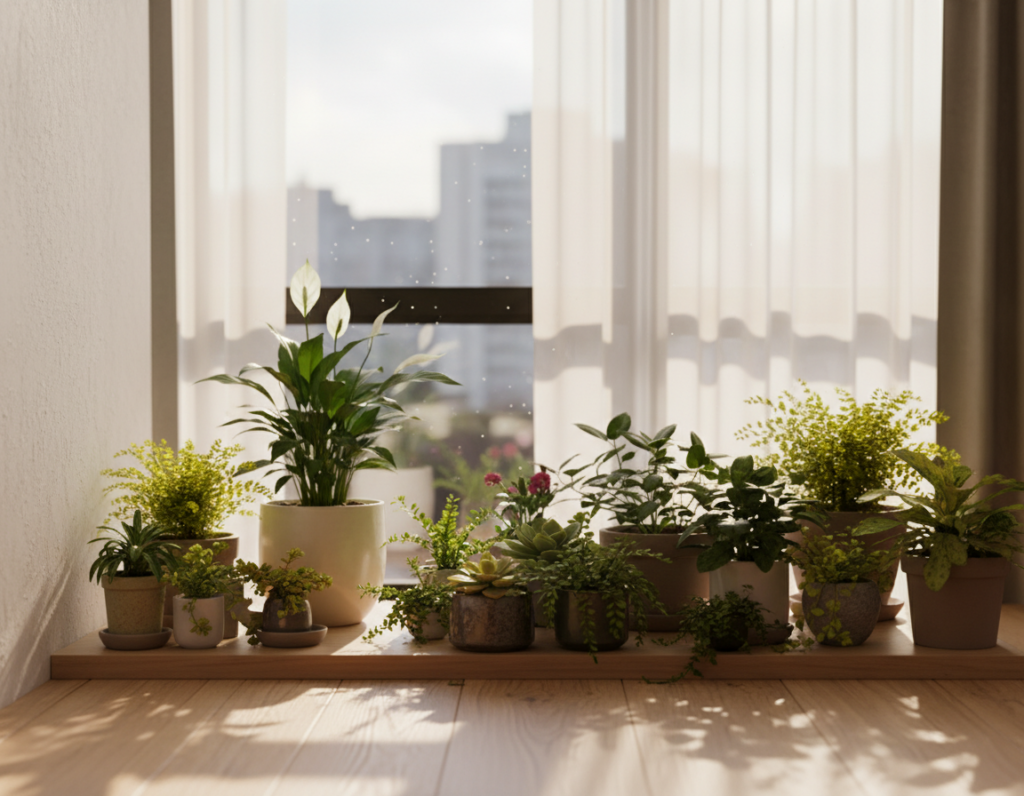
Start with a clear read of how much sunlight reaches each room before bringing home a new houseplant. Note bright windows, shaded corners, and any drafty spots near vents.
Match plant needs to your space. Choose varieties that tolerate the available light and the level of care you can give. Some house plants thrive on weekly watering and bright sun, while others prefer indirect light and light misting.
Size matters in compact homes. Opt for compact foliage or hanging options to avoid overcrowding a living area. Consider ferns or a hardy spider-type houseplant for vertical interest without taking floor room.
“Selecting the right greenery means balancing sunlight, soil needs, and how often you can water.”
- Check botanical names and toxicity if cats or dogs share the house.
- Prioritize low-maintenance varieties if friends or travel limit care time.
- Research specific care for leaves, soil, and seasonal sunlight shifts.
The Versatile Spider Plant
The spider plant earns its place in many homes because it adapts to varied light and care routines. Also called the Ribbon Plant, it can reach up to three feet and sends out dozens of graceful leaves and offshoots.
Ideal for hanging baskets and bright rooms, spider plants do best in indirect light. They tolerate occasional dry spells and recover quickly after missed water or brief low light.
Propagation Techniques
Propagation is simple and reliable. Mature specimens produce spiderettes—tiny plantlets on long stems.
- Root in water: Clip a spiderette and place it in a jar until roots form.
- Pot up: Transfer rooted offshoots to well-drained soil for a new houseplant.
- Hang or shelf: Use hanging baskets to keep foliage out of reach of curious cats and dogs.
Because they help filter the air and look attractive near a window, spider plants remain a popular, easy care choice for apartments and shared houses.
Elegant Palms for Small Spaces
Tall, graceful palms add vertical interest without overwhelming a compact living room. They bring a tropical feel and help improve the air while fitting near a window or in a corner.
Parlor Palm Care
Parlor palms (Chamaedorea elegans) thrive in low light and tolerate a range of room conditions. They can reach up to six feet indoors and keep fan-shaped leaves with minimal fuss.
Care is simple: place the pot where the palm gets indirect light, water only when the topsoil feels dry, and avoid harsh, direct sun. This makes the parlor palm an excellent choice for households with cats and dogs.
Ponytail Palm Characteristics
The ponytail palm stands out with a thick, bulbous trunk that stores water. That trunk lets the plant survive missed waterings and makes it an easy care option for busy residents.
- Light: prefers indirect light or bright, filtered sun.
- Water: infrequent—allow soil to dry between waterings.
- Size: can reach up to eight feet, creating dramatic foliage without needing much space.
Both palms offer elegance and low-maintenance growth. They are solid choices for apartment owners who want large, stylish greenery that remains friendly to cats and dogs while improving room air and mood.
Charming Succulents and Cacti
Succulents such as Haworthia offer compact form and low fuss care for apartment life.
The Haworthia is a miniature succulent from South Africa. It forms tight rosettes of thick leaves that add texture without taking much room.
These specimens need well-draining soil and should only be watered when the soil dry. That routine prevents root rot and suits busy schedules.
Succulents tolerate drought and reward owners who favor dry waterings. Many will thrive in bright, indirect light and handle some direct sun if acclimated slowly.
“Monitor soil moisture and allow the top layer to dry between waterings.”
- Use gritty, well-draining soil to speed runoff.
- Place near a sunny window but avoid harsh midday sun.
- Choose varieties that coexist well with cats and dogs.
As a choice for the house, succulents bring varied shapes and minimal upkeep. They improve air and look attractive on shelves, windowsills, or next to ferns in grouped displays.
Flowering Favorites for Bright Windows
Bright windows are ideal stages for blooms that reward careful placement and routine care. These flowering choices suit sunny sills and offer color without complex upkeep.
African Violet Lighting
African violet produces vivid purple, pink, or white flowers and prefers bright, indirect sunlight to avoid burning its sensitive leaves.
East- or north-facing windows work best. Rotate the pot for even growth and avoid hot midday sun.
Christmas Cactus Blooms
The Christmas Cactus is a low-maintenance choice that rewards consistent care with winter blooms. It thrives in bright, indirect light and likes moderate, regular water during the growing season.
Hoya Varieties
Hoya or wax vines offer thick, glossy foliage and fragrant, star-shaped flowers. Many Hoya varieties are non-toxic and make a good option for homes with cats and dogs.
- Placement: give bright, indirect light for best flowering.
- Care: moderate water and well-draining soil support repeat blooms.
- Benefit: these houseplants add scent and texture without heavy fuss.
Unique Foliage and Patterned Leaves
Textured and patterned foliage offers visual interest while requiring modest care. Fittonia, the Nerve Plant from Peru, shows striking veins that pop against dark green backgrounds. It thrives with high humidity and regular misting to keep its patterned leaves vivid.
The Maranta, or Prayer Plant, folds its leaves each night—a living display named for Bartolomeo Maranta. This prayer plant does best in medium to bright indirect light and prefers soil kept consistently moist. It is a popular pet-friendly plant for shared living spaces because of its gentle growth habit.
Both varieties tolerate low light but reward owners who avoid harsh sun. They add texture and color and create dynamic movement as leaves open and close through the day.
“Choose patterned foliage for drama; match humidity and light to keep colors bright.”
- Care tip: keep soil evenly moist for the prayer plant.
- Humidity: mist or use a tray for the Fittonia’s tropical needs.
- Placement: bright, indirect light or low light spots work best.
Hardy Ferns for Humid Corners
Hardy ferns bring lush texture to humid corners and tolerate the lower light of bathrooms or kitchens.
The Boston Fern and the Bird’s Nest are excellent choices for moist rooms. Both prefer indirect light and higher humidity and add a tropical feel without demanding bright sun.
Boston Fern Maintenance
Keep the soil evenly moist so fronds stay full and green. Water when the topsoil begins to dry, but avoid letting the pot sit in standing water.
Place the fern in a spot with bright, indirect light or low light. Mist leaves or use a humidifier to mimic a forest understory.
- Hardy ferns like Boston and bird nest thrive in humid corners such as bathrooms or kitchens.
- Ferns are generally non-toxic to cats and dogs, making them a lush option for shared homes.
- When the soil dry, it is time to water; do not allow constant pooling around roots.
“A steady humidity level keeps fronds vigorous and reduces leaf browning.”
Air Plants for Minimalist Decor
Air plants bring a sleek, soil-free accent that suits minimalist rooms and modern shelves. Tillandsia absorb moisture and nutrients through their leaves, so they do not need soil to thrive.
These houseplants fit glass terrariums, driftwood mounts, or hanging displays. They keep a clean look and reduce mess compared with potted options.
They are an excellent easy grow choice. A light misting or a quick soak every few days keeps them hydrated. Avoid direct, scorching sun and place them where they get bright, indirect light.
- Versatile displays: arrange on shelves, in bowls, or on wall mounts.
- Low fuss: minimal watering and no soil means tidy upkeep.
- Variety: sizes and shapes let owners customize any room.
“Air plants provide modern greenery with minimal care and a clean aesthetic.”
For more on choosing pet-safe options and air-purifying references, see air-purifying resources. These choices work well in apartments shared with cats and dogs and suit a modern, low-clutter lifestyle.
Essential Care Tips for Healthy Growth
Simple daily observations help catch early signs of trouble and keep foliage looking its best. A short walk through the room to check leaves and soil makes big problems easier to stop.
Consistent routines support easy care for spider plants and the ponytail palm. Water when the top inch of soil dries, and place house plants where they get steady, indirect light or gentle morning sun.
Watch for pests and nutrient gaps. Yellowing or chewed leaves often signal insects or a deficiency. Treat issues quickly to avoid long-term damage.
For species like the african violet, avoid getting water on the leaves; water at the soil level to prevent spotting and rot. Establish a predictable schedule so cats and dogs can live alongside a thriving green collection.
“A little attention each week keeps most problems small and recoverable.”
- Match light and water needs to each plant.
- Inspect foliage and soil weekly for pests or stress.
- Adjust care seasonally as sun and humidity change.
Managing Soil and Watering Schedules
A simple probe into the soil beats a calendar when deciding to water. Creating a routine around moisture checks helps care for varied species, from a hardy spider to the sensitive prayer plant.
Monitoring Soil Dryness
Check before you pour: press a finger an inch into the topsoil. If it feels dry, a light drink is due. If it feels cool and damp, wait and check again in a few days.
Plants in low light need less frequent waterings than those in bright, indirect sunlight. The prayer plant prefers soil kept consistently moist but never waterlogged.
Using Filtered Water
Filtered water removes chlorine and harsh minerals that can brown leaf tips. For sensitive houseplants, use room-temperature filtered or rain water when possible.
- Match water amount to pot size and drainage.
- Adjust frequency with seasonal changes in natural light.
- Observe cats or dogs around pots and secure collection trays.
Creative Placement to Keep Plants Out of Reach
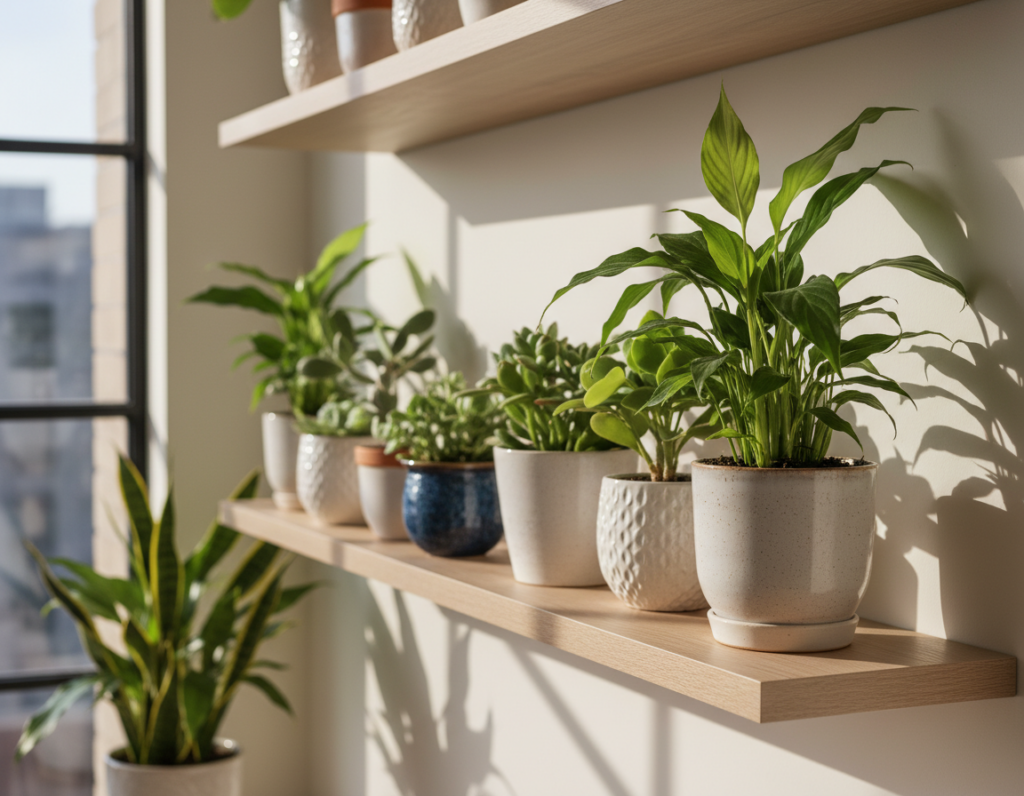
Using height and clever shelving turns a living room into a layered green display and keeps leaves out of reach. This approach lets owners enjoy a wide variety of plants while keeping curious cats and dogs away from soil and stems.
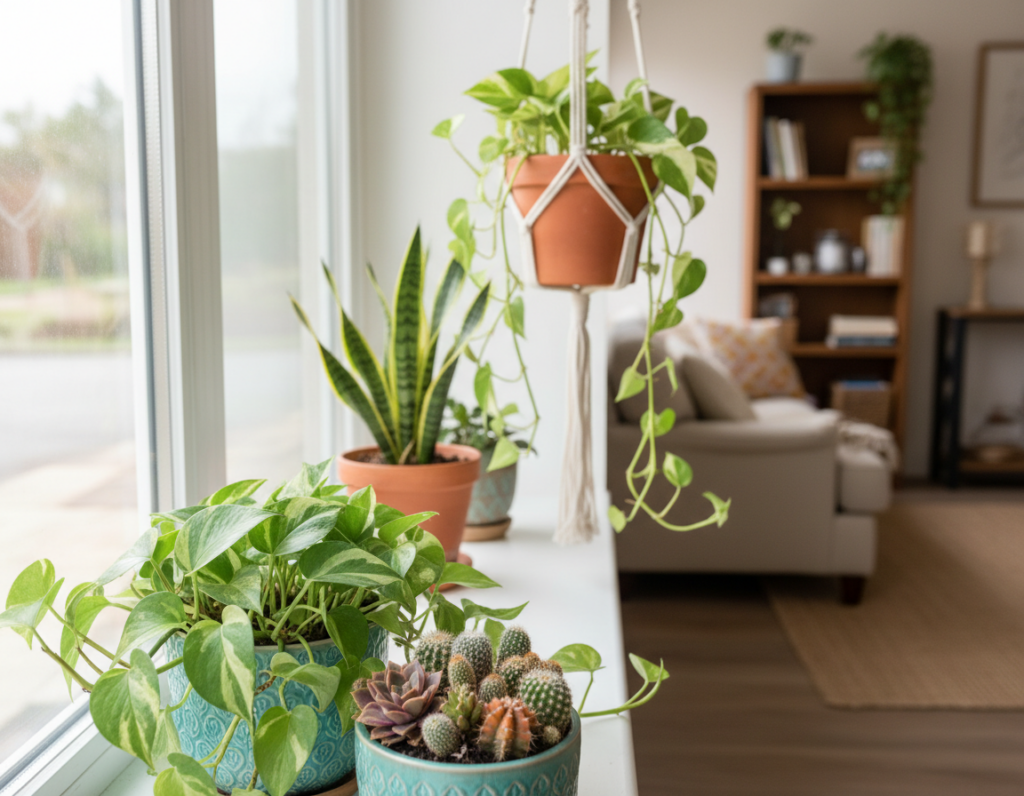
Hanging baskets and tall plant stands free floor space and protect pots from digs and knocks. Wall-mounted planters create a vertical gallery that looks intentional and tidy.
Place the group where it gets the best light and sun for the species. Sturdy anchors and low-center-of-gravity stands reduce topple risk if a cat likes to climb.
Layering works well: high shelves, a mid-level stand, and a hanging basket make a dynamic display that also limits access. Rotate pots as light shifts through the day so each specimen gets the water and light it needs.
“Vertical design keeps foliage beautiful and unreachable while maximizing light exposure.”
- Use hanging baskets to reclaim shelf and floor space.
- Choose tall, sturdy stands for heavier pots.
- Consider wall planters for a secure, elevated layout.
- Secure stands if a cat or energetic dog is present.
For more styling tips on shelving and vertical displays, see styling ideas for shelves.
Troubleshooting Common Plant Issues
Quick checks for yellowing or soft stems stop minor issues from becoming major problems. Regular inspections make it easier to spot trouble early and act before stress spreads.
Signs of Overwatering
Drooping leaves and a damp, musty smell often point to too much water. Soft stems or soggy soil mean roots may be suffocating.
If a plant is not thriving, check the light levels and watch for drafts or sudden temperature changes. Those factors change recovery time and water needs.
- Prune damaged foliage: trim yellow or dead leaves to help redirect energy to new growth.
- Inspect for pests: look under leaves for tiny webbing or aphids and treat quickly to prevent spread.
- Adjust watering: let the topsoil dry before the next drink to avoid root rot.
“Staying observant and proactive resolves most issues and keeps an indoor garden healthy for both people and cats.”
Safety Precautions for Pets and Children
Practical safeguards help everyone enjoy greenery without adding household hazards.
Always choose non-toxic plants and keep a list of approved species within easy reach. Knowing which varieties are non-toxic reduces the chance of accidental poisoning and speeds responses in an emergency.
Keep curious hands and mouths in mind. Teach children not to touch or taste leaves, and supervise play near any pot. If a child or an animal chews a leaf or eats part of a plant, seek medical or veterinary attention right away.
- Store fertilizers and soil additives in a locked cabinet away from children and animals.
- Place pots where they get proper light but remain out of reach—use high shelves or hanging baskets.
- Have emergency contacts ready: pediatrician, veterinarian, and poison control.
“Creating a guarded, well-informed space lets families enjoy green decor without compromising health.”
Conclusion
A mindful mix of foliage can turn a spare corner into a healthy, living focal point. Choosing a few reliable species—like the prayer plant, spider plants, ponytail palm, and african violet—makes care simple and results predictable.
Match each plant to proper light and use indirect sunlight where noted to keep leaves vibrant. The bird nest fern rewards steady humidity and gentle care.
With planning and placement, house plants and indoor houseplants add color and improve air without extra stress. Keep curious cats and dogs away from pots and keep routines consistent for lasting success.
Enjoy building a thriving apartment garden that brings daily joy and natural beauty.