Discover how to turn tight living areas into a lively, styled corner. This introduction outlines simple choices and care tips that help any resident create a green focal point. The guide focuses on growth habits, light needs, and easy maintenance.
The Philodendron Micans is a rare trailing plant from South America that adds soft texture as it spills over pots. Golden Pothos helps cleanse indoor air by removing toxins like formaldehyde. Snake plant, often called Mother-In-Law’s Tongue, thrives in low light and suits dim corners.
Pilea Depressa, or Baby Tears, grows fast and cascades over container edges, creating layered looks. The rule of three suggests clustering pots of varied heights and shapes to mimic natural groupings and boost visual interest.
Practical tips cover light checks, soil choices, and watering routines. Proper care keeps leaves bright through winter and makes the shelf a functioning work of interior design. Readers will get clear, usable advice to choose one best option and keep their home green.
The Appeal of Greenery in Compact Living Spaces
Green accents lift mood and focus, turning tight rooms into calm, productive corners. Indoor greenery improves air quality and can reduce stress while boosting concentration in a home office or living room.
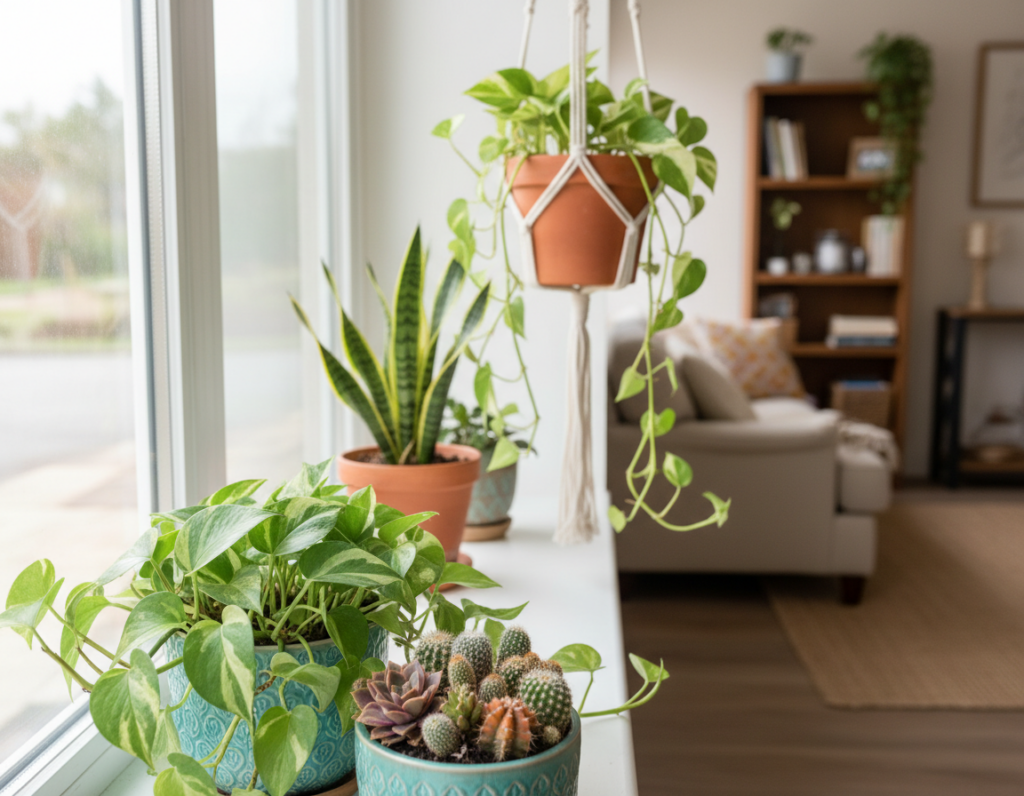
Designers often place a few living pieces among books to break visual monotony. A Bird’s Nest snake plant is an ideal low maintenance choice; it tolerates bright and moderate light and is nearly impossible to kill.
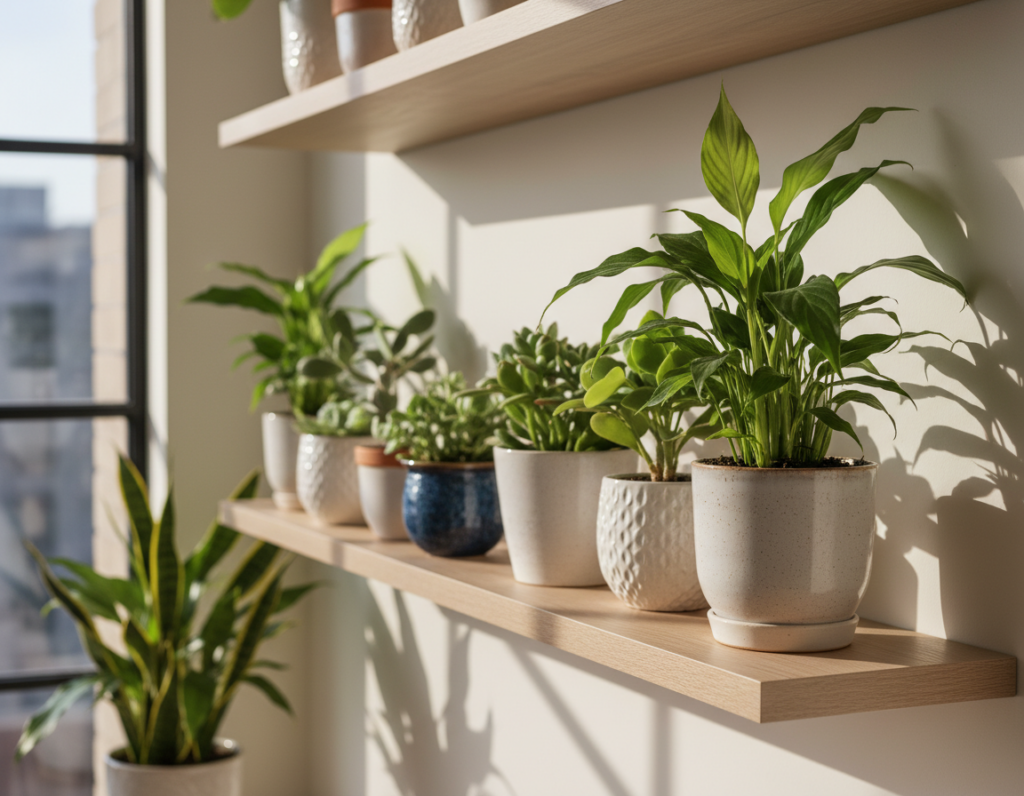
Using varied pots and containers adds depth to a shelf display and complements interior design. Different textures and heights create rhythm and make the arrangement feel intentional.
- Air quality: A well-located snake plant helps purify indoor air.
- Low maintenance: Best plants for shelves are forgiving and easy to water.
- Design rule: Simple arrangement rules turn a shelf into a living feature.
These tips show how a few careful choices can bring nature into homes and enhance both function and style.
Essential Design Rules for Plants for Small Apartment Shelves
Clustered containers can turn a narrow ledge into a deliberate design feature. Thoughtful placement pairs beauty with function and protects the surrounding décor.
The Rule of Three
The rule of three encourages grouping three pots of varied sizes or shapes to mimic nature. This creates visual rhythm and makes the display feel intentional.
Use three items at different levels to add depth. Mix trailing and upright varieties to balance movement and form.
Choosing the Right Containers
Choose a shelf that sits in a bright place and gives each pot some wiggle room. Ensure the surface is stable and can bear the weight of soil and water.
- Make sure pots have drainage holes or use a tray to catch excess water.
- Place a saucer or absorbent mat under each pot to protect the home and books from spills.
- Sweet Pea Pots, available in three sizes, work well to introduce varied levels and texture.
Practical tips: match pot size to the plant’s root space and avoid overcrowding. Proper soil and a steady water routine keep leaves healthy and growth manageable.
Learn how to integrate living displays into a compact room with this detailed guide: how to successfully integrate houseplants.
Mastering Light and Watering for Shelf-Bound Greenery
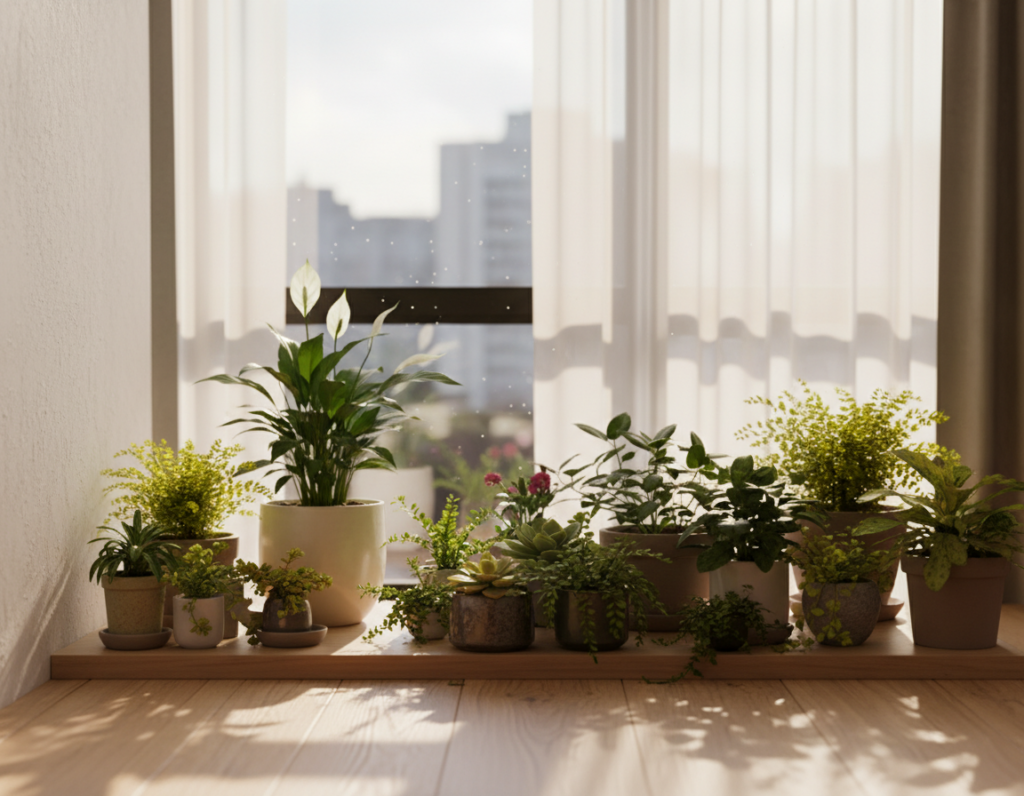
Good shelf care starts with observing how sunlight moves across the room and adjusting water accordingly. Simple habits prevent stress and help each plant thrive.
Rotate pots every few days so all leaves get equal indirect light. This keeps growth balanced and reduces leaning toward one side.
Check the soil often; higher levels dry faster than lower ones. If the top soil feels dry to the touch, it is usually time to water.
Managing Humidity and Drainage
Use a 4:1 soil to perlite mix for philodendrons and other tropicals to improve drainage. Make sure pots have holes and saucers to protect the interior and keep roots healthy.
“Allow a Bird’s Nest snake plant to dry between waterings; it thrives when left alone.”
- Rotate containers to balance light across all levels.
- Adjust water in winter; growth slows and water needs drop.
- Monitor moisture so each plant can thrive in its shelf place.
Top Trailing Varieties for Vertical Displays
Trailing varieties bring vertical motion and soften high shelves with cascades of foliage. These choices work well when the goal is a lush look without taking floor space.
Golden Pothos
The Golden Pothos is one of the best indoor trailing plants. It grows fast and helps purify the air. This variety is forgiving about watering and tolerates a range of light levels.
Heartleaf Philodendron
The Heartleaf Philodendron, including Philodendron Micans, is low maintenance and thrives in indirect light. Prune stems to encourage fuller growth and root cuttings in water to propagate.
String of Hearts
String of Hearts, also known as the Rosary Vine, produces tiny silvery hearts. It prefers bright, indirect light and adds delicate movement to any vertical display.
- Care tip: make sure to keep trailing plant soil slightly dry between waterings.
- Design tip: mix fast growers with slow ones for consistent coverage.
- Winter note: reduce water and avoid direct sun to protect leaves.
“Many trailing varieties are low maintenance, making them ideal for a vertical design.”
Upright and Sculptural Options for Tight Corners
A tall, upright specimen can anchor a corner and bring architectural interest without crowding other items. Choose forms that rise rather than sprawl to keep nearby surfaces tidy and usable.
Top picks include the Bird’s Nest snake plant, a slow-growing, adaptable choice that rarely needs repotting. The Watermelon Peperomia adds bold, striped leaves and fits narrow shelf niches without sprawl.
- The Lace Fern thrives in indirect light and fills nooks quickly while staying low maintenance.
- The Staghorn Fern offers an antler-like silhouette that doubles as living sculpture on elevated displays.
- Peperomia Hope behaves like an epiphyte, trailing lightly while tolerating average home humidity.
Care tips: place these varieties where they get bright, indirect light and use a well-draining soil mix. Water sparingly in winter and prune only to maintain shape. These choices balance trailing plant energy and create composed, vertical interest on a single shelf or corner.
“When selecting one best option, think about habit, light needs, and how the form complements surrounding pieces.”
Maintenance Tips for Long-Term Plant Health
Simple, steady maintenance helps long-lived growth and keeps display pieces attractive year‑round. A short routine prevents stress and keeps leaves glossy. Regular checks save effort later and keep a shelf display reliable.
Pruning and Cleaning
Prune stems in early spring to encourage new growth and create cuttings for propagation. Small trims also keep a pot within the desired size and shape.
Wipe dust from leaves weekly so indirect light reaches the leaf surface. A clean leaf boosts photosynthesis and reduces pest risk.
Propagation Techniques
Root stem or leaf cuttings in water to expand the collection without buying more pots. Many cuttings root in a few weeks and transfer easily to soil.
Practical care tips:
- Repot every 1–2 years unless roots crowd the top.
- When the soil feels dry to the touch, water; ensure drainage to avoid rot.
- Feed monthly with diluted fertilizer during the growing season and scale back in winter.
“Consistent cleaning and pruning prevent common issues and keep foliage looking its best.”
Conclusion
Thoughtful selection and simple routines make keeping a living display manageable. The reader learns that matching light, soil, and water habits to daily life wins over fancy setups. One best choice often beats many neglected pieces.
Whether the pick is a snake plant or a hardy devil ivy, these additions bring nature and cleaner air into a room. Follow the basic rule: match habit, light, and soil, then use steady tips to maintain balance.
With a clear plan and a little care, anyone can create a lasting, stylish collection that fits their interior and schedule.